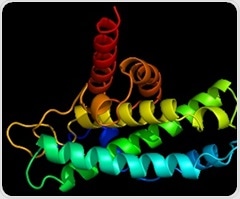
Researchers report they have discovered how two problem proteins known to cause Parkinson's disease are chemically linked, suggesting that someday, both could be neutralized by a single drug designed to target the link.
Movement disorders are conditions involving abnormal involuntary movements of a part of the body. These can occur due to several causes, and are uncommonly associated with stroke. A tremor may develop for the first time following a stroke, either immediately after it, or in a subacute manner.
Mitochondrial dysfunction is the root cause of many diseases that are bewildering in their variety and complexity. They include rare genetic disorders in children, some forms of heart disease, and most likely many cases of Parkinson's disease.
Parkinson's disease (PD) is a neurodegenerative disorder in which nerve cells in the substantia nigra, a pigmented dopamine-rich region in the brain, are destroyed gradually over a period of time. These cells are responsible for the smooth relay of nerve impulses to the next point, the corpus striatum. Loss of these neurons leads to dopamine deficiency which eventually manifests clinically.
UBC researchers Jenn Jakobi and Gareth Jones, both Health and Exercise Sciences professors at UBC's Okanagan campus, recently completed a study that examined the methods used to monitor the progressive advancement of Parkinson's disease (PD)--a degenerative disease that affects the central nervous system.
Why did you receive this email?
You are receiving this email because you subscribed to updates from AZoNetwork UK Ltd. on one of
our websites
and requested to be notified of additional information.