
|

|
|
Marking World Alzheimer's Day
|
|
|
|
|

Sponsored by Acro Biosystems |
|
|
Modeling Alzheimer's Disease with Pre-formed Fibrils (PFFs)
Tau and Amyloid beta (Aβ) proteins play crucial roles in Alzheimer's disease (AD) progression, contributing to neurodegeneration. Tau pre-formed fibrils (PFFs) and Aβ PFFs are essential tools in AD research, enabling scientists to model pathological aggregation, investigate mechanisms, and evaluate potential therapeutic strategies, ultimately advancing the development of more effective treatments.
|
|
|
|
|
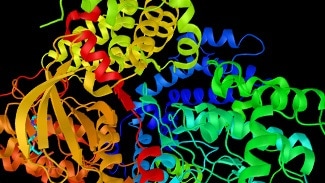
Study links protein increases to cognitive improvement in Alzheimer's
A study published in the journal Brain shows that increases in protein levels with new Alzheimer's drugs can explain the slowing of cognitive impairment at least as well as the reduction in amyloid plaques.
|

|
Neuroplasticity: Rewiring the Brain
Neuroplasticity is key to brain health, facilitating learning and recovery while combating age-related cognitive decline and neurodegenerative disorders.
|
|
|
|
Modeling Alzheimer's Disease with Cerebral Organoids
The introduction of pre-formed fibrils (PFFs) into cerebral organoid has revolutionized Alzheimer's disease (AD) research by precisely mimicking the complex process of protein seeding and propagation observed in AD. This approach creates a more realistic and comprehensive disease model, offering valuable insights into AD mechanisms and facilitating the development of novel therapeutic strategies.
|
|
|
|

|
Genetics of Alzheimer's disease and dementia in African populations presented at Nairobi conference
Regions of the genome associated with Alzheimer's disease and dementia in African populations will be presented at the Future of Dementia in Africa conference on September 11-12, 2024.
|

|
Researchers seek early Alzheimer's detection with MRSI
University of Virginia professor Mathews Jacob has secured a $3.9 million grant to advance his innovative research on detecting Alzheimer's disease in its early stages.
|
|
|
|
Key Targets for Alzheimer's Disease Drug Development
Alzheimer’s disease (AD) research aims to uncover therapeutic targets such as Tau, APOE, Aβ, and TREM2 to address its complex pathology. High-quality proteins are essential for accurately modeling disease mechanisms, facilitating the discovery of new therapeutic strategies, and accelerating the development of effective treatments.
|
|
|
|

|
Light pollution may elevate Alzheimer's risk
Outdoor light at night could be a significant risk factor in Alzheimer's disease, according to new research from Rush.
|

|
Understanding brain activity shifts in Alzheimer’s disease
Amyloid-beta and tau proteins have long been associated with Alzheimer's disease. The pathological buildup of these proteins leads to cognitive decline in people with the disease.
|
|
|
|
|
|