
|
|
|
| |

|
|
| |
The latest HIV/AIDS news from News Medical |
|
|
|
 | | |  Biotherapeutic metabolite repairs gut damage caused by HIV infection Biotherapeutic metabolite repairs gut damage caused by HIV infection Researchers at the UC Davis School of Medicine have identified a naturally occurring metabolite that repairs gut damage caused by HIV infection and significantly improves the effectiveness of antiretroviral therapy (ART) in the nonhuman primate model of HIV/AIDS. | | | | |  Once-weekly oral tablet proves highly effective for HIV care Once-weekly oral tablet proves highly effective for HIV care An international clinical trial led by researchers including Professor Chloe Orkin of Queen Mary University of London has shown that a once-weekly oral treatment for HIV is as effective as one of today's leading daily therapies, offering the potential for a new treatment option that could reduce the burden of lifelong daily pill-taking. | |
|
|
|  | | | | | 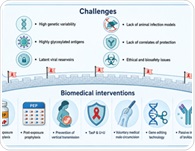 Long-acting HIV prevention tools could help close the gap before a vaccine arrives Long-acting HIV prevention tools could help close the gap before a vaccine arrives A review of non-vaccine HIV interventions highlights the strong preventive effects of long-acting PrEP, sustained ART, U=U, vertical transmission programs, and voluntary medical male circumcision. Gene editing and multispecific antibodies may expand future options, but safety, cost, access, adherence, and implementation barriers remain. | |  | | | | |  Integration is key to fighting global epidemics, WHO reports Integration is key to fighting global epidemics, WHO reports The World Health Organization (WHO) today launched a new report assessing progress in implementing the Global Health Sector Strategies (GHSS) on HIV, viral hepatitis and sexually transmitted infections (STIs) for 2022–2030. | |
|
|
| | | |  Every year, more than 120,000 newborns worldwide contract HIV, a global health burden that requires lifelong treatment for millions of people - assuming they have access and can afford it. Every year, more than 120,000 newborns worldwide contract HIV, a global health burden that requires lifelong treatment for millions of people - assuming they have access and can afford it. | | | | |  A new UC San Francisco study helps explain why people with HIV remain at elevated risk for type 2 diabetes despite effective suppression of the virus with modern medications. A new UC San Francisco study helps explain why people with HIV remain at elevated risk for type 2 diabetes despite effective suppression of the virus with modern medications. | |
|
|
|
|
|
|
|