|
|
|
| |

|
|
| |
The latest lab automation and artificial intelligence news from AZoNetwork |
|
|
|
 | | |
 AI-Enabled Laboratory Orchestration for Advanced Therapeutics AI-Enabled Laboratory Orchestration for Advanced Therapeutics
Scaling cell and gene therapies often creates an overwhelming amount of paperwork, deviations, and disconnected lab data. This white paper looks at how practical, governed AI helps manufacturing teams speed up batch reviews and spot issues earlier, without taking critical quality decisions away from the scientists who know best.
| |
|
|
| | | | |  Artificial intelligence (AI) is changing how science gets done. At the U.S. Department of Energy's (DOE) Argonne National Laboratory, researchers are not just using AI as a tool. Artificial intelligence (AI) is changing how science gets done. At the U.S. Department of Energy's (DOE) Argonne National Laboratory, researchers are not just using AI as a tool. | | | | |  Molecular Devices, a Danaher company and a leading provider of high-performance life science solutions, and STEMCELL Technologies (STEMCELL), a global supplier of specialized products and services supporting life sciences, today announced a validated automated workflow that can be used with STEMCELL's IntestiCult™ Plus Organoid Growth Medium for human intestinal organoids culture on the Molecular Devices CellXpress. Molecular Devices, a Danaher company and a leading provider of high-performance life science solutions, and STEMCELL Technologies (STEMCELL), a global supplier of specialized products and services supporting life sciences, today announced a validated automated workflow that can be used with STEMCELL's IntestiCult™ Plus Organoid Growth Medium for human intestinal organoids culture on the Molecular Devices CellXpress. | | | | |  DataSelf Corp., the mid-market leader in data warehousing and AI-based analytics, today announced the latest release of DataSelf ETL+, a next-generation reporting and analytics solution. DataSelf Corp., the mid-market leader in data warehousing and AI-based analytics, today announced the latest release of DataSelf ETL+, a next-generation reporting and analytics solution. | | | | |  More than two decades after scientists first sequenced the entire human genome - all 3 billion "letters," or base pairs, of DNA code - the meaning of much of this code remains a mystery. More than two decades after scientists first sequenced the entire human genome - all 3 billion "letters," or base pairs, of DNA code - the meaning of much of this code remains a mystery. | | | | | 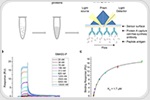 AI-driven drug discovery can be accelerated by combining cell-free expression with purification-free SPR for faster biomolecular interaction analysis. AI-driven drug discovery can be accelerated by combining cell-free expression with purification-free SPR for faster biomolecular interaction analysis. | |
|
|
|  | | | How would you rate today's newsletter?
| |
|
|
| | | |
 |
Stay updated with the latest in health and medical news! Follow News‑Medical.net on Google News for real‑time updates. Click here to follow us now. |
| |
|
|
|
|
|
|
|
![[Free Webinar] Imaris 11.1: Learn Faster, Analyse with Confidence](https://www.azonetwork.com/newsletters/images/generic/53__639251491707683233_multisizecolor_0_custom.jpg)