|
|
|
| |

|
|
| |
The latest schizophrenia news from News Medical |
|
|
|
 | | | 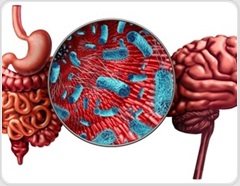 Probiotics for mental health? A new review finds promising signals and major gaps Probiotics for mental health? A new review finds promising signals and major gaps This narrative review examines how psychobiotics may influence anxiety, depression, bipolar disorder, and schizophrenia through gut-brain pathways involving neurotransmitters, inflammation, immune regulation, gut barrier function, and stress signaling. Specific Lactobacillus and Bifidobacterium strains showed encouraging effects, but wide differences in strains, doses, populations, and study designs currently limit clinical translation. | | | | |  One cognitive ability stood out in a study of Western diets and Alzheimer’s risk genes One cognitive ability stood out in a study of Western diets and Alzheimer’s risk genes A Western dietary pattern was associated with faster attention decline among older adults carrying the APOE ε4 allele, while no significant cognitive associations emerged for a Prudent dietary pattern. However, the Western diet association lost statistical significance after excluding participants with possible baseline cognitive impairment, making the finding exploratory. | |
|
|
| | | | |  Patients diagnosed with conditions after an emergency hospital admission or an emergency room visit face a higher risk of death than those diagnosed in non-emergency settings, according to a large population-based study by Emma Whitfield and colleagues from University College London, UK, published August 25th in the open access journal PLOS Medicine. Patients diagnosed with conditions after an emergency hospital admission or an emergency room visit face a higher risk of death than those diagnosed in non-emergency settings, according to a large population-based study by Emma Whitfield and colleagues from University College London, UK, published August 25th in the open access journal PLOS Medicine. | | | | |  Imagine watching a son or daughter begin college during a formative time in life, only to have schizophrenia suddenly alter their reality. Imagine watching a son or daughter begin college during a formative time in life, only to have schizophrenia suddenly alter their reality. | | | | |  The immune system may also play a role in mental disorders. Scientists are investigating these links with brain function in greater detail, and new findings show that immune changes may differ by disorder type. The immune system may also play a role in mental disorders. Scientists are investigating these links with brain function in greater detail, and new findings show that immune changes may differ by disorder type. | | | | |  New research has found that improvements to the severity of delusions in patients with schizophrenia-spectrum disorder recovering from an acute psychotic episode were significantly associated with reductions in volatility priors—someone's expectations about the unpredictability of their environment. New research has found that improvements to the severity of delusions in patients with schizophrenia-spectrum disorder recovering from an acute psychotic episode were significantly associated with reductions in volatility priors—someone's expectations about the unpredictability of their environment. | | | | |  A single dose of psilocybin produced a lasting increase in sociability for at least two weeks in Cntnap2-knockout mice with social deficits, while it did not enhance sociability overall in mice with normal social behavior. The effect required 5-HT2A receptor activation and persisted when psilocybin was administered under light anesthesia, suggesting that wakefulness during the drug’s acute effects was not necessary for this behavioral response. A single dose of psilocybin produced a lasting increase in sociability for at least two weeks in Cntnap2-knockout mice with social deficits, while it did not enhance sociability overall in mice with normal social behavior. The effect required 5-HT2A receptor activation and persisted when psilocybin was administered under light anesthesia, suggesting that wakefulness during the drug’s acute effects was not necessary for this behavioral response. | | | | |  A region of the brain called the striatum is critical for many cognitive and motor functions, including decision-making, control of movement, habit formation, and processing of reward. A region of the brain called the striatum is critical for many cognitive and motor functions, including decision-making, control of movement, habit formation, and processing of reward. | | | | |  A Rutgers-led international collaboration has identified 36 genes that substantially raise the risk for obsessive-compulsive disorder (OCD) and chronic tic disorders – providing what two researchers said is the most detailed biological understanding of how these conditions develop – and how they might eventually be treated. A Rutgers-led international collaboration has identified 36 genes that substantially raise the risk for obsessive-compulsive disorder (OCD) and chronic tic disorders – providing what two researchers said is the most detailed biological understanding of how these conditions develop – and how they might eventually be treated. | |
|
|
|
|
|
|
|