A real-world supermarket trial suggests that moving fresh produce to the front of discount stores could help nudge shoppers toward healthier baskets, but modest effects and rising food waste show policy design still matters.
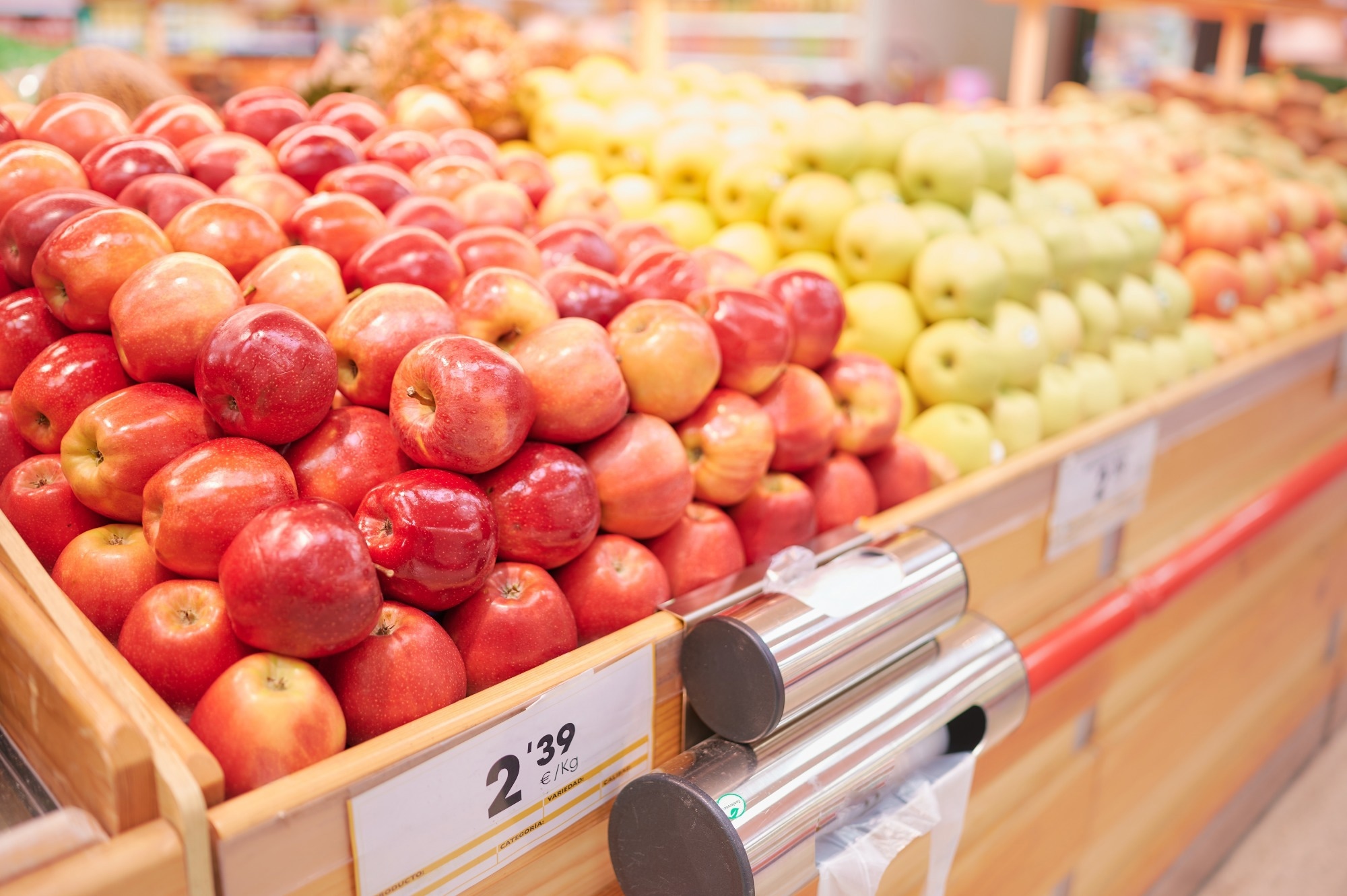
Evaluation of a supermarket placement strategy to nudge healthier dietary habits: synopsis of the WRAPPED study. Image Credit: Itxu / Shutterstock
In a recent study published in the journal Public Health Research, researchers investigated whether a supermarket placement strategy could improve diet, store sales, and household purchasing in discount supermarkets in England.
Poor diet is a major modifiable risk factor for noncommunicable diseases. Supermarkets represent a leading source of food, and their marketing strategies influence food choices. Healthy foods are more than twice as expensive per calorie as unhealthy foods, and there are fewer than 1% of placement promotions for fruit and vegetables. Moreover, small and discount supermarkets have less prominent positioning of fresh fruits and vegetables.
This is concerning as such stores are often used by disadvantaged families and people with poor dietary behaviors. Legislation was introduced in England in October 2022 that prohibits the placement of foods high in fat, salt, and sugar at store entrances, checkouts, and aisle ends in chain retail outlets. A pre-implementation investigation of this legislation indicated support for these new rules and that the restrictions could be further extended to support healthier food choices.
About the Study
In the present study, researchers investigated whether the placement of an expanded section of fresh fruits and vegetables at store entrances in discount supermarkets improves diet quality, store sales, and household purchasing. The study included 36 discount supermarket stores across England. Further, female shoppers possessing a loyalty card with the supermarket chain were recruited; online-only shoppers were excluded.
The intervention included expanding and installing the fresh produce section near the store entrance for six months. Control stores made no changes to their layouts and had a limited range of fresh produce positioned near the back of the store. Participants provided data on their ethnicity, age, marital status, education, employment, weekly grocery spending, and whether the study supermarket was their primary food store.
Household purchasing and store sales data were acquired from stores. Surveys collected data on participants' diets, shopping habits, and household fruit/vegetable waste patterns. The intervention's costs at the societal, individual, and retailer levels were estimated. A process evaluation was conducted to assess the intervention implementation and impact. Linear regression models examined intervention effects on changes in dietary quality from baseline to 3 and 6 months post-intervention.
Findings
The study included 580 shoppers: 280 from 18 intervention stores and 300 from 18 control stores. Of these, 475 participants provided purchasing data, and 360 provided information on household fruit/vegetable waste and dietary patterns. There were minor differences in participant characteristics between intervention and control stores. In particular, intervention store shoppers were more likely to live in more deprived neighborhoods and were less likely to be White.
The study supermarket was the primary source of household groceries for 31% of participants. Participants with available purchasing data made 5,077 store visits during the intervention. The proportion of shoppers buying fruits and vegetables declined from baseline to three and six months, though the decrease was less pronounced for intervention store shoppers. Fruit and vegetable purchases showed a suggestive increase among intervention store shoppers with lower educational attainment, although this subgroup finding was not definitive.
Intervention stores had greater increases in fresh fruit/vegetable sales, especially early after implementation, although these effects diminished over time. Furthermore, the intervention had a positive effect on women's dietary quality at the 6-month follow-up, but this effect was small and was not consistently observed at earlier time points. The intervention had little impact on household fruit/vegetable waste frequency at 1 and 3 months post-intervention. However, at six months, intervention store participants had a greater frequency of household fruit/vegetable waste, with vegetable waste increasing more clearly than fruit waste.
From an individual (household) perspective, the intervention had a positive effect on the quantity of fruits and vegetables purchased over six months. At the retailer level, there were initial capital costs for relocating fruits and vegetables, as well as additional costs to maintain the larger range and volume of produce, though the overall financial impact was difficult to quantify. Before the intervention, about 41% of intervention stores and 27% of control stores positioned the fresh produce section in the front half of the first aisle.
One month after implementing the intervention, all intervention stores positioned the fresh produce section in the front half of the first aisle, compared with only 23% of control stores. Intervention stores had a markedly shorter distance between the store entrance and the fresh produce section than control stores after the intervention was implemented. Intervention stores also had a higher number of different fruit/vegetable items than control stores post-implementation.
Conclusions
Positioning a fresh fruit and vegetable section near the store entrance can improve the nutritional profile of supermarket sales and may enhance household purchasing and women's dietary quality, although purchasing effects were modest and sometimes uncertain. The net intervention effect after six months was positive at the individual level, with no increases in shopping time or expenditure. However, the study was not randomized, took place during Brexit, COVID-19, and cost-of-living pressures, and found increased household fruit and vegetable waste at six months.
Overall, the findings provide evidence to support refining the UK Food (Promotion and Placement) Regulations, as implemented in England, to require a fresh produce section near store entrances to enhance their health impact.
Download your PDF copy by clicking here.
Journal reference:
- Vogel C, Crozier S, Dhuria P, et al. Evaluation of a supermarket placement strategy to nudge healthier dietary habits: synopsis of the WRAPPED study. Public Health Research. 2026;14(14). DOI: 10.3310/KSDT8756. https://www.journalslibrary.nihr.ac.uk/phr/KSDT8756
 Indian adapted Mediterranean diet targets inflammation in heart disease trial