Consumer Medicine Information (CMI) summary
The
full CMI on the next page has more details. If you are worried about using this medicine,
speak to your doctor or pharmacist.
1. Why am I using NEUPOGEN?
NEUPOGEN contains the active ingredient filgrastim. NEUPOGEN is used to encourage
your bone marrow to produce more neutrophils, a type of white blood cell. You may
have been prescribed NEUPOGEN because you are receiving treatment for cancer, are
receiving a bone marrow or stem cell transplant, are donating stem cells for another
person, are suffering from severe chronic neutropenia or are receiving medicines for
HIV infection.
For more information, see Section
1. Why am I using NEUPOGEN? in the full CMI.
2. What should I know before I use NEUPOGEN?
Do not use if you have ever had an allergic reaction to NEUPOGEN, any of the ingredients
listed at the end of the CMI, or to any medicines or products that are produced using
the bacteria E. coli.
Talk to your doctor if you have any other medical conditions, take any other medicines,
or are pregnant or plan to become pregnant or are breastfeeding.
For more information, see Section
2. What should I know before I use NEUPOGEN? in the full CMI.
3. What if I am taking other medicines?
4. How do I use NEUPOGEN?
NEUPOGEN is injected under the skin (subcutaneous). More instructions can be found
in Section
4. How do I use NEUPOGEN? in the full CMI.
5. What should I know while using NEUPOGEN?
|
Things you should do
|
Remind any doctor, nurse, dentist or pharmacist you visit that you are using NEUPOGEN.
Keep all of your doctor's appointments so that your health can be monitored.
Tell your doctor straight away if you become pregnant
Go straight to your hospital if you notice any signs or symptoms of infection.
|
|
Things you should not do
|
Do not use NEUPOGEN to treat any other complaints unless your doctor tells you to.
|
|
Driving or using machines
|
Be careful driving or using any machines or tools until you know how NEUPOGEN affects
you.
|
|
Looking after your medicine
|
Keep NEUPOGEN in a refrigerator at a temperature of 2°C to 8°C.
Keep your medicine in its pack until it is time to use it. Protect it from light.
|
6. Are there any side effects?
Common side effects include bone, back, muscle, joint, mouth or throat pain; swelling
or stiffness of joints; muscle spasms; abdominal discomfort; diarrhoea; constipation;
nausea; vomiting; severe nose bleeds; reddish or purplish bumps or blotches, mouth
ulcers; numbness; tingling in the hands and feet; injection site reactions; cough;
hair loss; headache; looking pale; loss of appetite; unusual weakness; difficulty
sleeping. Serious side effects include rash, itching or hives; shortness of breath,
wheezing, difficulty, or rapid breathing; tiredness, fever; easy bruising or bleeding;
coughing up blood; swelling; faintness; rapid pulse or sweating; painful skin lesions;
chest pain; left shoulder pain; pain in the upper left side of the stomach; swelling
of your stomach-area; reduced urination; blood in the urine.
For more information, including what to do if you have any side effects, see Section
6. Are there any side effects? in the full CMI.
Active ingredient(s):
filgrastim
Full Consumer Medicine Information (CMI)
This leaflet provides important information about using NEUPOGEN. You should also speak to your doctor or pharmacist if you would like further information
or if you have any concerns or questions about using NEUPOGEN.
Where to find information in this leaflet:
1. Why am I using NEUPOGEN?
NEUPOGEN contains the active ingredient filgrastim. NEUPOGEN belongs to a group of medicines called cytokines and is a copy of a substance
normally present in your body, called Granulocyte Colony Stimulating Factor or G-CSF.
Using gene technology, NEUPOGEN is produced in a specific type of bacteria, called
E. coli.
G-CSF is produced in the bone marrow and assists in the production of neutrophils,
which are a type of white blood cell. Neutrophils help the body fight infections
by surrounding and destroying the bacteria that cause them. G-CSF also helps neutrophils
to do this work better. NEUPOGEN works by encouraging the bone marrow to produce more
neutrophils.
NEUPOGEN can be used:
to increase the number of white blood cells after treatment with chemotherapy to help
prevent infections;
to increase the number of white blood cells after a bone marrow transplant to help
prevent infections;
before high-dose chemotherapy to make the bone marrow produce more stem cells which
can be collected and given back to you after your treatment. These can be taken from
you or from a donor. The stem cells will then go back into the bone marrow and produce
blood cells;
to increase the number of white blood cells if you suffer from severe chronic neutropenia
to help prevent infections;
in patients with advanced HIV infection which will help reduce the risk of infections.
2. What should I know before I use NEUPOGEN?
Warnings
Do not use NEUPOGEN:
If you are allergic to:
any medicine containing filgrastim
any of the ingredients listed at the end of this leaflet
any medicines or products that are produced using the bacteria E.coli.
Always check the ingredients to make sure you can use this medicine.
at the same time as your chemotherapy or radiotherapy.
in the 24 hours before or after you receive your chemotherapy, radiotherapy, bone
marrow transplant or stem cell transplant.
This is because these types of treatments may stop NEUPOGEN from increasing the number
of infection-fighting neutrophils.
Check with your doctor if you:
have any allergies to any other medicines, foods, preservatives or dyes.
have or have had any of the following medical conditions:
a medical condition affecting the bone marrow or blood
family history of a genetic disorder
sickle cell disease
problems with your kidneys, liver, heart or other organs
previous treatment for cancer
any infections, cancers or tumours.
take any medicines for any other condition
are not sure whether you should use NEUPOGEN
During treatment, you may be at risk of developing certain side effects. It is important
you understand these risks and how to monitor for them. See additional information
under Section
6. Are there any side effects?
Pregnancy
Check with your doctor if you are pregnant or intend to become pregnant.
Breastfeeding
Talk to your doctor if you are breastfeeding or intend to breastfeed. It is not known
if the active ingredient in NEUPOGEN passes into the milk.
Use in Children
There is limited experience with the use of NEUPOGEN in children. Your doctor will
discuss the risks and benefits of using it in children.
3. What if I am taking other medicines?
Tell your doctor or pharmacist if you are taking any other medicines, including any
medicines, vitamins or supplements that you buy without a prescription from your pharmacy,
supermarket or health food shop.
Some medicines may interfere with NEUPOGEN and affect how it works.
Check with your doctor or pharmacist if you are not sure about what medicines, vitamins
or supplements you are taking and if these affect NEUPOGEN.
4. How do I use NEUPOGEN?
How much to use
Your doctor will tell you how much NEUPOGEN to use.
How much you will need to use will depend on the reason for your treatment, your body
weight and the number of neutrophils in your blood.
For NEUPOGEN to work properly, you have to use it exactly as your doctor has instructed.
Follow the instructions provided and use NEUPOGEN until your doctor tells you to stop.
When to use NEUPOGEN
NEUPOGEN should be used at the same time each day.
Your doctor will tell you when to begin your treatment and when to stop.
Your doctor will tell you how many injections you need each week and on which days
they should be given.
Patients receiving chemotherapy or who have received a bone marrow or stem cell transplant
are only required to use NEUPOGEN for short periods of time until the number of infection-fighting
neutrophils are restored (usually 1 to 3 weeks).
Stem cell donors should receive NEUPOGEN treatment for 4 to 5 days.
Patients with severe chronic neutropenia are required to use NEUPOGEN regularly and
for a long period of time, to keep the number of infection-fighting neutrophils at
a normal level.
Patients with HIV infection need to use NEUPOGEN daily until their neutrophil numbers
are normal. Usually, the dose is then reduced to three injections per week to maintain
the neutrophil numbers.
How to use NEUPOGEN
NEUPOGEN is given by injection. This can be either:
into the tissues just below the skin, called a subcutaneous injection, or
into a vein, called an intravenous injection.
Intravenous injections will be given by a doctor or nurse.
For subcutaneous injections, in some instances, your doctor, nurse or pharmacist may
suggest that you or your carer be taught how to administer the injection. This will
allow you to have your NEUPOGEN injection at home.
Follow all directions given to you by your doctor, nurse of pharmacist carefully. They may differ from the information contained in this leaflet.
If you do not understand the instructions, ask your doctor, nurse or pharmacist for
help.
Where to inject NEUPOGEN
The best injection sites are:
your abdomen, except for the area around the navel (belly button) or
the front or side of your thighs.
The sites are shown in the picture below.
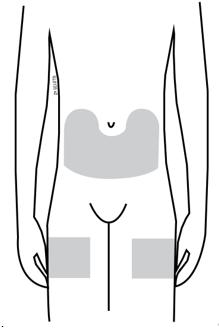
Change the injection site each time you inject to avoid soreness at any one site.
Things to do before you inject
Make sure that you have all the materials you need for your injection:
a new NEUPOGEN pre-filled syringe or vial
a syringe and needle if using a NEUPOGEN vial
an alcohol swab
a puncture-resistant sharps container.
Follow these instructions exactly to help avoid contamination and possible infection.
If you are unsure, check with your doctor, nurse or pharmacist.
1. Find a clean, flat working surface, such as a table, where you can inject undisturbed.
2. Remove the syringe or vial from the refrigerator.
For a more comfortable injection, leave at room temperature for approximately 30 minutes.
Do not warm NEUPOGEN in any other way (e.g. do not warm it in the microwave or in hot water).
3. Check the packaging. Do not use NEUPOGEN if the packaging is torn or shows signs of
tampering.
4.
Check that the syringe or vial has NOT been used before.
5.
Do not shake the syringe or vial. If the NEUPOGEN solution appears frothy or bubbly, allow the syringe or vial to sit
undisturbed for a few minutes to reduce the froth or bubbles before measuring your
dose.
6. Do not remove the needle cover until you are ready to inject.
7. Check the expiry date on the label. Do not use if the date has passed the last day
of the month shown.
8. Check the appearance of the solution. The solution should be clear and colourless.
If it is cloudy, coloured or if there are clumps or flakes, you must not use it.
9. Wash and dry your hands thoroughly.
How to prepare your injection - NEUPOGEN Syringe
1. Hold the syringe vertically with the needle pointing up. This helps reduce the amount
of medicine that may leak out of the needle.
2. Carefully remove the needle cover, taking care not to touch the exposed needle.
3. Check the dose (in mL) that your doctor has prescribed and locate the correct volume
mark on the syringe barrel.
4. Carefully push the plunger until the grey upper edge of the plunger reaches the correct
volume mark. This will push the air and any excess liquid out of the syringe.
5.
Double-check that you have the correct dose.
How to prepare your injection - NEUPOGEN Vial
1. Check that the syringe you are using is marked every tenth of a mL/cc (i.e. 0.1, 0.2,
etc. mL/cc) so that you can accurately inject the prescribed dose.
Use disposable syringes and needles and use them once only.
2. Flip the protective cap off the vial. Do not remove the rubber stopper.
3. Wipe the top of the rubber stopper with an alcohol swab.
4. With the needle cover on, carefully pull back on the plunger. This will draw air into
the syringe. The amount of air should be the same as your NEUPOGEN dose.
5. Carefully remove the needle cover, taking care not to touch the exposed needle.
6. Gently push the needle through the rubber top of the NEUPOGEN vial.
7. Carefully push the plunger down. The air injected into the vial will allow NEUPOGEN
to be easily withdrawn from the vial into the syringe.
8. Turn the vial and syringe upside down. Make sure the tip of the needle is IN the solution.
9. Slowly pull back on the plunger to draw the correct dose of NEUPOGEN into the syringe.
10. Check the syringe for air bubbles. The air is harmless, but a large air bubble will
reduce the NEUPOGEN dose.
To remove the air bubbles, gently push the solution back into the vial and measure
the correct dose of NEUPOGEN.
11.
Check that the correct dose of NEUPOGEN has been drawn into the syringe.
12. Remove the needle from the vial.
How to inject NEUPOGEN
1.
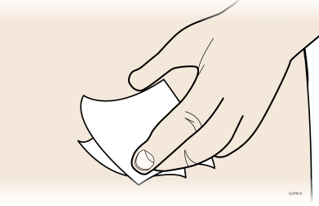
Clean the site where the injection is to be made with an alcohol swab, moving the
alcohol swab in an expanding circle and allow the site to dry.
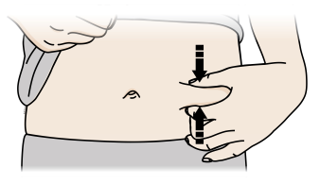
2. Pinch a large area of skin between your thumb and forefinger, to create a firm injection
site.
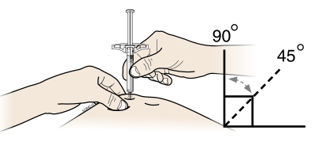
3. Pick up the syringe and hold it as you would a pencil.
4.
Insert the needle directly into the skin (at an angle of between 45° and 90° or as
advised by your doctor, nurse or pharmacist).
5. Inject the NEUPOGEN by gently pushing the plunger all the way in.
6. Withdraw the needle and using the alcohol swab apply pressure for several minutes
to the injection site.
Do not put the needle cover back on the used syringe. You cannot reuse the syringe.
Discard the used syringe into an approved, puncture-resistant, sharps container.
If you are using NEUPOGEN vials, dispose of the used vial in the rubbish.
Do not change the dose or the way you inject NEUPOGEN without consulting your doctor.
Always follow your doctor's instructions.
If you forget to use NEUPOGEN
If you miss your scheduled dose, inject it as soon as you can - provided that it is
still on the same day.
If you miss a whole day before you remember to inject yourself, do not take a 'catch-up'
dose or increase your next dose.
Talk to your doctor, nurse or pharmacist as soon as possible about the missed dose.
If you use too much NEUPOGEN
If you think that you have used too much NEUPOGEN, you may need urgent medical attention.
You should immediately:
phone the Poisons Information Centre
(by calling
13 11 26), or
contact your doctor, nurse or pharmacist, or
go to the Emergency Department at your nearest hospital.
You should do this even if there are no signs of discomfort or poisoning.
5. What should I know while using NEUPOGEN?
Things you should do
Remind any doctor, dentist, pharmacist or nurse you visit that you are using NEUPOGEN.
Keep all of your doctor's appointments so that your health can be monitored. Your
doctor may order blood tests to check the levels of infection-fighting neutrophils
and other blood cells.
Treatment with NEUPOGEN leads to changes in the numbers of certain blood cells.
Blood tests may also be undertaken after you have completed your NEUPOGEN treatment
until your blood cells have returned to normal levels.
Call your doctor straight away if you:
become pregnant
Go straight to your hospital if you:
Notice any signs or symptoms of infection.
There are many ways an infection may show itself. Symptoms of an infection include:
fever (a temperature of 38.2°C or greater, or as your doctor suggests), chills, rash,
sore throat, diarrhoea, earache, difficult or painful breathing, coughing or wheezing.
Things you should not do
Do not use NEUPOGEN to treat any other complaints unless your doctor tells you to.
Do not give NEUPOGEN to anyone else, even if they have the same condition as you.
Driving or using machines
Be careful before you drive or use any machines or tools until you know how NEUPOGEN
affects you.
The effects on your ability to drive or use machines whilst taking NEUPOGEN are not
known.
Looking after your medicine
Follow the instructions in the carton on how to take care of your medicine properly.
Keep NEUPOGEN in a refrigerator at a temperature of 2°C to 8°C.
Exposure to freezing temperatures will not harm NEUPOGEN.
Exposure to room temperature of up to 3 days will not harm NEUPOGEN.
Do not use this medicine if it has been left out of the refrigerator for more than
three days.
Keep your medicine in its pack until it is time to use it. Protect it from light.
Keep it where children cannot reach it.
When to discard your medicine
Once you have injected NEUPOGEN, do not put the needle cover back on the used syringe.
Discard the used syringe into an approved, puncture-resistant sharps container and
keep it out of the reach of children.
Never put the used syringes into your normal household rubbish bin.
Dispose of the full puncture-resistant sharps container as instructed by your doctor,
nurse or pharmacist.
Dispose of the used vial in the rubbish or as directed by your doctor, nurse or pharmacist.
Getting rid of any unwanted medicine
If you no longer need to use this medicine or it is out of date, take it to any pharmacy
for safe disposal.
Do not use this medicine after the expiry date.
6. Are there any side effects?
All medicines can have side effects. If you do experience any side effects, most of
them are minor and temporary. However, some side effects may need medical attention.
See the information below and, if you need to, ask your doctor or pharmacist if you
have any further questions about side effects.
Less serious side effects
|
Less serious side effects
|
What to do
|
|
Muscle and Skeleton:
temporary bone pain, such as in the lower back or in the long bones of the arms or
legs
This pain is usually relieved with non-prescription painkillers, like paracetamol.
If you continue to have bone pain even after having taken this form of pain relief,
you should speak to your doctor, as you may need a prescription medicine.
back pain
pain, swelling, warmth or stiffness of joints
worsening of existing arthritis
muscle pain
muscle spasms
Gut and Digestion:
abdominal discomfort
diarrhoea or constipation
nausea (feeling sick) and/or vomiting
Blood:
pink, red or blue/purple spots or bumps on the skin
bleeding or bruising more than usual, severe nose bleeds
reddish or purplish blotches under the skin
Eyes, ears and mouth:
sore throat
sore mouth, mouth ulcers
Nervous System:
numbness
tingling in the hands and feet
Skin
redness, swelling or itching at the site of injection
skin disorders - worsening of existing symptoms
skin rash or red, itchy spots
swelling of hands, legs, ankles, feet or any other part of the body
General:
cough
hair loss
headache
looking pale
loss of appetite
unusual weakness
difficulty sleeping
|
Speak to your doctor if you have any of these less serious side effects and they worry
you.
|
Serious side effects
Tell your doctor or pharmacist if you notice anything else that may be making you
feel unwell.
Other side effects not listed here may occur in some people.
Reporting side effects
After you have received medical advice for any side effects you experience, you can
report side effects to the Therapeutic Goods Administration online at
www.tga.gov.au/reporting-problems . By reporting side effects, you can help provide more information on the safety of
this medicine.
Always make sure you speak to your doctor or pharmacist before you decide to stop
taking any of your medicines.
7. Product details
This medicine is only available with a doctor's prescription.
What NEUPOGEN contains
|
Active ingredient
(main ingredient)
|
filgrastim (rbe)
|
|
Other ingredients
(inactive ingredients)
|
Sodium acetate
Sorbitol
Polysorbate 80
Water for injections
|
|
Potential allergens
|
The needle cover on the pre-filled syringe contains a derivative of latex.
|
Do not take this medicine if you are allergic to any of these ingredients.
What NEUPOGEN looks like
NEUPOGEN is a clear, colourless solution. It is supplied in pre-filled syringes or
vials.
The syringes and vials are packed in cartons of 10 and are available in the following
strengths:
300 micrograms of filgrastim in a volume of 0.5 mL, in a syringe (AUST R 53580);
480 micrograms of filgrastim in a volume of 0.5 mL, in a syringe (AUST R 53581);
300 micrograms of filgrastim in a volume of 1 mL, in a vial (AUST R 53579); and
480 micrograms of filgrastim in a volume of 1.6 mL, in a vial (AUST R 53577).
Who distributes NEUPOGEN
Amgen Australia Pty Ltd
Level 11, 10 Carrington St
Sydney NSW 2000
Ph: 1800 803 638
www.amgenmedinfo.com.au
This leaflet was prepared in February 2023.