Insomnia refers an inability to fall asleep or stay asleep for long enough to feel refreshed in the morning, despite adequate opportunity to sleep.
Insomnia is estimated to affect a third of people in the UK at some point in their lives. It tends to be more common among women than men and is also more likely to occur as people age.
.jpg "insomnia") Image Credit: Tero Vesalainen / Shutterstock.com
Image Credit: Tero Vesalainen / Shutterstock.com
The most common symptoms of insomnia include the following:
- Problems falling asleep
- Waking up during the night
- Waking up early
- Feeling tired and irritable
- Difficulty concentrating and functioning as usual during the day
Insomnia is described as either primary or secondary insomnia. Primary insomnia is not directly related to the presence of any other health problems, while secondary insomnia arises as a result of another factor such as depression, anxiety, arthritis, heartburn or the use of substances such as drugs or alcohol, for example.
Since insomnia can be caused by many different things, it can sometimes be difficult to establish what the underlying problem is. Some of the main factors that are known to contribute are described below.
Stress and anxiety
Stressful events such as the loss of a loved one, financial problems or problems at work can trigger insomnia in some people. Even once the event has passed, an affected individual may still experience insomnia because they have started to associate bedtime with having thoughts that make them anxious. When this happens for long periods, the person starts to feel dread or panic about the prospect of not sleeping. Therefore, anxiety and insomnia can feed each other, creating a vicious cycle that often requires intervention to break.
Depression
Depression can affect a person’s ability to sleep and the risk of severe insomnia is significantly higher among people with major depressive disorders. Research has also shown that insomnia can lead to depression or worsen it. Insomnia and signs of depression such as lack of motivation, low energy levels and feelings of hopelessness may be related and each can make the other worse. Regardless of whether insomnia or depression came first, however, both can be treated.
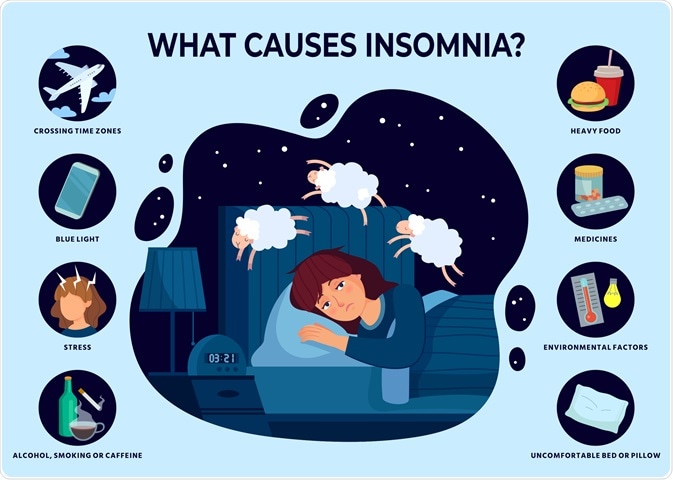 Causes of insomnia. Image Credit: Tartila / Shutterstock.com
Mental health conditions
Aside from anxiety and depression, a number of other mental health problems can affect a person’s sleeping pattern and cause insomnia including mood disorders, panic disorder, post-traumatic stress disorder and schizophrenia.
Physical health conditions
A number of underlying health conditions may also affect sleeping patterns and cause insomnia. Examples include the following:
- Respiratory conditions such as asthma or chronic obstructive pulmonary disease (COPD)
- Heart conditions such as heart failure or angina
- Joint or muscle problems such as arthritis
- Hormonal disorders such as overactive thyroid
- Neurological conditions such as Parkinson’s disease or Alzheimer’s disease
- Genitourinary problems such as enlarged prostate or incontinence
- Sleep disorders such as narcolepsy, sleep apnea, restless leg syndrome or night terrors
- Chronic pain
- Digestive problems such as acid reflux
- The menopause
- Nasal/sinus allergies.
Sleeping routine and environment
Going to bed at inconsistent times, taking naps during the day or failing to relax before bedtime all increase the likelihood of insomnia. Working at home in the evening, for example, can make it difficult to unwind and mean a person goes to bed preoccupied. The light from a computer can also make the brain more alert. People sometimes sleep in to make up for having lost sleep, but this can confuse the body clock and make it difficult to get to sleep the following night. Changes in a person’s sleep routine due to shift changes at work or jet lag can also contribute to insomnia.
Environmental factors that can contribute to insomnia include an uncomfortable bed, hot or cold temperature and a room that is too bright or noisy.
What causes insomnia? - Dan Kwartler
Lifestyle
Poor lifestyle habits such as drinking alcohol, taking drugs, low levels of exercise and even eating too much late at night can affect a person’s ability to sleep. Drinking caffeinated drinks such as tea and coffee or smoking can also increase the risk of insomnia because caffeine and nicotine are stimulants.
Medication
Certain drugs that are either prescribed or bought over the counter can cause insomnia as a side effect and these include:
- Some antidepressants
- Steroid medications
- Non-steroidal anti-inflammatory drugs (NSAIDs)
- Drugs for epilepsy
- Drugs for high blood pressure
- Stimulants used to treat conditions such as narcolepsy or attention deficit hypersensitivity disorder
- Certain asthma treatments
References
Further Reading
Last Updated: Apr 7, 2023
 New review illuminates the intricate connections between gut microbiota and sleep regulation