Women are much more likely to be affected by urinary incontinence than men, which is the result of various factors. The anatomy of the female urinary system, for example, makes them more susceptible to problems with the excretion of urine, in addition to particular life events that only affect women, such as childbirth.
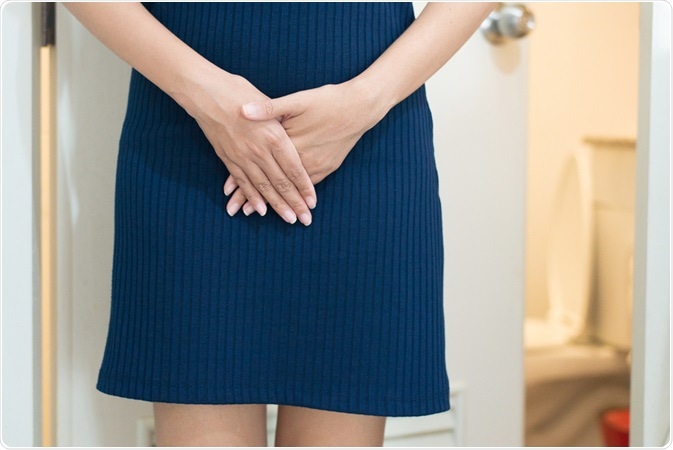
Image Credit: GBALLGIGGSPHOTO / Shutterstock.com
The most common types of incontinence for women are stress and urge incontinence, as a result of the causative factors that are relevant for women.
Epidemiology
Urinary incontinence tends to be a condition that is under-reported, as it is a potentially embarrassing condition to seek help for. Furthermore, many women experience mild symptoms that do not inhibit their quality of life significantly. As a result, the epidemiologic data on the condition varies considerably, and it is, therefore, difficult to determine the real prevalence.
However, current estimates indicate that between 15% and 50% of women of all ages are thought to experience symptoms of urinary incontinence. More severe symptoms, such as losing a large quantity of urine or on a more frequent basis, affect approximately 1 in 10 of all women.
As women age, the prevalence of the condition rises and more women report symptoms of incontinence. This is likely to result from several factors, such as after childbirth and the general aging of the body and urinary system.
The female urinary system
One of the predominant reasons that females are more susceptible to urinary incontinence is the anatomical positioning of the urine organs. Of particular note, the ureters, which carry the urine from the bladder to the ureter to be excreted, are much shorter in length than male ureters. As a result, there is less opportunity for the muscles in the area to contract and stop the flow of urine.
Women and stress incontinence
Stress incontinence involves the involuntary leakage of urine as a result of activities that put stress on the bladder. Sudden laughter or coughing, as well as intense exercise or heavy lifting, may lead to the unexpected leakage of urine in varying amounts.
This is often due to the weakening of the sphincter or pelvic floor muscles that are needed to control the flow of urine. Women are more susceptible to this type of incontinence due to the anatomy of their urinary system and particular life events, such as childbirth, that lead to the weakening of the muscles.
Women and urge incontinence
Urge incontinence involves the sudden and irrepressible need to urinate. Often, women affected by the condition do not have enough time to reach a bathroom to urinate.
More women are affected by urge continence than men, which is likely due to the specific conditions that are likely to cause urge incontinence, including an overactive bladder and a urinary tract infection (UTI) which may cause the condition. UTIs, in particular, occur much more commonly in women than in men and probably account for the higher prevalence of urge incontinence.
Pregnancy and childbirth
Pregnancy is a condition that is unique to the female gender, with the process of childbirth known to have an adverse effect on the ability to pass urine. This is due to the strain on the muscles of the pelvic floor during childbirth, which can weaken significantly during the post-partum period.
Pelvic floor muscles play an important role in the control of urine flow and are able to stop the flow or urine midway through urination. If these muscles are weakened, such as during childbirth, the effects can be evident with symptoms of sexual dysfunction and urinary incontinence.
References
Further Reading
Last Updated: Feb 22, 2023
 Discovery offers a breakthrough approach to combat prostate tumor growth