Understanding the anatomy of the breast is important in understanding how it makes milk.
Making breast milk involves both the brain as well as the breast. Several hormones are responsible for making and continuing to make breast milk.
The breast is a modification of a cluster of glands.
There are several parts of a normal breast:-
Glandular tissue
This is the most important part of the breast. It contains glands that make fluids like breast milk. Hormones regulate the formation of breast milk in these glands.
Blood vessels
Breasts are usually rich in blood supply. This is especially true for pregnant and breast feeding mothers. Blood carries oxygen and nutrients to the breast tissues and carries away waste materials for purification. The blood vessels in the breast supply the nutrients needed for breast milk production.
Lymphatic channels
Lymphatic channels are colorless or whitish fluids that travel through the lymphatic system and carry the white blood cells that help fight infections. Lymph tissue in the breast helps remove waste and help fight infections as well.
Connective tissue
These tissues help in binding one type of tissues with another. These connective tissues provide support to the breast.
Nerve tissues
Breasts are suffused with a rich network of nerves. The nipples and the areola (the ark area around the nipple) are richly supplied with nerve endings. These nerves make the breasts sensitive to touch. This allows the reflex letting down of the milk in response to the baby’s sucking. This is called the let-down or milk-ejection reflex.
A let-down reflex or milk ejection reflex is a reflex reaction that occurs when the baby suckles at the nipple. It is a conditioned reflex that involves ejection of the milk from the alveoli through the ducts to the sinuses of the breasts and ejects via the nipple.
Let down occurs a few seconds to several minutes after the beginning of sucking. It may occur several times during a particular feeding session. The mother may feel a tingling or discomfort in her breast when this reflex occurs. She may not feel anything at all.
A let down reflex has emotional cues and may occur when a woman is not breastfeeding as well. For example, let down can occur when she hears her baby cry or when she is thinking of her baby.
Sometimes let down may occur in gushes that makes it difficult for the baby to feed. In these cases the mother may express the initial milk by hand before offering the breast to the baby.
Fat tissues
These are connective tissues that form a large portion of the breasts. This is also called adipose tissue. Fatty tissues in the breast protect the breast from injury and help form the shape and size of the breasts.
More fatty tissues mean larger breasts. This is the reason why larger breasts do not mean more milk. It is the amount of glandular tissues that determine the amount of milk.
Larger breasts also do not mean a different or better quality of milk.
Anatomy of the Breast
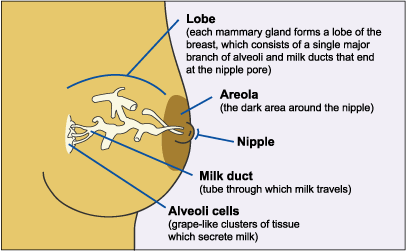
Alveolar cells
There are alveolar cells within the breast that make breast milk. During the latter half of the pregnancy the breasts gear up to make milk after childbirth. A hormone called Prolactin secreted by the pituitary gland in the brain is responsible for the alveoli making milk. Prolactin rises when the baby suckles.
There is another hormone called Oxytocin that causes tiny muscles around the alveoli to squeeze the milk via small tubes called milk ducts. These milk ducts progressively enlarge to end in the nipple and eject the milk from the nipple.
Oxytocin also causes the muscles of the uterus to contract during and after birth. Before childbirth this may induce labour and after childbirth it helps uterus to get back to its original size and reduces the bleeding after childbirth.
Both prolactin and oxytocin help the mother form an emotional bond with her baby.
Further Reading
Last Updated: Jul 13, 2023
 Study links extended breastfeeding to stronger infant immune health