Before the arrival of the baby, a new and first time mother needs to prepare if she wishes to breastfeed her baby. She is provided with information on the benefits and advantages of breastfeeding and is made aware of the disadvantages of formula feeding or artificial feeding.
Some useful guidance and preparations that foster good breastfeeding practices among new and first time mothers include:-
-
Breastfeeding to a large extent depends on willingness and confidence of the mother. Unless she is confident and willing to breastfeed her newborn, initiating this practice is difficult.
-
Good prenatal care, adequate medical care and a healthy balanced diet during pregnancy ensures that the baby is not born with a low birth weight or not born prematurely (before term). A preterm and small baby is more difficult to breastfeed than a term, normal weight baby. Despite this, breastfeeding is possible in the smallest of babies and mothers should be made aware that all babies need mother’s milk as their only nourishment for the initial six months of life.
-
Preparations include joining breastfeeding classes and reading on the methods and techniques of breastfeeding. Although all babies are different and ultimately the mother needs to learn her own baby’s unique ways and cues for feeding, these classes help.
-
Seeking support of the family and partner in fostering breastfeeding.
-
Breastfeeding mothers need to drink plenty of fluids and water. This prevents dehydration. A healthy balanced diet is essential for breastfeeding mothers.
Nipple preparation
Nipple preparation is recommended before the birth of the baby. There are several types of nipples.
Some have a flat nipple where the nipple lies flat against the areola. An inverted nipple means the nipple is pushed inwards rather than protruding outwards. Both flat and inverted nipples make breastfeeding difficult especially initially.
A nipple shield or a breast shell may help mothers with this nipple abnormality. This is a round plastic shell that fits around the breast and creates a moist environment around the nipple to help it protrude to a more normal shape.
It is a myth that nipples need to be hardened before the baby begins breastfeeding. Mothers are advised not to rub any rough cloth or brush over the nipples to harden them. This may cause sore nipples and may cause irritation of the nerves within the nipple leading to contractions of the uterus.
In pregnant women this may lead to a premature labour as well. Nothing (alcohol, petroleum jelly, tincture of benzoin etc.) should be applied over the nipples to harden them. This may irritate the nipples. Soap should not be used over the nipples.
The glands on the nipples normally secrete a substance that helps to keep them clean and moist. Soap and detergents may cause dry skin.
Lactation consultant
After childbirth, the help of a lactation consultant is usually sought to help initiate the techniques of breastfeeding.
In women who have had previous breast surgery or injury, who are suffering from medical ailments, depressive disorder (postnatal depression), initiating breastfeeding may be difficult. The help of a lactation consultant is often warranted.
Initiating breastfeeding as soon as possible
Breastfeeding should be initiated as soon as possible after birth. The sucking instinct of the baby is very strong within the first hour of life.
In addition the mother secretes special yellowish milk called colostrum during the initial few days after childbirth. Colostrum is made in the breast by week 26 of pregnancy. This colostrums is rich is beneficial nutrients and antibodies.
Nursing bras
Using nursing bras, nursing pads and breastfeeding clothes. Breasts are usually fuller and heavier just before and after childbirth and remain heavy if the mother breastfeeds. Supportive bras especially nursing bras help.
Nursing bras have flaps that open out from the center or from below to release the nipple for the baby to latch on. These should be bought and ready for size and comfort before childbirth. The cup should allow a hand within to make room for a little breast growth during nursing.
Breasts may also leak milk in breast feeding mothers. This especially is an emotional response or may occur in the opposite breast as the baby feeds on one.
Nursing pads may help soak up the leaking milk. It is vital that wet pads are changed. Wearing wet pads may cause a raised risk of sore and infected nipples and breasts.
Breastfeeding may be practiced wearing any comfortable clothing. Shirts, t-shirts, sweaters, sweatshirts etc. are usually comfortable for feeding. Special nursing wear are also available at maternity and baby shops.
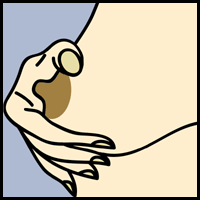
Regular Nipple |
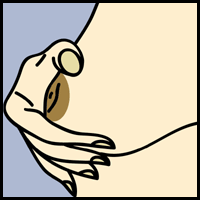
Flat Nipple |
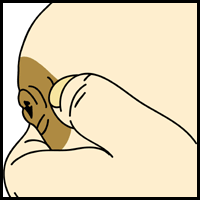
Inverted Nipple |
|
Regular, flat, and inverted nipples
|
Further Reading
Last Updated: Jul 13, 2023
 Breastfeeding and pregnancy linked to improved postmenopausal cognition