Chronic obstructive pulmonary disease (COPD) is a progressive lung disease. It is typically characterized by cough, breathlessness and production of mucus. Emphysema and bronchitis (chronic) may both lead to COPD. In both conditions there is severe lack of oxygen in the air sacs of the lungs.
 |
|
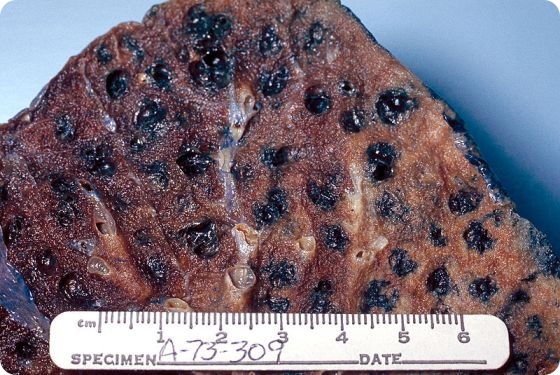
Gross pathology of lung showing centrilobular emphysema characteristic of smoking. Closeup of fixed, cut surface shows multiple cavities lined by heavy black carbon deposits.
|
Pathology
There is gross destruction of the air sacs or the alveoli in emphysema. There is persistent over-inflation that leads to damage to the elasticity of the lungs.
The lungs are like a balloon. In emphysema the lungs are over-inflated so that they lose their elasticity and elastic recoil. There are balloon-like bullae or blisters in the lung tissues. Because carbon dioxide is trapped in the bullae, the body is deprived of fresh air flowing into the lungs.
The lungs begin to cope with this lack of fresh air by taking deeper breaths. This further expands the lung tissues and makes it lose its elasticity. With loss of elasticity more carbon dioxide accumulates in the lungs leaving less space for fresh air and this leads to shortness of breath.
With time the muscles and ribs begin to expand to contain the expanded lungs. The diaphragm that lies beneath the lungs and is normally dome shaped also flattens and lose their functional capacity.
Causes of emphysema and its relation with pathology
One of the most important causes of emphysema is cigarette smoking. Other causes include air pollutants, inhalation of chemicals, fumes, dust etc.
Cigarette smoke changes the structure and function of the lungs by causing irritation and inflammation of the narrow airways. This leads release of enzymes in the lungs that destroy lung tissues and an increased size in the air sacs eventually leading to emphysema. The destroyed lung tissues form bullae (holes) and lose elasticity.
Alpha-1 antitrypsin deficiency is a rare genetic condition where there are decreased levels of the protective protein, alpha-1 antitrypsin. Alpha-1 antitrypsin protects the lungs from the destructive effects of enzymes. Patients who lack this enzyme thus have lungs that are damaged by enzymes called elastases at an early age.
Apart from chronic inflammation caused by irritation there is also a theory of increased oxidative stress that can contribute to increased destruction and/or impaired lung maintenance and repair in emphysema.
The major consequence of the oxidative stress is thought to be the activation of the transcription factor nuclear factor-kB. This in turn activates proinflammatory cytokine transcription that causes destruction of the lungs. Cigarette smoking also inhibits histone deacetylase. This also promotes the release of proinflammatory cytokines.
A theory goes that there is an imbalance between proteases (protein break down enzymes) and antiproteases in emphysema. A delicate balance between protease and antiprotease activity is required for proper lung maintenance. When this balance changes there is increased destruction and inappropriate repair of lungs leading to emphysema.
Further Reading
Last Updated: Jul 8, 2023
 Heated herbal product delivers nicotine with fewer toxins