Fatty liver disease is also referred to as Nonalcoholic Fatty Liver Disease (NAFLD) or Nonalcoholic Steatohepatitis (NASH).
This is a group of conditions where there is accumulation of excess fat deposits over the liver. This fat deposit is also seen among alcoholics.
Non alcoholic fatty liver disease is seen in patients who drink little or no alcohol. The commonest form of Non alcoholic fatty liver disease is termed fatty liver.
Statistics
Fatty liver is a very common disorder and up to 20 percent of adults and approximately 5 percent of children are affected.
One of the common risk factors for this condition is obesity. Nearly two thirds of obese adults and half of obese children are found to have fatty liver.
Nonalcoholic Steatohepatitis – the more severe form of fatty liver – is seen in is around 20% of the obese individuals.
With the rise of obesity over the last couple of decades, there has been a rise in number of individuals with fatty liver.
Pathology
Having some amount of fats over the liver cells is normal and seldom causes damage to the liver. As the disease progresses to Nonalcoholic Steatohepatitis (NASH) there is presence of liver cell inflammation followed by formation scars within the liver tissues.
NASH may eventually lead to liver scarring and cirrhosis that leads to substantial damage to the liver and liver failure.
Causes and risk factors
Some of the risk factors for fatty liver disease include:-
- Obesity
- Diabetes
- Metabolic syndromes that include diabetes, pre-diabetes or insulin resistance, being overweight or obese, having raised blood cholesterol and triglycerides and high blood pressure
Symptoms of fatty liver
Commonly there are no symptoms. There may, however, be some amount of abdominal pain that may be concentrated in the central or right upper part of the abdomen.
There may be fatigue and tiredness in addition.
The liver may be enlarged in some children.
Some patients experience dark discoloration of the skin called acanthosis nigricans that occurs in the neck or in the underarm region.
Diagnosis
Diagnosis is suspected in an obese individual. On blood tests there are mild elevations of the liver enzymes – Aspartate transaminase (AST) and Alanine transaminase (ALT). However, blood tests may also be normal in many cases.
An ultrasound of the abdomen, however, can show the fatty deposits over the liver and confirm the diagnosis.
A more confirmatory test is by taking a small sample of liver tissue from the affected liver. This is called a liver biopsy. The sample is stained appropriately and looked under the microscope. The abnormal fat deposits in the liver cells can be seen under the microscope.
Treatment
Patients are advised to take a healthy balanced diet and regular exercise in order to lose weight and maintain a normal body weight.
They are advised to avoid alcohol and unnecessary medications.
Diabetics and those with other associated conditions like high blood cholesterol, high blood pressure etc. need to be treated individually for the same.
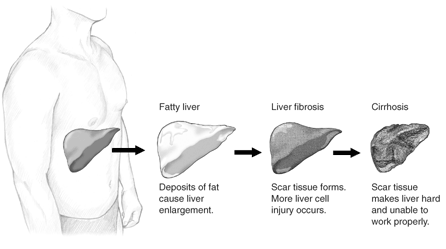
Stages of liver damage. Image Credit: National Institute of Diabetes and Digestive and Kidney Diseases.
Further Reading
Last Updated: Jun 12, 2023
 Patients who stop GLP-1 drugs often restart or try alternatives