Pathology is a branch of medical science primarily concerning the cause, origin, and nature of disease. It involves the examination of tissues, organs, bodily fluids, and autopsies in order to study and diagnose disease.
Currently, pathology can be divided into eight main areas, depending on the types of methods used or the types of diseases examined. These different disciplines are described below.
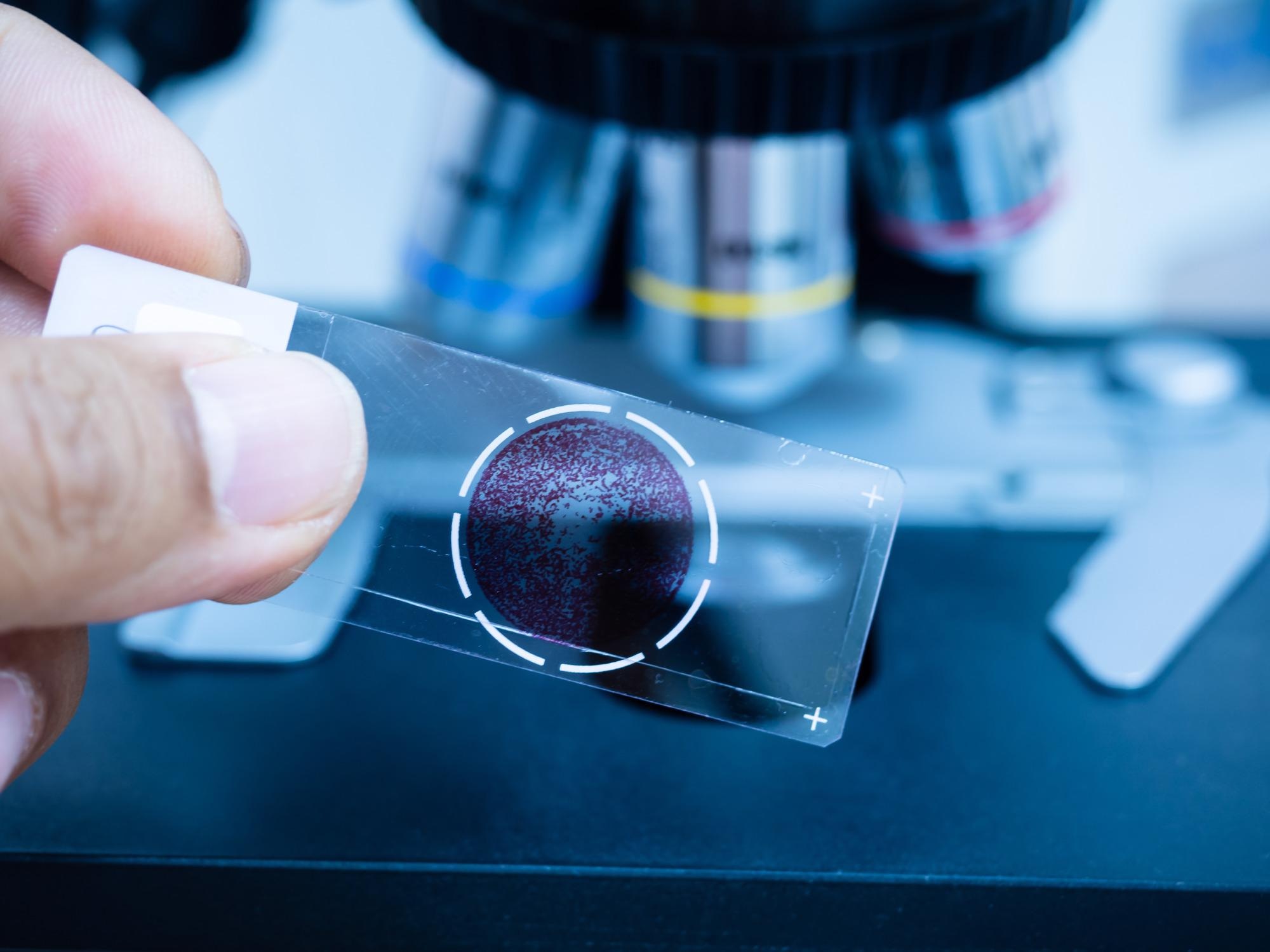 Image Credit: Komsan Loonprom / Shutterstock
General pathology
General pathology describes a complex and broad field that involves the study of the mechanisms behind cell and tissue injury and understanding how the body responds to and repairs injury. Examples of areas that may be studied include necrosis, neoplasia, wound healing, inflammation and how cells adapt to injury. Thorough understanding in these areas is applied in the diagnosis of disease. General pathology is also the term used to describe anatomical and clinical pathology.
This field covers areas of pathology, but at a less specialist level. A person working in general pathology would be trained in the areas of laboratory analysis, such as hematology and clinical chemistry. However, they would have a less detailed knowledge than a person who specializes in one of these fields.
Anatomical pathology
This field is concerned with the study and diagnosis of illness through microscopic analysis of samples from bodily fluids, tissues organs and sometimes the entire body or autopsy. Factors that may be examined include the cell appearance, anatomical makeup and chemical signatures within cells.
This discipline can be subdivided into several disciplines and examples of these are given below:
- Histology – Samples of bodily tissues and organs are prepared and examined in order to detect and diagnose disease. The architecture of tissue is observed at a microscopic level and the relationship between different cell and tissue types is examined.
- Cytology – Bodily fluids and tissues are examined at the cellular level in order to screen for and diagnose disease and help aid treatment decisions. A cytologist will examine how cells look, form and function.
- Forensic pathology – Forensic pathology is the examination of an autopsy in order to discover the cause of death. The external appearance is first assessed to check for evidence of wounds or suffocation, for example. Surgical procedures are then begun and the internal organs are studied to see whether internal injuries exist and are connected to external ones.
Clinical pathology
Also referred to as laboratory medicine, clinical pathology concerns the analysis of blood, urine and tissue samples to examine and diagnose disease. Examples of the information clinical pathology laboratories may provide include blood count, blood clotting and electrolyte results. A clinical pathologist is usually trained in microbiology, hematology or blood banking, but not at the same expert level as someone who specializes in one of these fields.
A clinical pathologist may come across problems that demand specific expertise, at which point they would need to consult a more specialized colleague. Clinical pathologists play a similar role to that of general pathologists, although they would not be involved in anatomical pathology.
Chemical Pathology or Biochemistry
Biochemists or chemical pathologists examine all aspects of disease, identifying changes in various different substances found in the blood and bodily fluids such as proteins, hormones and electrolytes since these changes can indicate and provide clues about disease or disease risk.
For example, a biochemist may assess cholesterol and triglyceride levels in order to determine heart disease risk. They may also look for and measure tumor markers, vitamins, poisons, medications and recreational drugs.
Genetics
There are three main branches of genetics and these include the following:
- Cytogenetics: This is the analysis of chromosomal abnormalities at the microscopic level.
- Biochemical genetics: The search for specific disease markers using biochemical techniques.
- Molecular genetics: Gene mutations are searched for and analyzed using DNA technology.
Genetics involves performing tests on chromosomes, biochemical markers and DNA taken from bodily fluids and tissues in order to detect genetic illnesses.
Hematology
This field is concerned with various different disease aspects that affect the blood, including bleeding disorders, clotting problems, and anemia, for example. Another area of hematology is transfusion medicine, which involves performing blood typing, cross-matching for compatibility and managing large amounts of blood products. An example of a test a hematologist may perform is a blood clotting test to check whether a patient’s dose of warfarin needs increasing or decreasing.
Immunology
Immunologists perform immune function tests to establish whether or not a patient is suffering from an allergy and if so, what they are allergic to. Many diseases also arise as a result of the immune system having an abnormal reaction to healthy cells or tissues and launching an immune attack against them. This is referred to as a autoimmune disease. There is a range of immunological tests that can detect markers of autoimmune diseases such as rheumatoid arthritis, diabetes and lupus.
Microbiology
Microbiology is concerned with diseases caused by pathogenic agents such as bacteria, viruses, parasites and fungi. Samples of blood, bodily fluid and tissue are tested to establish whether infection exists, and the field of medical microbiology is also engaged with identifying new species of microorganisms.
Other areas encompassed by microbiology include control of infection outbreaks and researching the problems resulting from bacterial antibiotic resistance. One of the principal roles of the microbiologist is to make sure that antimicrobial drugs are prescribed and used appropriately.
Sources
- http://www.cartercenter.org/resources/pdfs/health/ephti/library/lecture_notes/health_extension_trainees/GeneralPathology.pdf
- https://peoria.medicine.uic.edu/
- http://www.uhs.nhs.uk/OurServices/Pathology/Pathology.aspx
- https://www.cma.ca/
- https://www.ibms.org/home/
Further Reading
Last Updated: Jul 21, 2023
 Elusive stem cells offer clues to treat lumbar spinal stenosis