Introduction
Visual Signs of Scoliosis in Young Children
Visual Signs of Scoliosis in Infants
Other Scoliosis Symptoms in Adults
Diagnostic Tests for Scoliosis
References
Scoliosis is characterized by a curved spine in the shape of an “s” or a “c”, which can affect the posture and movements of people affected by the condition.
Most patients do not experience significant back pain upon initial presentation but notice visual signs of asymmetry in their body that relate to the curvature of their spine. However, back pain or discomfort is more common among patients in adulthood with chronic scoliosis.
In addition to the visual signs, several tests can be used to identify abnormalities of movement and position of the body that is common in patients with scoliosis.
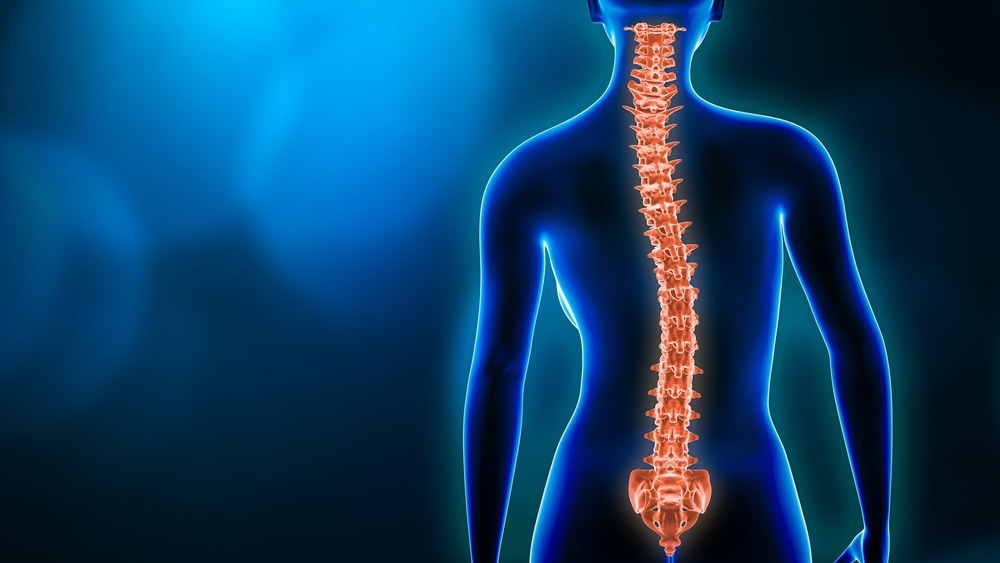
Image Credit: MattLphotography/Shutterstock.com
Visual Signs of Scoliosis in Young Children
The most common sign indicative of the condition that patients report is asymmetry of the body, which results due to the curvature of the spine. This may include:
- Uneven shoulders
- Off-center head over the pelvis
- Asymmetrical ribs and ribcage
- One more prominent shoulder blade
- Asymmetrical hips
- Leaning to one side
- Legs with different lengths
As a result of this subtle asymmetry, patients with scoliosis may find it challenging to fit into clothing as usual and that their body doesn’t feel as balanced as usual.
Visual Signs of Scoliosis in Infants
Diagnosis of scoliosis in infants is not as common as for young children and adolescents; however, the visual signs are essential to recognize. They may include:
- A bulge on one side of the chest
- Always lying in a curved position on one side
- Shortness of breath and chest pain
- Malfunction of heart or lungs in severe cases
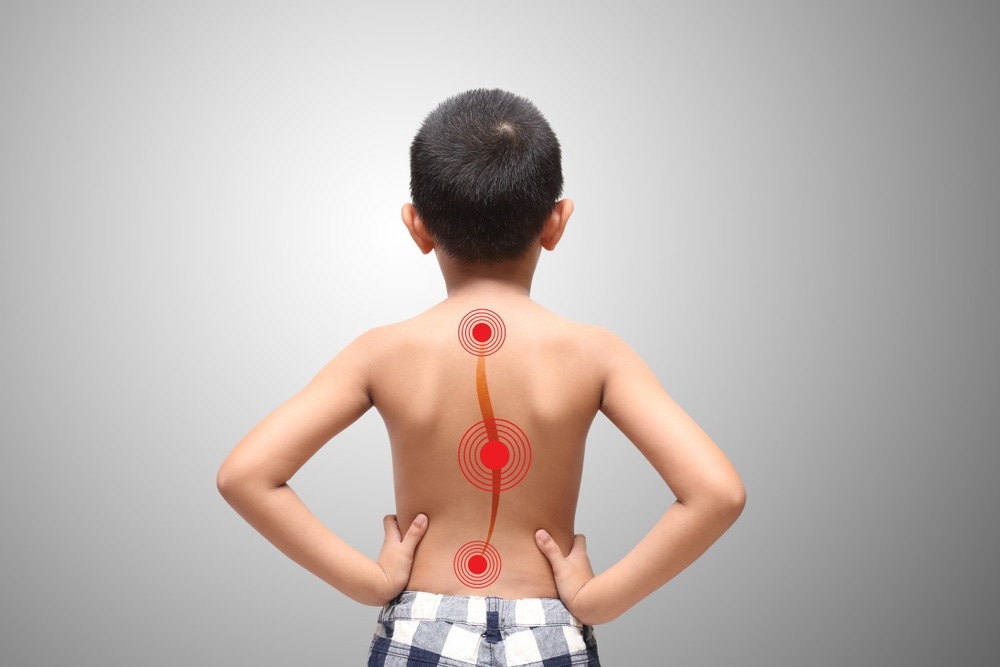
Image Credit: jeffy11390/Shutterstock.com
Other Scoliosis Symptoms in Adults
Unlike children and adolescents, who rarely note symptoms of pain or discomfort associated with scoliosis, adults may also experience some other symptoms.
As a result of the curvature of the spine, many adults report lower back pain and stiffness in the area. Occasionally numbness or cramping in the legs may also occur. Sharp pain in the legs due to nerve damage in the spine may also affect some individuals.
Diagnostic Tests for Scoliosis
Thoracic, thoracolumbar, lumbar paraspinal, and thoracic cavity prominences may be evident in patients with scoliosis due to the abnormal vertebral rotation and spinal curvature associated with the disease.
Adams’ forward bend test can help view these changes and identify people that may be affected by scoliosis. The patient is asked to bend forward from the waist, highlighting paraspinal and rim prominences. This test is commonly used as a screening tool to identify people that may need further testing to establish if scoliosis is a probable cause.
If a positive result from the Adams’ forward bend test needs further investigation, a scoliometer can be used to quantify the degree of the paraspinal prominences. If an individual measures more than 5° for either the thoracic or lumbar prominence, further investigations should be commenced as the patient may require interventions to manage the presenting symptoms.
References:
- Scoliosis: Treatment, symptoms, and causes (2022). Available at: https://www.medicalnewstoday.com/articles/190940 (Accessed: 4 August 2022).
- Scoliosis (2017). Available at: https://www.nhs.uk/conditions/scoliosis/ (Accessed: 4 August 2022).
- Ali Baaj, M. (2022) Scoliosis Symptoms, Spine-health. Available at: https://www.spine-health.com/conditions/scoliosis/scoliosis-symptoms (Accessed: 4 August 2022).
Further Reading
Last Updated: Aug 10, 2022