The thalamus is a small structure within the brain located just above the brain stem between the cerebral cortex and the midbrain and has extensive nerve connections to both. The primary function of the thalamus is to relay motor and sensory signals to the cerebral cortex. It also regulates sleep, alertness, and wakefulness.
Location of the thalamus
The brain is comprised of ventricles or fluid-filled spaces. The thalamus surrounds the third ventricle. It is a subdivision of part of the brain called the diencephalon and is one of the largest structures derived from the diencephalon during embryonic development.
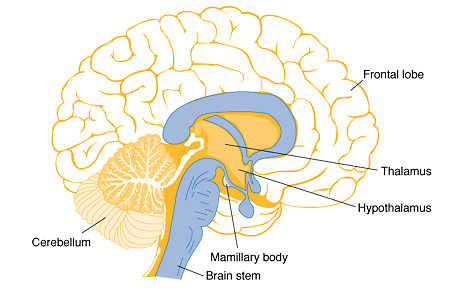
Brain regions
Also located in the diencephalon are the epithalamus and the perithalamus, which contain regions called the zona incerta and the reticulate nucleus. These are distinct from the thalamus proper.
The thalamus lies at the top of the brain stem near the center of the brain, from where nerve fibers project out towards the cerebral cortex. The thalamus is divided into two prominent bulb-shaped masses of around 5.7 cm in length and positioned symmetrically on each side of the third ventricle.
The thalamus is supplied with blood by four branches of the posterior cerebral artery, namely the polar artery, paramedian thalamic-subthalamic arteries, thalamogeniculate arteries and the posterior choroidal arteries.
Within the thalamus lie myelinated nerve fibers called lamellae that separate the structure into individual parts. Distinct groups of neurons make up other parts such as the periventricular, the nucleus limitans, and the intralaminar elements collectively called the allothalamus. The allothalamus differs in structure form the major part of the thalamus called the isothalamus.
Further Reading
Last Updated: Dec 22, 2022