Bronchitis refers to the inflammation, irritation and infection of the main airways of the lungs. These main airways are generally termed bronchi.
The main symptom is a cough that may produce yellow-grey phlegm or sputum. Additionally there may be symptoms including sore throat, wheezing, blocked sinuses and nose.
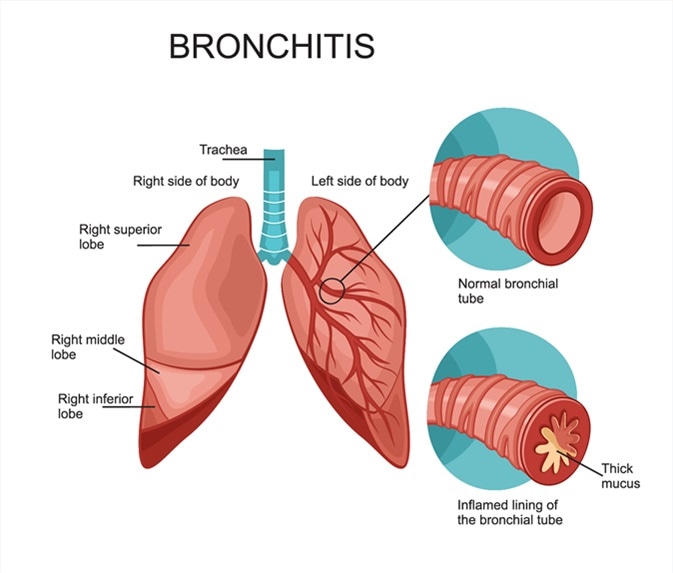
Bronchitis. Image Credit: logika600 / Shutterstock
Acute bronchitis
Acute bronchitis is one of the commonest types of lung infection that leads to a visit to the general physician. It is more common and deadly in children under the age of five and in elderly over the age of 50 years. It is more common in winter and may come after a bout of flu.
Pathology of bronchitis
Bronchitis occurs when there is swelling of the lining of the large airways called bronchi within the lungs. This swelling due to inflammation, irritation and infection leads to more mucus formation than normal. This blocks the airflow through the lungs and may damage the lung eventually.
Types of bronchitis
There are two basic types of bronchitis:-
- Acute bronchitis – This lasts for 2 to 4 weeks and is usually responsive to therapy
- Chronic bronchitis – This is a different entity and leads to long term damage to the inner walls of the airways in the lungs. This is part of a group of lung diseases called chronic obstructive pulmonary disease or COPD. This is a progressively worsening condition that cannot be cured.
What Is Bronchitis?
Symptoms of bronchitis
- A frequent cough
- Tiredness and fatigue
- Wheezing and noisy breathing
- Shortness of breath
- Chest pain accompanying coughing and deep breathing
- Fever with chills and body ache
- Sore throat
- Stuffy or runny nose with or without stuffy sinuses and headache
Red flags that need immediate attention include severe cough that lasts longer than three weeks, constant fever for more than three days, cough that brings up mucus streaked blood etc.
Those who have an underlying heart or lung condition e.g. heart failure or asthma; also need attention if bronchitis is suspected.
Causes of bronchitis
There are a range of causes that are responsible for both acute and chronic bronchitis. While acute bronchitis is most commonly caused by bacterial or viral infections, chronic bronchitis may be caused by other irritants as well.
Causes of bronchitis thus include:–
- Bacterial or viral infections
- Smoking
- Air pollutants, dust, smoke, chemicals etc.
- Lung disease such as asthma or emphysema
Treatment of bronchitis
Acute bronchitis is completely curable and often clears up on its own within a few weeks without the need for treatment.
The patient is advised antibiotics if the cause is bacterial and is advised rest and plenty of fluids.
In some cases the symptoms of bronchitis can last much longer. Symptoms persisting over three months are indicative of chronic bronchitis. These patients need to stop smoking if they do and they are treated with bronchodilators that dilate the narrowed airways and relieve the symptoms.
Complications of bronchitis
Pneumonia is the most common complication of bronchitis. It may occur if the infection spreads into the lung tissues causing air sacs inside the lungs to fill up with fluid. One in 20 cases of bronchitis leads to pneumonia. Chronic bronchitis also makes a person susceptible to pneumonia.
Further Reading
Last Updated: Jun 21, 2023
 New database transforms evidence-based care for children with lower respiratory tract infections