Eating disorders are a type of serious mental health condition characterized by severe disturbances in eating behaviors and related thoughts and emotions. Typically, people with ED develop an unhealthy preoccupation with food and body size, weight or shape. The most recent version of the Diagnostic and Statistical Manual of Mental Disorders (DSM-V) recognizes four sub-categories of eating disorders:
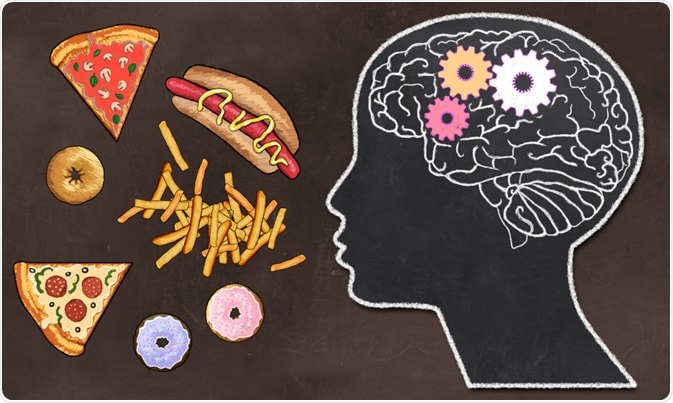 Image Credit: T. L. Furrer/Shutterstock.com
Anorexia nervosa (AN)
Anorexia nervosa is characterized by restriction of food intake leading either to weight loss or failure to gain weight, such that it results in a significantly low body weight according to one’s age, sex and height. It is accompanied by a distorted body image and an obsessive fear of gaining weight. The most recent version of the DSM identifies two sub-categories of AN:
‘Restricting type’ whereby many restrictions are placed upon food intake and may be accompanied by rigid food rules.
‘Binge-purge type’ whereby the person experiences regular incidents of binge-eating followed by purging by self-induced vomiting, use of laxatives or excessive exercise.
Bulimia nervosa (BN)
Bulimia nervosa is characterized by regular and uncontrolled short episodes of over-eating followed by methods of purging. People with BN report feeling unable to stop or prevent the episodes of bingeing, which can occur between several times a week to many times per day. People with BN may maintain a normal or above-normal body weight, and as such, this differentiates BN from binge-purge type AN.
Binge eating disorder (BED)
Binge eating disorder is characterized by frequent periods of excessive overeating, often when not hungry, followed by intense feels of shame, self-disgust and depression similarly to bulimia nervosa. Episodes of bingeing are not, however, followed by episodes of purging although sufferers may engage in sporadic and repetitive diets.
Other eating disorders
This is a category used to recognize and classify other constellations of eating disorder symptoms that do not fit into the above three categories, this term combines OFSED and UFED and replaces the previous category of ‘eating disorder not otherwise specified’ in the DSM-IV. This group includes:
Other specified feeding or eating disorder (OSFED)
A term used when an individual displays eating disorder symptoms but does not reach the threshold for clinical diagnosis. Examples may include a person with all the symptoms of anorexia nervosa but without low body weight, or a person with the symptoms of bulimia who does not binge, and purge as frequently as expected.
Unspecified feeding or eating disorder (UFED)
This category might be used to classify behaviors that cause clinically significant distress or reduction in functioning, but do not meet the criteria of any other eating or feeding disorders.
Pica
Pica is the diagnosis given to an individual who repeatedly consumes non-food materials such as chalk or paper, or edible items of no nutritional value such as ice, for more than a month.
Rumination disorder
Rumination syndrome or rumination disorder is a diagnosis whereby food that has been consumed and swallowed by an individual is regurgitated painlessly and without effort. Regurgitated food may be re-swallowed, re-chewed or spat out. The regurgitation is not caused by a gastrointestinal disorder.
Avoidant restrictive food intake disorder (AFRID)
DSM-5 diagnoses AFRID as a feeding or eating disturbance which results in a persistent failure to consume enough to satisfy energy and/or nutritional needs.
What complications are associated with eating disorders?
Eating disorders are complex and severe conditions that can lead to serious health complications and death. Mortality rates from eating disorders vary between studies depending on the classification of eating disorder, cause of death and the presumption of causality from the disorder and length of follow-up.
One large prospective study followed people with anorexia nervosa over thirty years and obtained mortality information from a national registry. It concluded that people with AN have a six-fold increase in mortality and are more likely to die from natural causes such as cancers.
Severely restricting caloric intake causes the body to consume muscle tissue for fuel, including heart tissue. As the heart has less fuel and fewer cells to power the circulatory system, pulse rate and blood pressure drop which increases the risk of heart failure. Additional complications include disturbances of the endocrine system, leading to amenorrhea, osteoporosis and insulin resistance, and gastric problems including gastroparesis, constipation or pancreatitis.
What risk factors are associated with eating disorders?
The risk of developing an eating disorder can stem from a wide range of interacting psychosocial, biological and social factors which increases the heterogeneity of experiences and symptoms that people with eating disorders experience. However, research has identified several broad factors that can influence the propensity to develop an eating disorder.
Biological factors
Genetic research has established the familial nature of AN, with those with a first degree relative with AN having a ten-fold greater lifetime risk of developing the disorder. Twin studies have estimated the heritability of AN at 50-60%. Attempts to identify specific genes which might be implicated in the risk of AN have been less successful, although more recent genome-wide association studies have shown genetic correlations between AN and other psychiatric disorders. However, genetic studies of other types of eating disorders are scarce.
Other biological risk factors include a strong correlation between the development of binge eating disorder and a history of dieting, and insulin-resistant diabetes and eating disorders.
Psychological factors
Certain psychological traits including perfectionism and cognitive-behavioral inflexibility are associated with the risk of developing an eating disorder. Specifically, setting unrealistically high expectations of oneself and an inability to adapt to unexpected conditions.
Eating disorders are also highly comorbid with anxiety disorders, particularly specific phobias and social anxiety. Interestingly, social anxiety is most closely associated with BN and BED, with both eating disorders sharing similar cognitive styles such as fears of social evaluation and inflexible appraisals of social situations.
Eating disorders: a mental illness, not a lifestyle choice | Viveca Lee | TEDxMcGill
Treatment for eating disorders
Eating disorders can be effectively treated. The earlier they are detected, the easier it is to treat them. Recovery can take months or years, but the majority of people recover. Once diagnosed, treatment is a multidisciplinary approach.
The health care providers involved include psychiatrists, psychologists, physicians, dieticians or nutritional advisers, social workers, occupational therapists and nurses.
Treatment includes diet education and advice, psychological interventions and treatment of concurrent mental ailments like depression and anxiety disorders.
References
- Arcelus J, Mitchell AJ, Wales J, Nielsen S. Mortality Rates in Patients With Anorexia Nervosa and Other Eating Disorders: A Meta-analysis of 36 Studies. Arch Gen Psychiatry. 2011;68(7):724–731. doi:10.1001/archgenpsychiatry.2011.74
- Arlt, J., Yiu, A., Eneva, K., Taylor Dryman, M., Heimberg, R. G., & Chen, E. Y. (2016). Contributions of cognitive inflexibility to eating disorder and social anxiety symptoms. Eating behaviors, 21, 30–32. https://doi.org/10.1016/j.eatbeh.2015.12.008
- Himmerich, H., Bentley, J., Kan, C., & Treasure, J. (2019). Genetic risk factors for eating disorders: an update and insights into pathophysiology. Therapeutic advances in psychopharmacology, 9, 2045125318814734. https://doi.org/10.1177/2045125318814734
- Nationaleatingdisorders.org. 2020. What Are Eating Disorders?. [online] Available at: <https://www.nationaleatingdisorders.org/what-are-eating-disorders> [Accessed December 2020].
- Papadopoulos, F. C., Ekbom, A., Brandt, L., & Ekselius, L. (2009). Excess mortality, causes of death and prognostic factors in anorexia nervosa. The British journal of psychiatry : the journal of mental science, 194(1), 10–17. https://doi.org/10.1192/bjp.bp.108.054742
- Redgrave, G. W., Coughlin, J. W., Heinberg, L. J., & Guarda, A. S. (2007). First-degree relative history of alcoholism in eating disorder inpatients: relationship to eating and substance use psychopathology. Eating behaviors, 8(1), 15–22. https://doi.org/10.1016/j.eatbeh.2006.01.005
- Sardar, M. R., Greway, A., DeAngelis, M., Tysko, E. O., Lehmann, S., Wohlstetter, M., & Patel, R. (2015). Cardiovascular Impact of Eating Disorders in Adults: A Single Center Experience and Literature Review. Heart views : the official journal of the Gulf Heart Association, 16(3), 88–92. https://doi.org/10.4103/1995-705X.164463
Further Reading
Last Updated: Mar 16, 2021
 Germany launches new training to help doctors recognize eating disorders in men