Sexually transmitted diseases (STDs) are infections that can be transmitted through sexual contact with an infected individual. These are also termed sexually transmitted infections or STIs. STDs can be transmitted during vaginal or other types of sexual intercourse including oral and anal sex, but some are acquired simply by skin-to-skin contact.
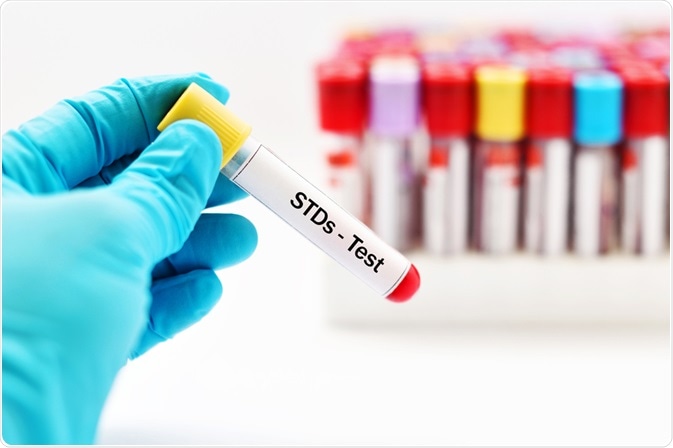
Image Credit: Jarun Ontakrai/Shutterstock.com
About 20 million new STDs occur in the US each year, about half between 15 and 24 years of age, in 2008. STIs cost the nation about $16 billion in just direct medical costs, leaving out the burden of suffering, loss of productivity and other indirect costs.
Moreover, the STD prevalence of 110 million infections in 2008 reflects only a low estimate since many individuals have multiple STDs at the same time and multiple episodes of one STD, as well as infection with multiple strains of the same organism simultaneously.
What causes STDs?
STDs can be caused by over 20 different types of organisms, including
- Viruses such as HIV, hepatitis B, herpes simplex and human papillomavirus (HPV)
- Bacteria such as gonorrhea, chlamydia, and syphilis
- Parasites like Trichomonas
Who is at risk?
Both males and females are at equal risk for STDs but the complications are often more serious for women, including pelvic inflammatory disease (PID), infertility and pregnant women, fetal defects. Chlamydia and gonorrhea can cause female sterility if not treated, and any STD increases the chances of getting HIV.
The primary risk factor for an STD is unprotected sexual intercourse or contact. It is important to know that all people with an STD do not have symptoms. The highest risk is for certain groups which include:
- Those with multiple sex partners, or whose partners have sex with multiple others
- Individuals in non-monogamous relationships who do not use condoms during sex and their partners
- History of STI
- Commercial sex workers
- Drug abusers, especially those who drink and use injectable drugs, because they tend to practice high-risk sexual behavior
- Young people who account for 50% of all cases of STIs
- Men on drugs for erectile dysfunction
- Children of infected mothers through vertical transmission
Symptoms of STDs
The symptoms of STDs vary with the type of infection, but they commonly include:
- Discharge from the penis or vagina.
- Itching around the genitalia.
- Pain experienced during sexual intercourse or while urinating. The pain may be of a stabbing or burning nature or dull pain in the pelvic area.
- Chancre sores due to syphilis are typically painless, red sores present around the genital area, anus, mouth, tongue or throat.
- Pain in and around the anus. Similarly, there may be sores and pain in the mouth in those who have oral sex with an infected person.
- There may be blisters around the genital area that turn into scabs.
- There may also be soft, flesh-colored warts around the genital area.
- There may be a scaly rash over the palms of the hand and soles of the feet or the trunk.
- In the case of hepatitis, urine may appear dark and stools light and chalky color. The whites of the eyes, nail beds and skin may also become a yellowish color.
- General symptoms of some STIs include fever, weakness, body and muscle aches and swollen lymph nodes.
- In people with HIV infection that has progressed to AIDS, weight loss, recurrent infections, night sweats, and tiredness may be present.
Depending on the type of infection, the STD may present either soon after exposure, within a few days, or may take years to manifest.
Complications of STDs
People with STDs may experience complications like:
- Pain in the pelvis
- Pregnancy complications including miscarriage, stillbirths and fetal anomalies
- Inflammation of the eyes, joints
- Heart and blood vessel disease
- Infertility
- PID
- Cancer of the cervix, throat, rectum and other areas due to HPV infection
Diagnosis and treatment
Individuals with high-risk sexual behavior or STD symptoms need to be screened for STDs. Untreated infections may have long-term severe consequences and are also transmitted to the partners. Proper management involves preventing further spread by tracing and treating all the partners involved.
The most reliable way to prevent STDs is to abstain from sexual activity unless with one faithful uninfected partner.
High-risk sexual behavior is an open invitation to STDs. Thus, for those who insist on having promiscuous sex, both partners should have been tested for STDs before having sex before each new relationship. Condoms for anal or vaginal sex, with a dental dam for oral sex, are also necessary for this situation.
Some governments recommend preventive pre-exposure vaccination before the start of sexual activity, for HPV, hepatitis A and hepatitis B. The first is recommended for girls and boys at age 11 and 12, respectively, and if not completed at this time, by age 26.
Other recommendations include male circumcision to help prevent getting HIV, genital HPV and genital herpes from an infected woman. Alcohol and drug use should be avoided at all costs when in a situation that may lead to sexual contact, as these make high-risk behavior much more likely.
Pre-exposure prophylaxis (PrEP)using specific drugs is also approved for people who are at extremely high risk for HIV transmissions such as men who have sex with men and commercial sex workers or their clients. Such drugs must be taken daily unless sexual behavior is modified to safe patterns. PrEP prevents only HIV and other precautions must be taken as usual to avoid other STIs.
Some STDs aren’t curable such as HIV and herpes, so both partners should know and decide their course of action ahead of time if either has these conditions. With treatable STDs, the full course should be completed, avoiding any sexual contact until then. There should be no contact with an untested, possibly infected, partner following treatment.
With the availability of sexual health clinics, it is time for all who have put themselves at risk of STIs to go for screening, get tested if necessary according to the health care provider’s advice, and stop acting irresponsibly about their sexual health, that of others, and even the health of unborn generations.
Updated on 30th March 2020 by Dr. Liji Thomas
Further Reading
Last Updated: Jul 18, 2023
 Plant-based diets may help prevent erectile dysfunction