May 17 2005
Researchers have found that drinkers seemed to lose the urge to binge-drink when they took pills made from the plant kudzu. Experts say the groundbreaking discovery may lead to a way to attack the rising binge-drinking problem which is especially prevalent among young people.
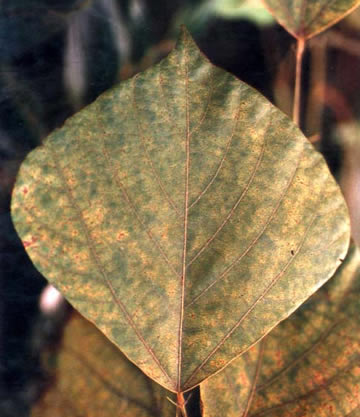
Not surprisingly, Scott Lukas, a researcher with Harvard-affiliated McLean Hospital, found plenty of volunteers for the study, which meant them hanging out in an "apartment," complete with television, recliner and a fridge stocked with beer.
The apartment-style laboratory was set up in the hospital, and the volunteers were told to spend a 90-minute session drinking beer and watching TV.
The researchers found that those who took kudzu pills drank an average of 1.8 beers per session, compared with the 3.5 beers consumed by those who took a placebo.
Although Lukas is uncertain why, he suspects that kudzu increases blood-alcohol levels and speeds up its effects, and the drinkers needed fewer beers to feel drunk.
Lukas says the only theory they have at present is that the rapid infusion of alcohol satisfies them and takes away their desire for more alcohol.
In research in 2003, David Overstreet and other researchers at the University of North Carolina-Chapel Hill, studied the plant and found it had a similar effect on rats.
Overstreet says there is a lot of anecdotal evidence from China that kudzu may be useful in respect to alcohol, but this is the first documented evidence that it could reduce drinking in humans. He describes the study and Lukas' work as "groundbreaking."
The 14 men and women chosen for the study were people who regularly had three to four drinks a day. After all of them spent a 90-minute session drinking and watching TV, they were divided in two groups for follow-up sessions.
Several forms of plant estrogen was extracted from the roots, stems and leaves of kudzu by a chemist, and used to make tablets. One group was given two tablets three times a day for a week, and the other group was given placebos.
After another round of 90-minute beer-drinking, the placebo group was given the kudzu tablets and vice versa.
Lukas hid a digital scale inside an end table where the subjects were told to rest their beers, and surreptitiously weighed the mugs of beer every time they took a drink, this enabled the team to get a sip-by-sip analysis of the drinking behaviour of the groups.
None of the test subjects suffered any side effects, and Lukas says the treatment appears perfectly safe. Some individuals reported feeling a little more tipsy or light-headed, but not enough to make them walk into walls or stumble and fall.
Kudzu will probably not turn drinkers into teetotallers, but Lukas hopes it may help heavy drinkers to cut back and bring them closer to being able to cut down completely.
Lukas' study was inspired by Dr. Wing Ming Keung, a pathology professor at Harvard Medical School, who has studied the potential medical applications of kudzu.
Keung has extracted a compound from kudzu root that he hopes to turn into a drug for reducing alcoholics' cravings.He says there is an urgent need to help people who cannot help themselves, and who need a drug to help them stop drinking.
The study is published in this month's issue of Alcoholism: Clinical and Experimental Research.
 Study reveals DNA methylation score that better detects alcohol intake than standard biomarkers