Sponsored Content by PittconJan 14 2016
Please can you give a brief overview of the variety of functions neuropeptides perform in the brain?
The scope of the activity of neuropeptides is remarkably broad. For example, neuropeptides are involved in pain control, mood/depression/eating disorders, social and emotional behaviour, body weight, drug abuse, stress, reproduction, motor control, memory, and in maintaining neuronal health when they are stressed.
How much is known about the production of neuropeptides and their interactions with neuron receptors?
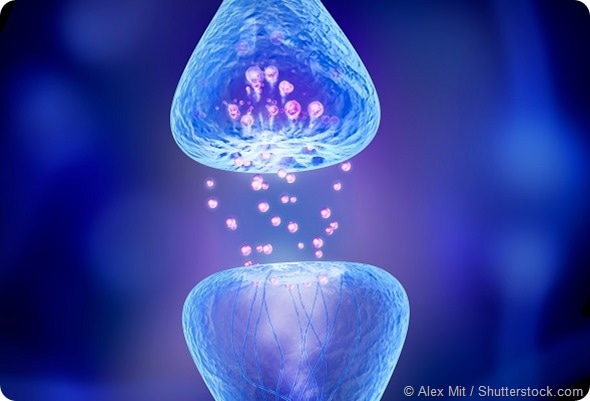
There is quite a bit known about how neuropeptides are produced, packaged, and released. Peptides are synthesized as much larger proteins called prepropeptides. These proteins typically contain the sequences of multiple peptides that are carved out of the propeptide (having lost the “pre” portion) by enzymes.
There is also a considerable amount known about receptors – their selectivity for certain peptides and the machinery that creates an effect inside the cell from binding to a peptide outside the cell.
Functions of Neuropeptides on the Brain
Functions of Neuropeptides on the Brain from AZoNetwork on Vimeo.
Why has little research been carried out on the fate of peptides in the extracellular space so far and how do you hope to change this?
It’s hard to do the measurements for one thing. For another, and this is not a criticism, experimental science gets its most crisp answers from the least complex systems.
Investigating the enzymes that hydrolyze peptides in a beaker provides the kinetic picture in some detail. This would be hard to do in intact tissue.
However, in tissue cultures (where we have worked) and in vivo (where we are going to work soon), there are many factors other than the kinetics of the enzyme reaction that govern the lifetime of a peptide in the extracellular space including how much enzyme is present and the local characteristics of the extracellular space governing the ability of the peptide to diffuse.
We hope to provide methods that can determine the lifetime of particular peptides in the extracellular space with good spatial resolution (few hundred micrometers), and most importantly measure changes in peptide fate caused by pathological events, drugs, etc.
What are ectopeptidases and why is it important to study their activity?
Ectopeptidases are integral membrane enzymes with the active site facing the extracellular space. They are generally regarded as nature’s paper shredder, hydrolysing peptides so that their effects remain fairly close to where they were released.
But sometimes hydrolysis leads to a peptide with an activity that is different from the original peptide. And there are perhaps half a dozen papers that demonstrate changes in peptide fate in experimental animals following some “treatment”.
We think that ectopeptidases play a more profound role in defining the activity of peptides in the brain.
Can you please outline the method you have developed to determine the activity of ectopeptidases?
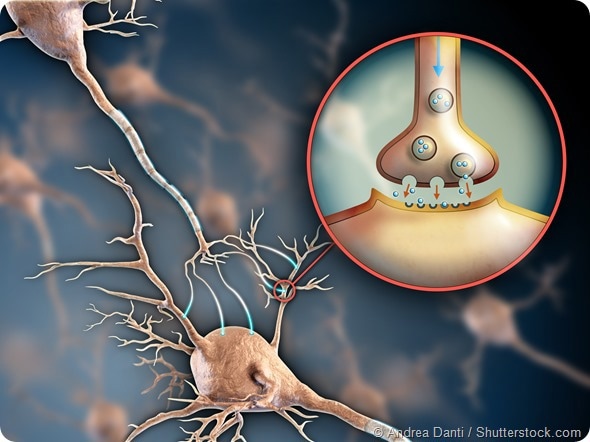
We use an electrical current to push a neuropeptide-containing fluid through the very small paths between cells, the extracellular space. The current-induced flow is called electroosmosis. It is easier to control than using pressure and it causes fluid to pass through wide and narrow paths whereas pressure-induced flow vastly favors large paths.
The solution also contains a d-amino acid analogue of the peptide which is not hydrolysed. We collect the fluid and measure the concentrations of the products of ectoenzyme activity on the peptide.
We have used an online analysis using capillary electrophoresis on a chip as well as offline analysis using capillary liquid chromatography.
What has this method revealed about the activity of different ectopeptidases?
We demonstrated that aminopeptidase N is active in a certain region of the hippocampus. This ectopeptidase inactivates leucine enkephalin (as well as other enkephalins, dynorphins, and endorphins).
We just reported at the most recent meeting of the Society for Neuroscience that there is a difference in the activity of this ectopeptidase in two adjacent regions of the hippocampus. This may help to explain a long-standing observation about the relative susceptibility of these two regions to oxidative stress.
Also, we were drawn into an interesting problem when seeking to understand the ectopeptidase g-glutamyl transpeptidase. To make a long story short, we discovered that the degradation of the famous biomolecule coenzyme A (CoA) was poorly understood, and that we were able to measure a degradation product, cysteamine.
In addition, an ectoenzyme called panthetheinase was involved in the degradation of CoA. So we quantitatively characterized the extracellular degradation of CoA for the first time.
In what ways is the current method limited?
We currently use brain tissue cultures. The limitation is that there is no blood flow, and of course it is a culture, not a whole brain. We have plans to do this experiment in vivo. Our spatial resolution is pretty good, but the throughput is poor – it takes a long time to get an answer for one peptide.
How close are you to improving the throughput of this measurement and what impact will this have?
We are very close – we now have a mass spectrometer to go with our capillary separations for analysis. Thus we will be able to determine the fates of multiple peptides at the same time and to more thoroughly determine what the distribution of hydrolytic products is – remember, some products have biological activity, so this is important.
What do you think the future holds for studying ectopeptidase activity?
Ectopeptidases themselves have been studied for a long time. The literature is very confusing because essentially the same enzyme may have been discovered in different organs and at different times resulting in several names for the same or almost the same molecule. And these are membrane-bound enzymes making characterization difficult.
Finally, they are not particularly selective and inhibitors are not particularly selective. Fortunately, thanks to modern biochemical techniques, some order is arising. In particular the MEROPS (http://merops.sanger.ac.uk/) site is very helpful. (I have no association with this site.)
So, more than ever before, specific questions can be asked. With our techniques and others that might be developed we should be able to determine what sort of “treatments” lead to changes in ectopeptidase activity that may be beneficial to brain health.
What Pittcon Can do for You
What Pittcon Can do for You from AZoNetwork on Vimeo.
Where can readers find more information?
I will describe our approach and results in a presentation at Pittcon in a symposium on Thursday, 10 March 2016, entitled “Overcoming obstacles to making measurements in the brain”.
The symposium is about the fact that analysis of living systems requires taking samples from animals, tissues, or cells. Usually this requires recognizing and adapting the analysis to minimize the perturbation created by the measurement itself. This is the definition of good analytical chemistry, of course.
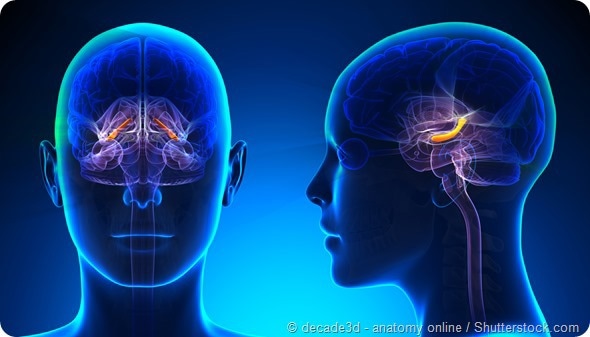
In my presentation, I will describe our efforts to make accurate measurements in this challenging environment. I will also talk about our results in which we contrast the fate of the neuroprotective leucine-enkephalin in two small regions of the hippocampus which is important in learning and memory.
The two small regions react very differently to being deprived of oxygen and glucose (e.g., stroke, injury). We think that ectopeptidases, at least aminopeptidase N, are important in this difference of susceptibility to an insult.
About Professor Stephen Weber
Stephen Weber is Professor of Chemistry and Clinical Translational Science at the University of Pittsburgh.
He received his PhD in 1979 from McGill University for theory and application of the electrochemical detector.
His research encompasses analytical separations theory and application as well as chromatographic detection/quantitation in bioanalytical chemistry, especially neurochemistry.
About Pittcon
Pittcon is North America’s largest conference and exposition in laboratory science, attracting thousands of industry, academia, and government attendees and exhibitors from around the world in. Pittcon goes beyond the typical conference; it's a global community dedicated to advancing science through education, collaboration, and philanthropy. By bringing together scientists, researchers, educators, students, and industry leaders, Pittcon creates opportunities to learn, connect, and inspire innovation. Beyond the event itself, more than 90% of Pittcon's net proceeds support science education and outreach initiatives locally and globally, funding scholarships, grants, STEM programs, laboratory improvements, and other efforts that strengthen communities and expand access to science.
Pittcon delivers world-class educational and professional development opportunities through its Technical Program, Short Courses, and Networking Workshops and Roundtables. Attendees can explore the latest scientific research through symposia, oral and poster presentations, enhance their skills with expert-led deep-dive courses, and connect with peers through interactive workshops and networking experiences designed to foster collaboration and career growth.
The Pittcon Expo brings the scientific community together in an immersive environment where attendees can discover the latest laboratory technologies, meet with leading instrument and service providers, and experience science in action. Beyond the exhibit booths, the Expo Floor features engaging attractions, educational experiences, demonstrations, and networking spaces, while receptions, parties, and social events create opportunities to build lasting connections with colleagues from around the world.
 The Surgeon-Scientist Pioneering Regenerative Engineering