Blood clotting or coagulation is a normal but complex bodily process that is designed to prevent bleeding in response to an injury or cut. However, sometimes a blood clot can form in critical locations such as the heart, lung or brain and can cause serious complications if they are not treated in time.
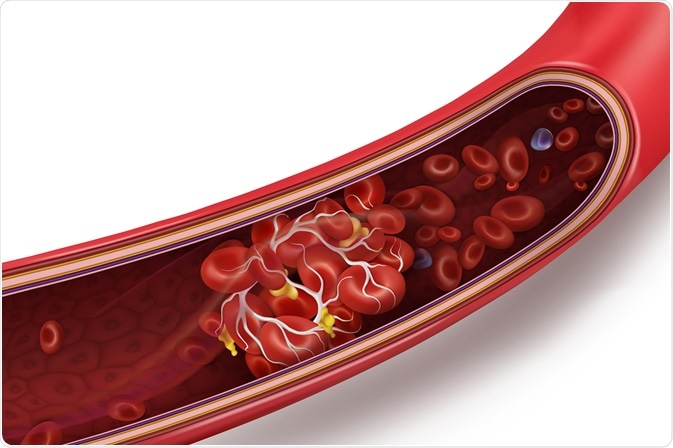 Image Credit: studiovin / Shutterstock.com
Clots can occur in both the arterial and venous blood vessels. Arteries are the blood vessels that carry fresh and oxygenated blood away from the heart and around the body (apart from pulmonary arteries that carry blood to the lungs), while veins are the vessels that carry deoxygenated blood back to the heart from the rest of the body.
Arterial thrombosis
A blood clot that forms in an artery or an arterial thrombus is a very dangerous clot that can obstruct the flow of blood to major organs and cause complications such as stroke, transient ischemic attack (TIA or mini-stroke), heart attack, or peripheral arterial disease.
Venous thrombosis
A venous thrombus can occur in the deep veins of the body such as a deep leg vein or a blood vessel of the lung. Deep vein thrombosis (DVT) usually occurs in the large veins of the calf or thigh where it causes pain and inflammation. A piece of the clot may also detach and travel to the lungs where it may lodge and create another blockage. This is a potentially life-threatening complication of deep vein thrombosis called pulmonary embolism (PE). DVT and PE are collectively termed venous thromboembolism or VTE.
Risks associated with blood clots
Thrombosis and its complications are one of the leading causes of death and disability worldwide. The condition is more common in individuals aged over 40 years but people can develop the condition at any age.
Some of the factors that raise the risk of thrombosis include:
- Family history of thrombosis, DVT and PE
- Blood vessel damage as a result of infection, surgery or inflammation
- Some medications such as oral contraceptive pills and hormone replacement therapy
- Obesity and being overweight
- Females are more at risk of VTE, particularly pregnant women.
- Being inactive for long periods of time. If a person is laid up in bed for long periods after major surgery, for example, the risk of VTE rises dramatically. Some examples of serious illnesses that can lead to prolonged periods of bed rest include heart attack, heart failure, stroke and spinal cord injury.
Symptoms of thrombosis
The symptoms of a blood clot range from mild to severe. In DVT, classic symptoms include:
- Pain and swelling in one leg, usually the calf
- Feeling of warmth in the area where the clot has formed.
- Reddening of skin, particularly behind and below the knee.
In patients with PE, symptoms include shortness of breath, chest pain that worsens on inhalation, a cough that may produce blood, and feeling faint or passing out.
Further Reading
Last Updated: Mar 13, 2023
 Engineered blood clots form faster to stop severe bleeding