Dehydration is a condition that results when the body loses more water than it takes in. This imbalance disrupts the usual levels of salts and sugars present in the blood, which can interfere with the way the body functions.
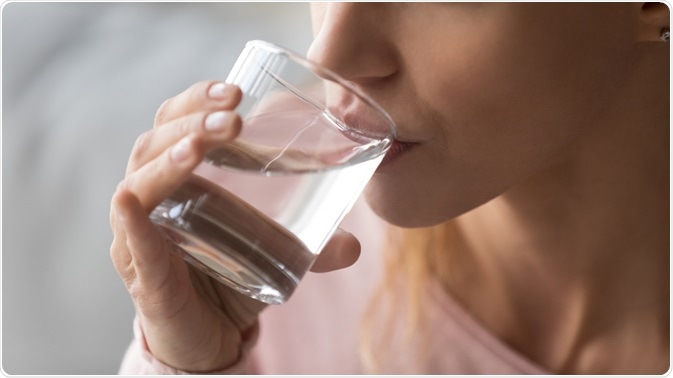 Image Credit: fizkes/Shutterstock.com
Two-thirds of the human body is composed of water, which aids in numerous functions such as lubrication of the joints and eyes, digestion, and the flushing out of wastes and toxins. As the water content in the blood begins to decline, the resulting imbalance in the levels of minerals, salts and sugars can cause several harmful effects.
Symptoms and signs of dehydration
Some of the early signs of dehydration include:
- Intense thirst
- Feeling dizzy or light-headed
- Having concentrated urine that is dark in color and strong in smell
- A reduction in the frequency of urination
- In babies, signs include the soft spot on the top of the skull (fontanelle) being sunken; few or no tears shed on crying, fewer wet nappies, and drowsiness.
Causes of dehydration
Dehydration is usually caused by an inadequate intake of fluids to replace those that have been lost. Other contributing factors include climate, physical activity and diet. Dehydration is also caused by illnesses that may lead to fluid loss such as persistent diarrhea and vomiting.
Babies and infants are at the greatest risk of becoming dehydrated because their low body weight makes them sensitive to even a minor loss of fluid. The elderly are also at a greater risk because they may be less alert to dehydration setting in and not realize they need to drink fluids. People who are diabetic or who suffer from alcoholism are also at a greater risk of dehydration and athletes can be affected due to the amount of body fluid lost through sweat.
What is Dehydration? Causes, Signs and Symptoms, Diagnosis and Treatment.
Treatment for dehydration
A person who is dehydrated needs to drink plenty of fluids such as water, squash or fruit juice, but should avoid caffeinated beverages and fizzy drinks.
If illnesses such as vomiting or diarrhea are making it difficult to hold water down, small sips should be drunk. Infants and children who are dehydrated should not be given water as this can dilute the already low levels of electrolytes and minerals in the body.
The World Health Organization recommends the use of oral rehydration solutions, which are especially designed for children with diarrhea and dehydration. The solution contains a mixture of potassium, salts and sugars to restore the correct balance of body fluids.
Prompt treatment of dehydration is important, as severe dehydration can cause life-threatening complications and even death.
References
Further Reading
Last Updated: Dec 21, 2022
 Settling the creatine safety debate