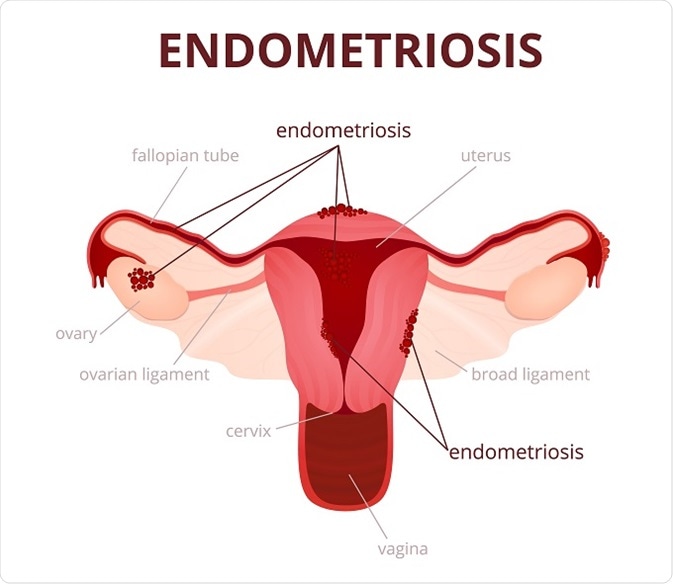
Endometriosis describes a condition where deposits of womb lining or endometrium are found lying in areas of the body outside of the womb.
©Marochkina Anastasiia / Shutterstock.com
What happens in endometriosis?
Bits of the endometrial tissues are found in different regions of the pelvic and abdominal areas. Examples of areas where the deposits may be found include:
- Fallopian tubes
- Ovaries
- Vagina
- Bladder
- Lower intestines
- Rectum
Symptoms of endometriosis
Endometriosis is most commonly diagnosed around the age of 25 to 40. The most common feature of the condition is heavy and painful periods. With each menstrual period, the deposited endometrial tissue is stimulated by hormones in the same way that the endometrium inside the womb is.
This results in heavy bleeding, pain in the lower abdomen, lower back, pelvis and thighs. Additional symptoms that may manifest include fatigue, anemia, depression and infertility. Symptoms may vary in severity but are usually of long-term duration.
Cause
The exact cause of endometriosis is not known. The most widely accepted theory however, is that endometrium flows into the fallopian tubes instead of passing through the vagina and out of the body. The tissue then moves into the abdomen and pelvis and becomes embedded on various different structures outside the womb. This mechanism is referred to as retrograde menstruation.
Diagnosis and treatment
If endometriosis is suspected, a woman is referred to a gynaecologist, a specialist in the diseases of the female reproductive system. For diagnosis, a procedure called a laparoscopy is performed. This involves an instrument with a camera attached to its tip being inserted into the abdominal cavity to view the inside of the abdomen while it is inflated with gas for improved visualization. The fallopian tubes, ovaries and other structures are all checked for patches of endometriosis.
There is no known cure for endometriosis. Symptoms are alleviated using pain relievers and hormone treatments which help to ease the symptoms, especially during periods. Surgery is another option and is often performed when endometriosis is suspected to be causing infertility.
Pregnancy often reduces the symptoms of endometriosis, which may return after childbirth and when periods have started again.
Further Reading
Last Updated: Jun 19, 2023
 New study links primary infertility to accelerated reproductive aging