Histamine is a biologically active substance that plays a key role in the body’s inflammatory reaction to injury caused by infection, physical damage, or allergies. Histamine is widely distributed throughout the animal kingdom and is also present in insect venom, as well as many plants and bacteria.
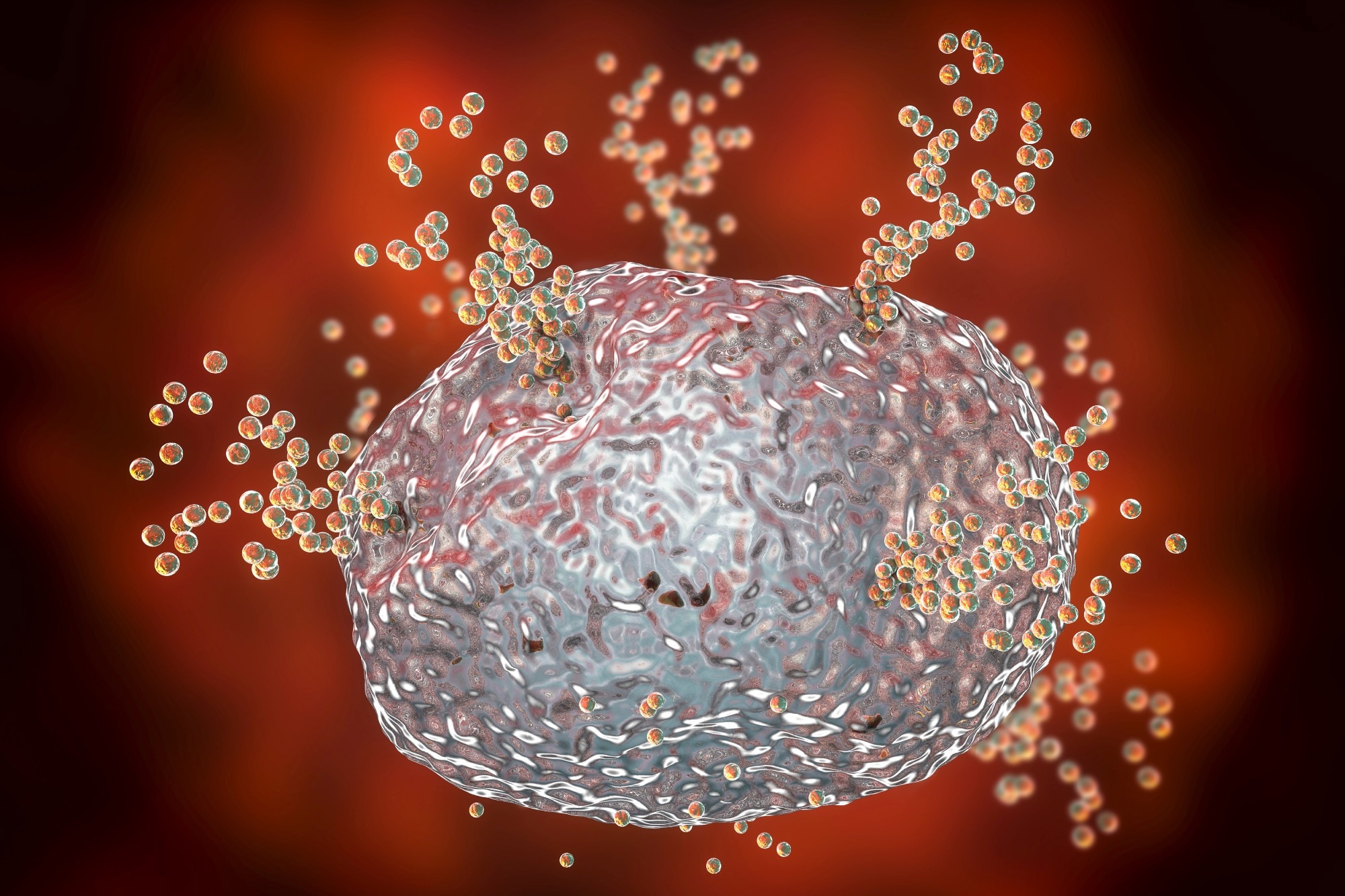
Image Credit: Kateryna Kon / Shutterstock.com
Histamine is classified as an amine, which is a molecule that is based on the structure of ammonia and is formed through the removal of a carboxyl group (decarboxylation) from an amino acid called histidine. This reaction is catalyzed by an enzyme called L-histidine decarboxylase. Histamine is a hydrophilic vasoactive amine and, once it has formed, it is either quickly inactivated or stored.
Storage and release
Histamine is found in almost all bodily tissues, mainly stored inside the granules of mast cells, where it is bound to compounds such as heparin. Mast cells are abundant in tissues that are prone to injuries such as the extremities and blood vessels. Blood cells called basophils also contain some granules that have histamine inside them.
The plasma concentration of histamine is less than 1 milligram (mg)/liter (L), although it may be higher in patients who have asthma. In the blood, the histamine concentration is between 10 to 100 mg/L.
Histamine is released from cells in response to an antibody called immunoglobulin E (IgE). This antibody may be secreted in response to an invading pathogen such as a virus, bacteria, or an allergenic substance such as pollen. Histamine can also be released in response to injury caused by toxins.
Allergy 3D Medical Animation
Regardless of the trigger of IgE, the response is a flood of histamine that has various different effects depending on the histamine receptor it comes into contact with. Some examples of these effects include:
- Contraction of smooth muscle in the lungs, stomach, or womb
- Dilation and increased permeability of blood vessels
- Reduced blood pressure
- Accelerated heart rate
- Increased gastric acid secretion
Histamine also acts as a neurotransmitter, relaying messages between neurons. The increased permeability of blood vessels allows immune cells and other substances to migrate from the bloodstream, through the vessels, and into the site where injury or infection has occurred. Leukocytes and blood plasma proteins can then begin the process of fighting infection and healing the tissue.
Effects of histamine release
The most well-researched histamine receptors are H1 and H2, with less known about the effects that histamine has on H3 and H4.
Effects on H1
Capillaries dilate and become more permeable, which can cause facial flushing and headache, as a result of histamine release. In cases of anaphylactic shock, a flood of histamine can cause blood to become trapped in dilated vessels, leading to collapse.
The increased permeability of capillaries can cause edema, as fluids and proteins leak from the plasma and into the extracellular tissue. Smooth muscle contraction, particularly of the digestive or bronchial muscles, can lead to a rise in intracellular calcium (CA2+) levels.
Effects on H2
There is increased secretion of hydrochloric acid in the stomach as a result of histamine release. Cardiac stimulation increases the force at which the heart contracts and the rate at which it beats.
Stimulation of H2 receptors does cause vasodilation; however, the onset is slower as compared to H1 stimulation. There is also a slight increase in bronchodilation. H2 stimulation may also inhibit the release of prolactin.
Effects on H3 and H4
The effect of histamine on H3 receptors is a reduction in histamine release in the peripheral and central nervous systems (PNS and CNS, respectively). However, the role of these receptors remains unclear. Researchers suspect that H3 inhibitors may be useful in certain neuropsychiatric conditions; however, to date, no drug been developed for this purpose. H4 receptors also appear to be involved in immune reactions, but further research is required.
Catabolism
Histamine that has been released is inactivated through either oxidative deamination or N-methylation. These reactions are catalyzed by diamine oxidase and N-methyl transferase, respectively.
Further Reading
Last Updated: Feb 19, 2024