Hypothermia is a dangerous condition in which the body becomes so cold that thinking, movement and protective responses are impaired, and the core body temperature drops to below 350C. In suspected hypothermia, a rectal low-reading thermometer is needed for accurate diagnosis. Other methods of diagnosis include tympanic thermometry and bladder probes.
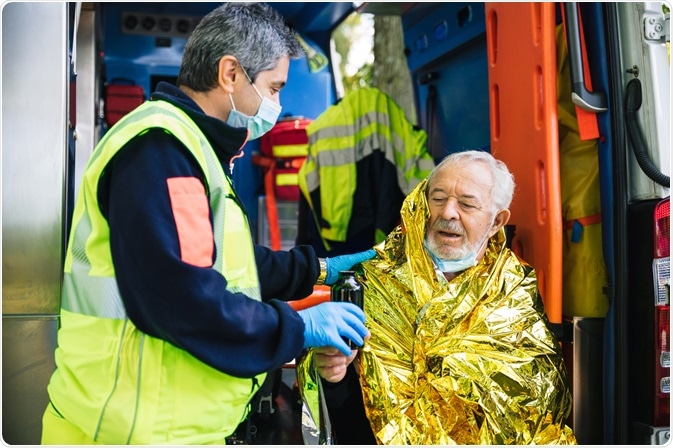
Image Credit: loreanto / Shutterstock
Hypothermia needs early and effective treatment. First-aid measures comprise:
- Calling emergency services
- Stopping heat loss. Heat loss occurs in four ways:
- Conduction when the person is in contact with a cold surface, such as the ground. Insulate the victim by laying him on a dry blanket or sheet.
- Convection, due to the loss of heat to air or water flowing over the surface of the body. Counter this by getting the person to shelter and use protective coverings to prevent wind contact.
- Radiation, with direct heat loss into the surroundings. To prevent this, cover the person, including the head.
- Evaporation – if the person is wearing wet things, remove them promptly.
- Passive external rewarming:
- Get the victim into shelter, but be very gentle if hypothermia is moderate to severe, because of the high likelihood of cardiac arrest with even light stimulation. Avoid rubbing and massaging for the same reason.
- Remove wet and tight clothing and wrap in a dry blanket
- Use layered protection, such as blankets, several coats or jackets, sheets or towels. If required, warm the victim skin-to-skin under the layers or in a sleeping bag
- Active external rewarming:
- Use an electric blanket, hot packs or chemical heating packs, to the chest, neck, head and groin area first.
- If the victim can drink easily, give warm sweetened drinks.
- Avoid alcohol.
- Support of breathing and circulation. If there is no pulse or breathing, get emergency medical help, and meanwhile start cardiopulmonary resuscitation (CPR). Continue until the body temperature becomes warmer, or till medical aid arrives. Some victims appear dead, but are not, and are successfully revived after warming.
- Monitor the breathing, which may be very irregular and slow and start CPR if the breathing rate is less than 4 breaths per minute.
Medical treatment of hypothermia
Hypothermia requires attention to multiple aspects of body function. Hospitalized patients may require:
- Correction of cardiac arrhythmias like ventricular fibrillation.
- Active core rewarming may use several means such as:
- warmed intravenous infusions
- warmed bladder infusions,
- Warmed humidified oxygen
- Thoracic lavage, or flushing out the thoracic cavity with warmed saline
- Extracorporeal warming of blood
- Complications include:
- Frostbite
- Rhabdomyolysis, or muscle destruction
- Kidney damage
- Electrolyte imbalances
- Coagulopathies
- Infection
- Hypoglycemia - this should always be ruled out, or treated if present.
Thiamine should be used to prevent alcohol-induced damage if alcohol abuse cannot be reliably ruled out. The victim’s history is seldom available and not reliable due to the presence of confusion.
After rewarming starts, cold blood from the peripheral vessels flows to the heart, causing the core temperature to drop again. This so-called “core rewarming after drop” should be watched for. It is important to continue rewarming until the core temperature is normal.
Gentle movements, and especially no nasogastric tube insertion, should be the norm, to avoid cardiac arrest.
References
Further Reading
Last Updated: Nov 8, 2022