Lymphedema is a health condition involving swelling of the lymph nodes, usually in the arms or legs, due to inadequate drainage of the body's lymph fluid.
The lymphatic system plays an essential role in the body by circulating of lymph throughout the body to collect foreign bodies such as bacteria, viruses, and waste products. The waste products can be filtered out by lymphocytes that are designed to fight infection in the body.
There are primary and secondary causes of lymphedema, depending on if another underlying health condition caused it.
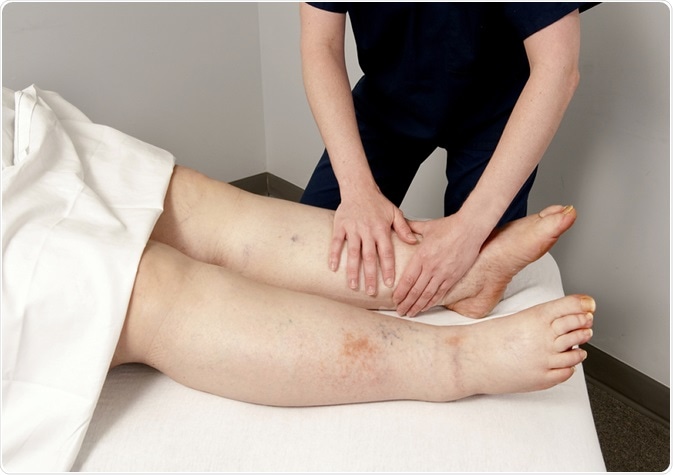
Lymphedema of the legs. Image Credit: futurewalk / Shutterstock
Primary Lymphedema
Primary lymphedema is rare and usually an inherited condition that arises as a result of abnormal development of the lymphatic system, including:
- Milroy’s disease, also known as congenital lymphedema, begins in infancy and involves the lymph nodes' abnormal function.
- Meige’s disease, also known as lymphedema praecox, usually occurs around puberty or during pregnancy.
- Late-onset lymphedema, also known as lymphedema tarda, is a rare condition that involves the presentation of symptoms after the age of 35.
Although the pathogenesis of primary lymphedema is not entirely known, it is thought to be caused by gene mutations that affect the lymphatic system's development. This results in a reduction of the individual’s ability to drain the lymph fluid as required.
A genetic link has been suggested due to the high prevalence of individuals with the condition that have a close relative with the condition. No specific genes are currently associated with the condition, however, and there is scarce evidence to suggest that offspring of affected individuals are at risk.
Secondary Lymphedema
Secondary lymphedema is the most common type and occurs due to a condition or procedure that has caused damage to the lymphatic system.
- Surgical procedures involving the removal of or damage to the lymph nodes or vessels may lead to lymphedema.
- Radiation therapy can cause scarring and inflammation of the lymphatic system.
- Cancer cells may obstruct lymphatic vessels and result in lymphedema, particularly for tumor growth close to the lymph node or vessels that may block the lymph fluid flow.
- Infection of the lymph nodes can also restrict lymph flow and lead to swelling and scarring of tissue. Parasitic infections with the same effect are prevalent in tropical and subtropical regions.
- Inflammatory conditions such as rheumatoid arthritis, dermatitis, and eczema may cause tissue inflammation and damage to the lymphatic system.
- Cardiovascular diseases that affect blood circulation throughout the body place patients at higher risk of experiencing lymphedema. This is most evident in patients with deep vein thrombosis, venous leg ulcers and varicose veins.
- Injury or trauma to the skin that causes significant scarring may damage the lymphatic system and increases the risk of lymphedema in rare cases.
- Immobility reduced the movement of lymph fluid and drainage, thereby increasing the risk of lymphedema.
Secondary lymphedema is particularly common among patients with cancer treatment that may have damaged the lymphatic system. The symptoms of this may present shortly after the procedure or be delayed for several months or years.
Lymphedema Symptoms and Treatments
References
Further Reading
Last Updated: Feb 16, 2021