Measles is a vaccine preventable disease. If a child develops the infection, he or she needs to be kept away from other children for at least five days after the rash has appeared to prevent spread of the infection. Vaccinated children and anyone who has already had measles are extremely unlikely to catch measles.
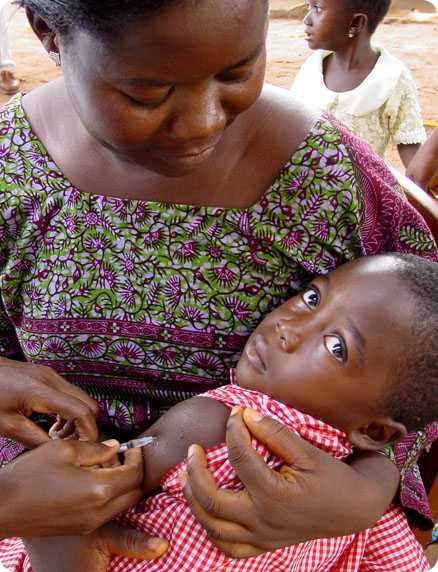
The measles vaccine will protect this child from the consequences of measles such as pneumonia, malnutrition, blindness and brain disease.
Vaccination
A combined vaccine against measles, mumps and rubella (MMR) is used to protect children against measles. The first dose of the vaccine should ideally be given to babies who are between 12 to 13 months old. Children are given a second dose or the booster dose before they start school, usually between the ages of three and five years old.
The second dose can be given three months after the first. Around 5 to 10% children do not develop complete immunity after the first dose. The second dose provides increased protection. After the booster dose less than 1% of children still have the risk of getting measles.
Post exposure prevention
Sometimes a child less than 13 months may be exposed to measles infection in the household. Since they have not yet received the vaccine they may be vulnerable to the infection and its complications. The action taken to prevent them developing the disease will depend on whether they are under or over six months old.
- For unvaccinated infants between 6 and 13 months of age – a child aged between 6 and 13 months who is exposed to the measles virus will normally be given the MMR vaccination to protect them from developing measles. The vaccine needs to be administered within 72 hours of exposure to the infection. The child needs two more doses as part of the childhood vaccination programme – one at around 13 months of age and another before the child begins school.
- For unvaccinated infants less than 6 months of age – for children with mothers who have had measles in the past, the child is usually immune to the measles infection because the mother passes on protective antibodies to the baby in the womb. These antibodies protect the child for the first 6 months of life. If the mother has not had measles before the child may be given an injection of human normal immunoglobulin (HNIG).
HNIG is not a vaccine. HNIG is a concentration of antibodies that can give short-term but immediate protection against measles. HNIG is also considered within 5 days of exposure for children and adults with compromised immune systems. Pregnant women who are exposed to measles may also be considered for intramuscular normal immunoglobulin.
Vitamin A supplementation
Vitamin A deficiency is associated with raised risk of complications from measles in children. Vitamin A supplementation in the form of an oil has been seen to protect from severe complications of measles.
Isolation and maintenance of hygiene
A child with measles needs to be kept away from other children for at least 5 days after onset of rash to prevent spread of the infection to other children. The mouth and nose of the child needs to be covered while coughing or sneezing. All soiled and contaminated handkerchiefs, tissues etc. need to be washed and disposed carefully to prevent spread. Toys and other articles used need to be washed in a strong detergent to prevent spread. Ideally used articles that are not washable should be wiped down with alcohol swabs. Hand washing and covering the mouth and nose while sneezing and coughing can prevent several cases of measles.
Further Reading
Last Updated: Jul 8, 2023
 Measles outbreaks surge worldwide, driven by declining immunization coverage