The term neoplasm refers to abnormal growth of tissue caused by the rapid division of cells that have undergone some form of mutation.
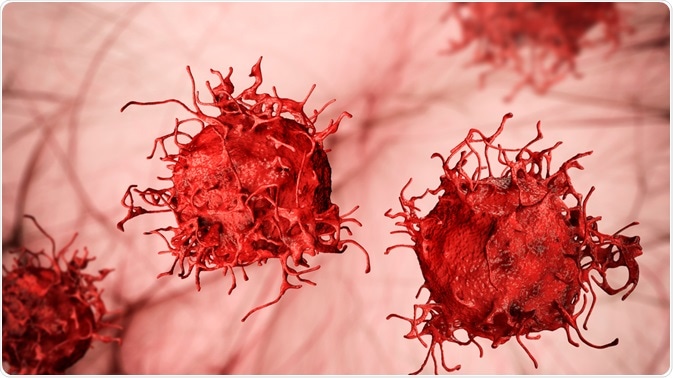
What is a neoplasm?
The body is made up of trillions of cells that grow, divide, and die in an orderly fashion. This process is tightly regulated and controlled by the DNA machinery within the cell. During childhood, the cells of the body rapidly divide; however, once adulthood is reached, cells generally only divide to replace worn-out and dying cells or to repair injured cells.
Neoplasia describes when these cells proliferate in an abnormal manner that is not coordinated with the surrounding tissue. These rogue cells, which are otherwise referred to as neoplastic cells, cannot be controlled in the way that normal cells can because they do not die when they should and they divide more quickly.
As this excessive growth persists, a lump or tumor that has no purpose or function in the body is eventually formed. This is referred to as a neoplasm and it may be non-cancerous (benign), pre-cancerous (pre-malignant), or cancerous (malignant).
Benign or non-cancerous neoplasms
Benign neoplasms are non-cancerous forms of tissue proliferation such as skin moles, lipomas, or uterine fibroids. These neoplasms do not become cancerous and are not usually life-threatening; however, depending on their location, benign growths may cause symptoms and signs if it presses on vital neighboring structures such as glands or nerves. This may indicate that treatment is required, which is usually surgery to remove the tumor without damaging any surrounding tissue. Other forms of therapy are medication and radiotherapy.
A benign tumor tends to grow more slowly than a malignant tumor and does not have the capacity to invade surrounding tissue or spread to other areas of the body (metastasis), as cancer can. The cause of a benign neoplasm is often not known, but several factors such as exposure to radiation or environmental toxins, genetics, diet, stress, inflammation, infection, and local trauma or injury may be linked to the formation of these growths.
Many different types of benign tumors can arise in different bodily structures. Some of the main forms of benign tumors include:
- Adenomas - Adenomas develop in the epithelial tissue, which is a thin layering that covers organs, glands, and other structures A polyp in the colon is a common example of an adenoma. These polyps can be removed surgically.
- Fibromas - Fibromas are growths that arise in the connective or fibrous tissue and can grow in any organ. Fibromas can cause symptoms and may need to be surgically removed.
- Hemangiomas - Blood vessel cells accumulate in the skin or internal organs and form a red or blue colored growth that is referred to as a hemangioma. A birthmark is a common example of a hemangioma. These growths often disappear by themselves but if they interfere with eating, hearing, or vision, for example, they may require treatment.
- Lipomas - Lipomas arise from fat cells and are the most common type of benign neoplasm found in adults, often occurring in the back, arms, neck, or shoulders. These benign growths usually grow slowly, are movable, and soft to the touch. Lipomas may be treated with steroid therapy or removed with surgery or liposuction.
Pre-malignant or pre-cancerous neoplasms
Precancerous neoplasms are masses that have not yet become cancerous but have the potential to do so if they are not treated. Sometimes, cells may undergo changes that eventually cause them to die on their own. However, other cells pass on mutations and new cells slowly become increasingly abnormal until they eventually become cancerous.
The different types of premalignant changes that can arise are described below.
- Hyperplasia - Hyperplasia refers to an abnormal increase in the number of cells. This is not usually precancerous; however, some types of hyperplasia are cancerous.
- Atypia - In atypia, the cells will appear slightly atypical under the microscope. This can sometimes be caused by inflammation and healing; therefore, this change in appearance may resolve itself once inflammation stops or the body has healed.
- Metaplasia - In metaplasia, the cells appear normal when observed under the microscope; however, they are not of the cell type that is usually found in that bodily tissue or area. Metaplasia is not usually precancerous, but some cases are.
- Dysplasia - In dysplasia, cells have an abnormal appearance under the microscope and are disorganized. Dysplasia refers to a precancerous condition in the majority of cases and people with dysplasia are usually monitored a regular basis to allow for treatment to be initiated in the event that these cell changes become severe.
Malignant neoplasms
Malignant is used to describe neoplasms that have become cancerous, as defined by the following distinct features:
- Abnormal cell growth
- Capacity to invade other tissues
- Capacity to spread to distant organs via blood vessels or lymphatic channels (metastasis)
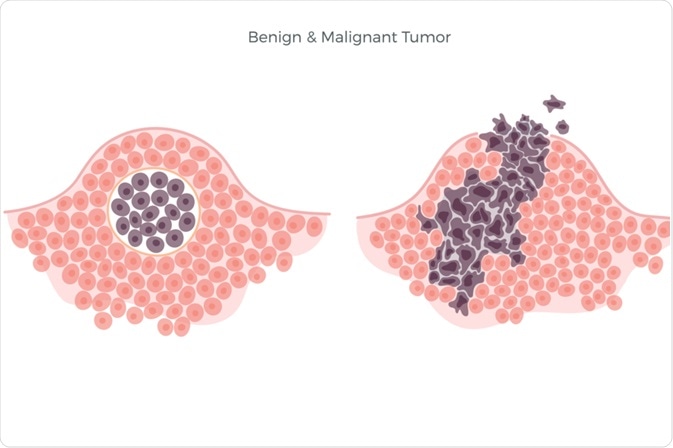
Image Credit: Pikovit / Shutterstock.com
If left untreated, these cancerous cells continue to rapidly divide and multiply in an uncontrolled and abnormal way. The tumor becomes larger and may eventually invade surrounding tissues or spread to other distant parts of the body via the bloodstream or lymphatic system. If many organs or a vital organ such as the brain or liver are extensively damaged by cancer, then death will occur.
The treatments available for treating malignant cancer include surgery, chemotherapy, and radiotherapy. However, once metastasis has occurred, the patient prognosis is so poor that treating the multiple sites affected is not usually viable.
The type of cancer a person has and wherein the body it originated from are factors that influence where the cancer will spread to. The extent of metastasis at diagnosis is referred to as the cancer stage and many cancers are categorized using a staging system that ranges from 0 to 4. Knowing the cancer stage and where the cancer may spread to next helps doctors to predict disease course and decide on the most beneficial treatment plan.
Some of the main types of cancer are described below:
- Carcinoma - Carcinomas often begin in the skin or tissues that line internal organs.
- Leukemia - Leukemias affect tissues that make blood, such as the bone marrow. Large numbers of abnormal cells are produced in the bone marrow, which then enter the bloodstream.
- Lymphoma - Lymphomas originate in the immune system.
- Sarcoma - Sarcomas develop in bone fat, muscle, blood vessels, cartilage, bone, or other types of connective tissue.
- Cancer of the central nervous system - This form of cancer originates in the tissues of the spinal cord and brain.
References
Further Reading
Last Updated: Aug 22, 2023