Onychomycosis is a condition that causes a fungal infection of the fingernails or toenails. It is also sometimes referred to as dermatophytic onychomycosis or tinea unguium.
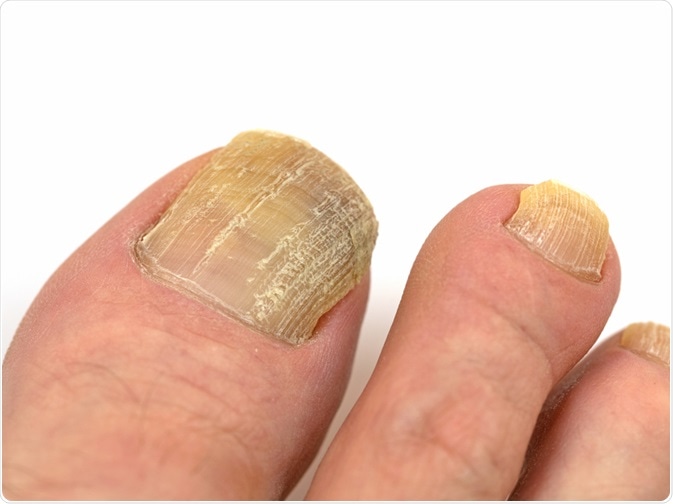
Image Credit: M. Schuppich / Shutterstock.com
Epidemiology
Onychomycosis is an extremely common condition. In fact, it is estimated that the prevalence of this condition is approximately 10% across the general population, which increases with age.
In some other populations, onychomycosis has been observed to be somewhat less prevalent, as is the case in Canada, where it has been estimated to affect approximately 6.48% of this nation's population.
Some health conditions significantly increase the risk of onychomycosis. Up to one-third of all diabetics, for example, are affected by the condition. Additionally, people who suffer from psoriasis can experience onychomycosis at a rate of 56% more than the general population.
Causes
Onychomycosis may be caused by dermatophytes, Candida albicans, or non-dermatophytic molds. These pathogens penetrate the nail, thus causing an infection underneath the nail and the resulting symptoms.
Some risk factors may increase the likelihood that an individual will be affected by nail fungus. Elderly people are more likely to be affected, as their nails typically grow slower and are thicker than usual, which provides optimal conditions for the growth of the infection. Additionally, people affected by certain health conditions, such as diabetes and psoriasis, are more likely to experience symptoms of onychomycosis.
Symptoms
The first symptoms to be reported are physical changes to the nail and surrounding skin. The nails and tissue are often discolored to white or yellow, and the nails can become thick and brittle, causing them to break more easily.
The appearance of the nail, particularly on the fingers, can cause people to feel self-conscious about the infection when in social situations. This can result in anxiety when people are in social situations and problems relating to other people.
If left untreated, the physical symptoms can worsen significantly and lead to inflammation of the area and pain. This only happens in severe cases and is not reported by most people who suffer from the condition.
Diagnosis
Initially, the diagnosis of onychomycosis is usually made upon visual examination of the nails and the suspected infection. However, several conditions cause similar symptoms, so a differential diagnosis is important to ensure that the optimal treatment is chosen.
Laboratory tests are often needed to confirm the diagnosis. These usually involve a skin sample or nail scraping, which is inspected using various laboratory methods.
Treatment
Some of the different treatments that are currently available for the treatment of onychomycosis can be divided into orally and topically administered treatments.
Oral treatments are generally more effective and include terbinafine, itraconazole, and fluconazole. Topical treatments include a liquid containing ciclopirox, amorolfine, or efinaconazole that is painted onto the affected nails. A combination of oral and topical treatments may achieve more effective results.
It is relatively common for the infection to recur, even after effective treatment. The rate of recurrence is believed to lie between 10% and 50%, although it is not precisely known.
Complications
In particularly severe cases, onychomycosis may lead to other serious infections. This risk is amplified when the immune system is suppressed due to medication or other health conditions such as AIDS and diabetes.
Osteomyelitis is an infection of the bone, which is a possible complication that may result from onychomycosis. This is rare but may affect some individuals with severe outcomes.
To prevent complications from occurring, it is recommended that treatment is commenced at the earliest possible point once the diagnosis has been confirmed.
Sources
- Westerberg, Dyanne P., and Michael J. Voyack. “Onychomycosis: Current Trends in Diagnosis and Treatment.” American Family Physician, vol. 88, no. 11, 1 Dec. 2013, pp. 762–770, www.aafp.org/pubs/afp/issues/2013/1201/p762.html
- Gupta, Aditya K., et al. “High Prevalence of Mixed Infections in Global Onychomycosis.” PLOS ONE, vol. 15, no. 9, 29 Sept. 2020, p. e0239648, https://doi.org/10.1371/journal.pone.0239648
- Narges Maskan Bermudez, et al. “Onychomycosis: Old and New.” Journal of Fungi, vol. 9, no. 5, 12 May 2023, pp. 559–559, https://doi.org/10.3390/jof9050559
- Sigurgeirsson, B., and R. Baran. “The Prevalence of Onychomycosis in the Global Population - a Literature Study.” Journal of the European Academy of Dermatology and Venereology, vol. 28, no. 11, 28 Nov. 2013, pp. 1480–1491, https://doi.org/10.1111/jdv.12323
Further Reading
Last Updated: Apr 18, 2024