Rabies is a viral disease that occurs by transmission of the virus from animals to humans. This usually occurs due to a bite from an animal that is infected with the virus.
Rabies has an incubation period that can range from one week to more than a year; however, in most cases, symptoms begin to become evident approximately one to three months following exposure to the virus.
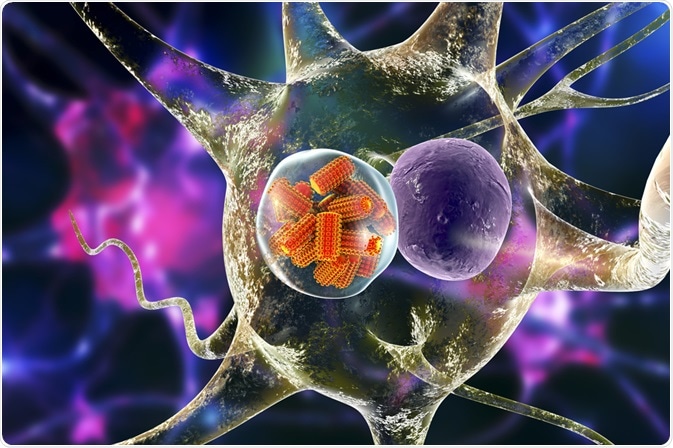
Image Credit: Kateryna Kon / Shutterstock.com
Although symptoms may not appear right away, it is important to seek medical attention immediately following contact with an animal that is suspected to have rabies. This is because the disease can currently only be prevented before symptoms begin to emerge. Therefore, prophylactic measures are recommended immediately following an incident to prevent symptoms from occurring and the disease from progressing.
Preclinical stage
The preclinical stage encompasses the time from when the virus was transmitted to a human, which is most often following a bite from an infected animal. It is common for individuals in this stage to be unaware of any particular symptoms associated with rabies.
Some people may notice signs related to the injury site, such as tingling or itchiness where the bite has occurred. Other signs that may begin to emerge in this early stage of the disease are an irrational fear of water or drafts of air, also known as hydrophobia and aerophobia, respectively.
Most individuals with preclinical rabies do not notice these effects, however, as there are different forms of the disease.
Rabies : Pathophysiology, Signs & Symptoms, Diagnosis & Management (Pre & post exposure prophylaxis)
Clinical stage
In the clinical stage of the disease, people begin to notice the symptoms that occur as a result of the virus. Paraesthesia, which is a tingling, prickling, or burning sensation, at the infection site is common among people affected by the disease. This symptom is often followed by inflammation of the brain and spinal cord.
There are two known types of rabies and each presents with different symptoms that affect the prognosis and end result of the disease.
The most common type is associated with hyperactivity and excited behavior. Individuals with this type of rabies are likely to experience the effects of hydrophobia or aerophobia. This type of rabies is also associated with a shorter prognosis, with death by cardiac arrest usually occurring just a few days after the onset of symptoms.
The second type of rabies is considered paralytic and comprises approximately 30% of all human rabies cases. This involves the gradual paralysis of muscles in the body, beginning from the site of infection and moving up the central nervous system to eventually affect the entire body. This usually takes longer to lead to the death of the individual and is regarded as less dramatic than the more common type of rabies. For this reason, many people with the paralytic form of rabies are not formally diagnosed as having the disease and may account for a higher prevalence of the disease than is recorded.
References
Further Reading
Last Updated: Apr 28, 2021