The vast majority of patients with sciatica notice a significant improvement in the severity of their symptoms within 6-8 weeks. For this reason, initial treatment should be conservative to avoid unnecessary exposure to treatments. Instead, patients should be adequately counseled to understand the nature of the condition and thus be equipped with methods to relieve the associated pain.
If another condition, such as cauda equina syndrome, is suspected to be involved, referral to a neurosurgeon should be made immediately.
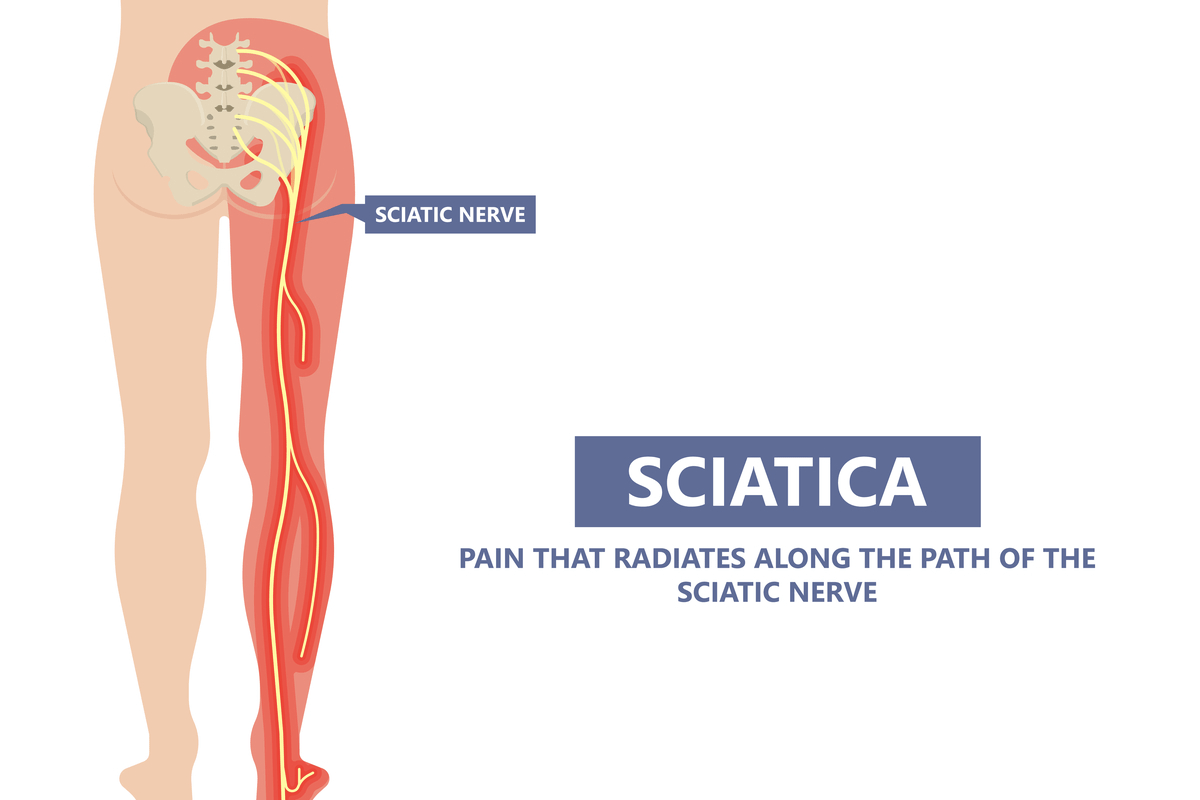
Image Credit: rumruay / Shutterstock.com
Initial advice
During the initial consultation with a patient with sciatica, reassurance about the limited nature of the condition without specific treatment measures should be given.
In the meantime, it is recommended that affected individuals continue with normal daily activities as well as possible. Resting may provide some symptomatic relief, but does not help to speed recovery.
Some people may find that using hot or cold packs is useful in the management of sciatica pain. Ice packs are recommended initially to help reduce pain and inflammation; however, after two to three days, a hot pack may provide more beneficial pain relief.
Stretching the affected area can also help to ease the pain. In some cases, referral to a physical therapist may be helpful. The sciatica patient may also benefit from simple yoga exercises. Staying active is important and, although it is not expected to improve recovery time, it helps to improve natural pain relief mechanisms, such as the release of endorphins.
Pharmacotherapy
The scientific evidence supporting the use of analgesics to relieve the pain of sciatica is not strong. Despite this, analgesic medications are usually prescribed to help individuals manage the pain.
Paracetamol is usually the first choice of pain relief medication, as it is associated with fewer side effects. Alternatively, non-steroidal anti-inflammatory drugs (NSAIDs), such as ibuprofen and aspirin, may also be recommended.
In some cases, opioid drugs like codeine or morphine may be given, either alone or in combination with simple analgesics. Additional, botulinum toxin is sometimes also used to relieve sciatica pain caused by piriformis syndrome. Antidepressant medication is also occasionally prescribed, as it is thought to help with neuropathic pain.
Epidural injection of corticosteroids may help to provide pain relief for severe cases. However, this is only indicated for patients with severe symptoms, as the possible adverse effects are significant.
Surgery
When the symptoms of sciatica persist to cause chronic pain, surgery may be considered as a treatment option.
The most common surgery is a discectomy, which involves the removal of part of the disc that is thought to cause the symptoms. However, the long-term benefits of this procedure do not seem to be superior to patients treated with conservative care.
Sciatica, Causes, Signs and Symptoms, Diagnosis and Treatment
Alternative Treatments
There is some evidence that spinal manipulation may provide a benefit in the treatment of acute sciatica, although this has not been replicated for patients with chronic sciatica.
Some patients opt for acupuncture as a method of pain relief, although the benefit of this remains unclear. Likewise, chiropractic care can be used to manipulate the spine and improve mobility, although evidence for this practice is lacking.
Physical therapy is thought to have some beneficial effects. Massage therapy may also help to improve acute pain, but is not associated with a shorter recovery period.
References
Further Reading
Last Updated: Mar 5, 2021