Tuberous sclerosis is a genetic disease with a broad clinical spectrum that has the potential to affect almost every organ system. It involves mutations in certain genes (TSC1 and TSC2) that are responsible for the production of proteins that usually help to regulate cell division and growth in the body.
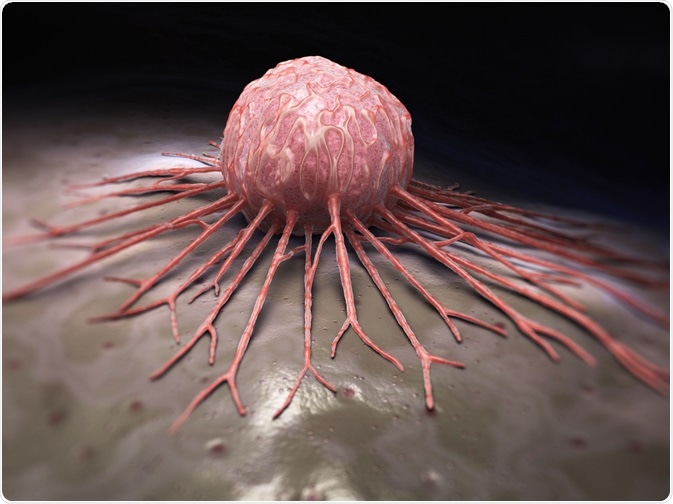
Image Credit: Tatiana Shepeleva / Shutterstock.com
When this balance is disrupted by the gene mutations, characteristic hamartomas may grow in various locations around the body such as the brain, skin, kidney, liver, lungs, and heart, affecting the function of these organs.
TSC1 and TSC2 gene mutations
There are two specific gene mutations known to be associated with tuberous sclerosis. The TSC1 gene mutation occurs on chromosome 9 and is related to the production of the hamartin protein. Comparatively, the TSC2 is on chromosome 16 and affects the production of tuberin protein. Taken together, these genes are thought to cause the characteristic tumors of tuberous sclerosis.
The gene mutation may be inherited from a parent who carries the gene or may occur spontaneously in the affected individual. Most cases of tuberous sclerosis present sporadically, with no known family history of the disease; however, approximately 1 in 3 patients inherit a defected TSC1 or TSC2 gene.
If one parent has tuberous sclerosis, any children will carry a 50% risk of inheriting the disease. This condition follows an autosomal dominant inheritance pattern, which explains why males and females are equally affected.
Hamartin and tuberin proteins
Hamartin and tuberin are thought to play a role in a complex that controls cell growth and division in the body. To date, the exact mechanism of pathology that leads to unregulated cell growth and the appearance of tumors is not known, although it is thought to be due to changes in the signaling of mTOR. Thus, the proteins hamartin and tuberin are considered to modulate gene transcription and suppress tumor growth.
The 2-hit model of tumorigenesis by Knudson specifies that the formation of the tumor requires a second mutation and a loss of heterozygosity (LOH). This suggestion follows from the presence of LOH in several hamartomas around the body in people with tuberous sclerosis.
Tuberous Sclerosis – Mayo Clinic
Affected areas and organs
Tuberous sclerosis can cause tumors to grow in various locations around the body and are known to affect several different organs. As a result, the severity of the condition can vary greatly between individuals and the symptoms will therefore also be different.
Tumors of the brain are most commonly associated with tuberous sclerosis and often cause seizures or developmental delays in affected individuals. In general, multiple tumors or those that are larger in size cause the most significant problems.
Lesions that present on the skin or around nails do not usually cause serious problems but can be particularly troublesome for individuals who are worried about the aesthetic effects of this condition.
Angiomyolipoma and cysts in the kidneys can affect the renal function of the individual and, in severe cases, renal failure may result. Some patients also note symptoms similar to polycystic kidney disease, which has similar genetic characteristics to tuberous sclerosis.
Cardiac rhabdomyoma refers to tumors that grow in the heart. When present in adults, the tumor is not usually large enough in size to cause significant damage; however, in newborn infants, these tumors can be fatal.
Pulmonary cysts and lymphangioleimoyomatosis (LAM) can affect the lungs, the latter of which is the most common cause of fatality for patients who exhibit evidence of LAM.
References
Further Reading
Last Updated: Sep 2, 2022