Once manufactured in large amounts, actual vaccine delivery and administration are of prime importance for it to be successful in preventing the ailment. Vaccine administration has been traditionally via injections but several new methods of vaccine delivery are also being explored these days. These new methods are hoped to improve compliance of the general population, ease administration and help in larger coverage.
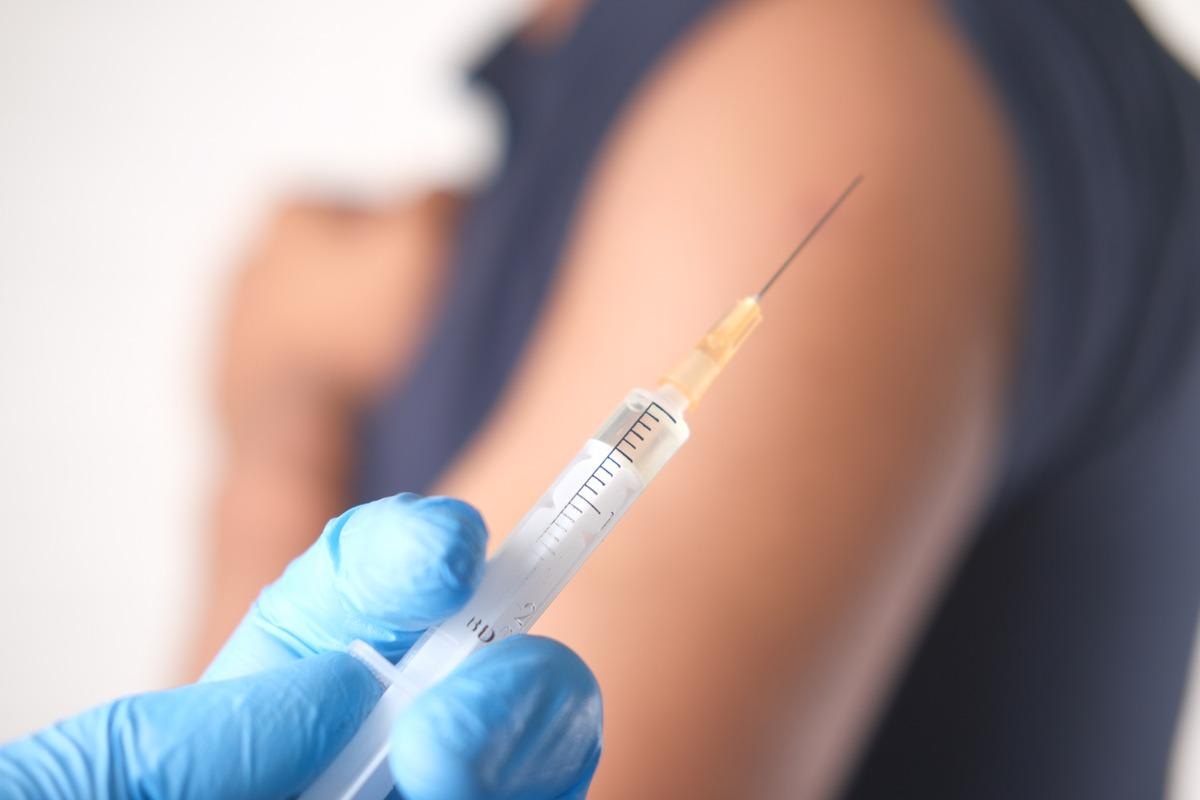
Image Credit: Towfiqu ahamed barbhuiya/Shutterstock
Vaccine preparation
Before administration, the vaccine needs adequate preparation and handling.
Syringe and needle selection
Syringe selection is vital with a new sterile needle and syringe used for each injection. An injectable vaccine may be delivered in either a 1-mL or 3-mL syringe as long as the prescribed dosage is delivered.
Needle Selection – the needle should be suitable for the site of injection and route of vaccine administration. Needle size also depends on the size of the individual, volume and viscosity of the vaccine, and injection technique. Typically, vaccines are not highly viscous so a fine gauge needle (22-25 gauge) can be used.
Expiration dates
Before administration, the vaccine vial and diluent needs to be inspected thoroughly. This is done to spot damage or contamination prior to use. The expiration date printed on the vial or box should be checked.
Vaccines can be used through the last day of the month indicated by the expiration date unless otherwise stated on the package labelling. Expired vaccine or diluent should never be used.
Addition of diluent or reconstitution
Several vaccines are prepared in a lyophilized (freeze-dried) form. The liquid diluent (usually sterile saline or distilled water) is provided in a separate ampoule for reconstitution. Each diluent is specific to the corresponding vaccine in volume, sterility, pH, and chemical balance. If the wrong diluent is used, the vaccine dose is not valid and will need to be repeated using the correct diluent.
The vaccines should be reconstituted just before administration. After reconstitution, the vial needs to be agitated or shaken to mix the vaccine thoroughly and obtain a uniform suspension prior to withdrawing each dose.
Route of vaccine administration and site
The recommended route and site for each vaccine are based on clinical trials, experience and theoretical considerations. This information is included in the manufacturer’s product information for each vaccine.
Routes of vaccine administration
The routes of administration for most vaccines include:
- Oral (PO) Route - Recommended for Rotavirus vaccines, typhoid vaccines and polio vaccines
- Subcutaneous (subcut) Route - Subcutaneous injections are administered into the fatty tissue found below the dermis (right under the skin) and above muscle tissue. The recommended subcutaneous sites for vaccine administration are the thigh (for infants younger than 12 months of age) and the upper outer triceps of the arm (for persons 12 months of age and older).
- Intramuscular (IM) Route -These are administered into muscle tissue below the dermis and subcutaneous tissue. All inactivated vaccines, with the exception of one formulation of meningococcal polysaccharide vaccine (MPSV4), are administered by the intramuscular route.
There are only two routinely recommended IM sites for administration of vaccines, the vastus lateralis muscle (anterolateral thigh) and the deltoid muscle (upper arm).
In infants, the thigh is the recommended site for injection because it provides a large muscle mass. The muscles of the buttock are not used for the administration of vaccines in infants and children. This is because this technique may injure the sciatic nerve. In adults, the deltoid muscle of the upper arm is chosen.
- Intradermal (ID) Route - The site of administration is the deltoid region of the upper arm. The injection is administered just below the skin or the dermal layer of the skin.
- Intranasal (NAS) Route - The live attenuated influenza vaccine is the only vaccine administered by the nasal route.
| |
Site |
|
Route |
Vaccines |
| LVL |
Left Vastus Lateralis |
Infants (& toddlers lacking adequate deltoid mass) |
IM |
Diptheria, Tetanus, Pertussis (DTaP, DT, Tdap,Td), Haemophilus influezae B (Hib), Hepatitis A (HepA), Hepatitis B (HepB), Influena, trivalent inactivated (TIV), Meningoccal conjugated (MCV4), Pneumococcal Conjuage (PCV7), Pneumococcal Polysaccharide (PPV), Polio, inactivated (IPV) - Need Size 22-25g, 1-2"
|
| RVL |
Right Vastus Lateralis |
| LD |
Left Deltoid |
Toddlers, children and adults |
IM |
| RD |
Right Deltoid |
| LALT |
Left Antero Lateral fat or Thigh |
Infants and young children |
SQ |
Measles, Mumps, Rubella (MMR), Meningococcal polysaccharide (MPSV4), Pneumococcal polysaccharide (PPV), Polio, inactivated (IPV), Varicella (Var) - Need Size 23-25g, 5/8" |
| RALT |
Right Antero Lateral fat or Thigh |
| LPUA |
Left Posterolateral Fat of Upper Arm |
Children and adults |
SQ |
| RPUA |
Right Posterolateral Fat of Upper Arm |
| LFA |
Left Fore Arm |
Intradermal |
Tuberculin ppd skin test |
| RFA |
Right Fore Arm |
Newer delivery techniques
Latest vaccine delivery methods include use of oral vaccines. The Polio vaccine was the first oral vaccine to be developed. The results were very positive in that the ease of the vaccines increased dramatically. With an oral vaccine there are myriad of advantages including ease of administration, no risk of blood contamination, more stability, less likely to freeze, less need for keeping and maintaining the cold chain and decreased costs.
Needle-Free Injections are jet injectors that have been developed to decrease the risks of needle stick injuries to healthcare personnel and to prevent improper reuse of syringes and needles.
Another method is the microneedle approach, which is still in the stages of development. Here pointed projections are made into arrays that can allow vaccine delivery through the skin. Vaccine delivery by nasal sprays is also being tried.
Newer techniques include the use of liposomes for vaccine delivery and the use of plasmids. Plasmids may be used in cancer vaccines.
Special situations for vaccine administration
Some situations mandate special precautions. These include:
- Multiple Vaccinations - If more than one vaccine needs to be administered, administration of each preparation at a different anatomic site is desirable. For infants and younger children, if more than two vaccines are injected in a single limb, the thigh is the preferred site because of the greater muscle mass.
- Vaccinations in patients with bleeding disorders - Those with these conditions tend to bleed profusely. These patients may develop hematomas or bruises on injections.
- Acute Vaccine Reactions - There may be severe allergic or other reactions with vaccine administration. Although rare, thorough screening for contraindications and precautions prior to vaccination can often prevent reactions.
Further Reading
Last Updated: Mar 9, 2023
 Her son’s injury never got its day in vaccine court. Their lawyer is now advising RFK on its overhaul.