Vaccine production stages
Challenges in large-scale vaccine production
Production of microbial antigens
Antigen isolation
Vaccine adjuvants, stabilizers, and preservatives
Quality control and safety in vaccine manufacturing
The effectiveness of vaccines as a public health tool relies on their widespread administration to large populations, encompassing both children and adults. This necessitates large-scale vaccine production, a process that often presents significant challenges.
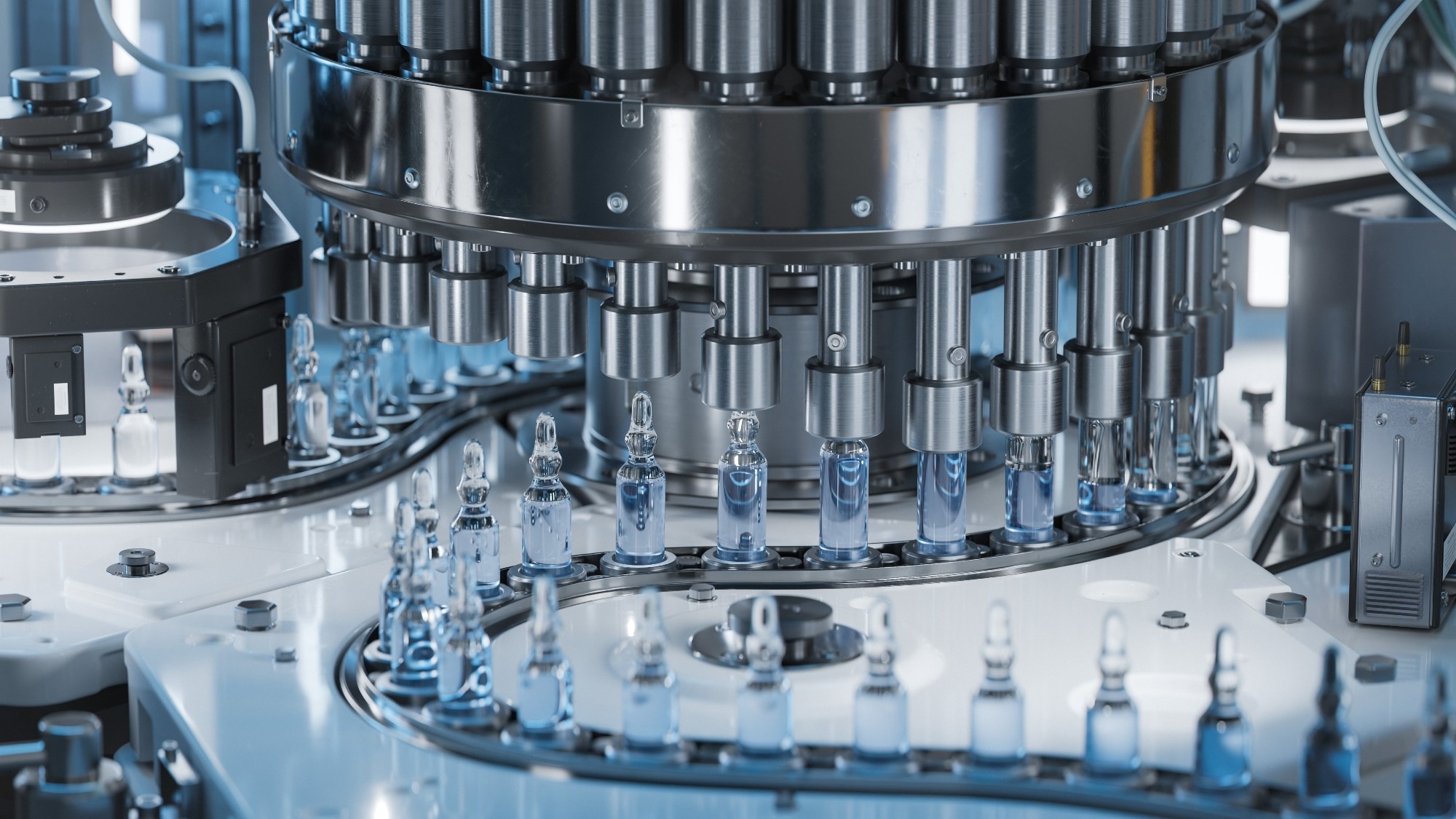 Image Credit: IM Imagery/Shutterstock.com
Vaccine production stages
Vaccine production involves several key stages. This manufacturing process includes:
- Antigen preparation (inactivation/attenuation): This stage focuses on generating the antigen component of the vaccine. This may involve inactivating/killing the pathogen (e.g., Hepatitis A, flu), weakening it, or producing specific antigenic components.
- Purification: The prepared antigen is then purified to remove unwanted materials and ensure its quality and safety.
- Formulation: The purified antigen is combined with other ingredients, such as adjuvants (to enhance the immune response), stabilizers (to maintain vaccine potency), and preservatives (to prevent bacterial contamination), to create the final vaccine preparation.
Regulatory Trends in Pharma Manufacturing: Key Changes to Watch in 2025
Challenges in large-scale vaccine production
Vaccine production employs a range of diverse and evolving technologies, from traditional methods to cutting-edge approaches such as virus-like particles, mRNA vaccines, and plant-based systems.
Modern vaccine development exploits these novel technologies to create safer and more efficacious vaccines while also improving stability, formulation, and delivery1.
New vaccine technologies, such as viral vector and nucleic acid-based vaccines, are critical for enabling rapid development and large-scale production to combat both pandemic threats and antibiotic-resistant bacteria2 effectively.
Each of these novel technologies presents unique challenges and advantages concerning safety, cost, and scalability. The major challenges include manufacturing complexities, assay optimization, and limited global manufacturing capacity3.
For instance, the global use of mRNA-based vaccines (e.g., Pfizer, Moderna) is currently constrained by ultracold storage requirements. This highlights the need for strategies to enhance stability at higher temperatures, particularly for resource-limited countries4.
A failure to adequately address vaccine supply chain issues can significantly diminish the impact of even the most effective vaccines5.
Vaccines 101: How new vaccines are developed
Production of microbial antigens
The initial stage of vaccine production involves generating the antigen from the target microbe. This can be achieved through various methods.
Viruses, for example, may be cultivated in primary cells, such as chicken eggs (as in vaccine influenza production), or in cell lines or cultured human cells (e.g., for Hepatitis A). Bacterial antigens, such as those used in the Haemophilus influenzae type b vaccine, are often produced in bioreactors.
Alternatively, the antigen may be a toxin or toxoid derived from the organism (e.g., diphtheria or tetanus), or it may consist of specific components of the microorganism. These components, including proteins or other parts, can be produced using recombinant technology in systems like yeast, bacteria, or cell cultures.
Live attenuated vaccines are created by weakening bacteria or viruses using methods like chemical treatment or heat (e.g., MMR, yellow fever).
Antigen isolation
Following antigen generation, it is isolated from the cells or medium in which it was produced. Live attenuated viruses may require minimal further purification.
However, recombinant proteins typically undergo extensive purification procedures, often involving ultrafiltration and various forms of column chromatography, before they are suitable for administration.
Vaccine adjuvants, stabilizers, and preservatives
The process of developing and producing vaccines can be challenging due to potential incompatibilities and interactions among the various antigens and other vaccine components.
After antigen production and purification, the vaccine is formulated by combining the antigen with adjuvants, stabilizers, and preservatives.
Adjuvants are added to enhance the immune response to the antigen. For instance, aluminum adjuvants achieve this enhancement by modulating the function of sentinel cells, such as macrophages and dendritic cells, inducing their polarization and activation6.
Stabilizers like lactalbumin hydrolysate-sucrose (LS) or trehalose dihydrate (TD) extend the vaccine's shelf life by maintaining the required virus titer for a longer period during reconstitution7.
Preservatives are also vital for improving the shelf life of products. Moreover, preservatives like 2-phenoxyethanol are essential for preventing microbial contamination in multi-dose vaccine vials8.
The CDMO Surge: Why Pharma Is Outsourcing More Than Everhttps://www.news-medical.net/life-sciences/The-CDMO-Surge-Why-Pharma-Is-Outsourcing-More-Than-Ever.aspx
Quality control and safety in vaccine manufacturing
The product must be protected from air, water, and human contamination. Conversely, the environment must be protected from antigen spills.
Therefore, meticulous attention to both product integrity and environmental safety is essential throughout the vaccine manufacturing process.
References
- Josefsberg, J., & Buckland, B. (2012). Vaccine process technology. Biotechnology and Bioengineering, 109. https://doi.org/10.1002/bit.24493.
- Rauch, S., Jasny, E., Schmidt, K., & Petsch, B. (2018). New Vaccine Technologies to Combat Outbreak Situations. Frontiers in Immunology, 9. https://doi.org/10.3389/fimmu.2018.01963.
- Ejeta, F. (2022). Challenges of Developing Novel Vaccines and Large Scale Production Issues. J Drug Res Dev, 8(2), 2470-1009. https://doi.org/10.16966/2470-1009.171.
- Uddin, M., & Roni, M. (2021). Challenges of Storage and Stability of mRNA-Based COVID-19 Vaccines. Vaccines, 9. https://doi.org/10.3390/vaccines9091033.
- Lee, B., & Haidari, L. (2017). The importance of vaccine supply chains to everyone in the vaccine world. Vaccine, 35 35 Pt A, 4475-4479. https://doi.org/10.1016/j.vaccine.2017.05.096.
- Danielsson, R., & Eriksson, H. (2021). Aluminium adjuvants in vaccines - A way to modulate the immune response. Seminars in cell & developmental biology. https://doi.org/10.1016/j.semcdb.2020.12.008.
- Sarkar, J., Sreenivasa, B., Singh, R., Dhar, P., & Bandyopadhyay, S. (2003). Comparative efficacy of various chemical stabilizers on the thermostability of a live-attenuated peste des petits ruminants (PPR) vaccine. Vaccine, 21 32, 4728-35. https://doi.org/10.1016/S0264-410X(03)00512-7.
- Khandke, L., Yang, C., Krylova, K., Jansen, K., & Rashidbaigi, A. (2011). Preservative of choice for Prev(e)nar 13™ in a multi-dose formulation. Vaccine, 29 41, 7144-53. https://doi.org/10.1016/j.vaccine.2011.05.074.
Further Reading
Last Updated: Apr 3, 2025
 Two-pronged therapeutic technology for cancer wins Pfizer Prize for Biomedical Research 2026