Vitamin E is a term that encompasses several subtypes of tocopherols, which are fat-soluble and exhibit antioxidant properties. Therefore, vitamin E can inhibit free radicals in the body from reacting and causing damage to the genetic makeup of natural cells in the body.
It has been suggested that vitamin E may be linked to a number of potentially fatal diseases, such as heart disease and cancer, by offering a protective effect. The outcomes of research examining these effects vary; thus, the complete role of vitamin E in the body remains unclear.
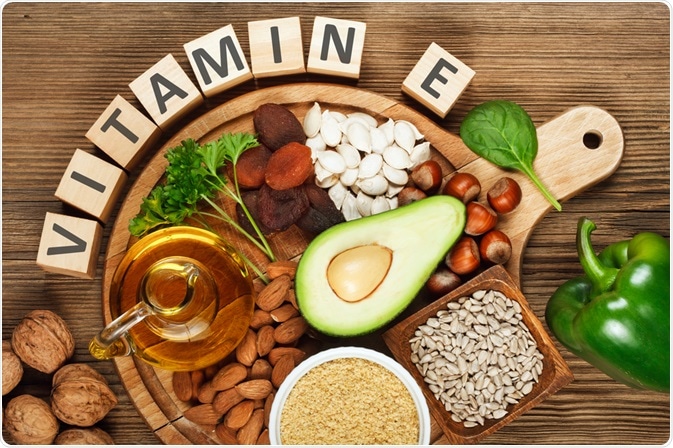
Image Credit: Evan Lorne / Shutterstock.com
Risk of heart disease
Early studies suggesting a preventative effect of vitamin E supplements for heart disease held promising results, although follow-up studies failed to support this notion. As a result, the currently available scientific evidence is conflicting.
Some research has indicated a risk reduction of 20-40% for those patients who supplemented vitamin E for at least two years. However, other studies have not found a significant difference from the control group, with one study that associated vitamin E with a slightly increased risk of heart failure.
As a result, the supplementation of vitamin E is not justified for the prevention of heart disease at this point in time, although it may offer some benefit.
Risk of cancer
Theoretically, the antioxidant effect of vitamin E should help to minimize the effect of free radicals in the body, thus reducing the risk of cancer. However, when put to the test in scientific trials, this has not been shown to be the case.
Observational studies of vitamin E intake through supplementation or dietary sources have not found a protective effect against general or specific cancers. Some studies suggest that supplementation may lower risk of prostate cancer in male smokers; although, when a larger trial of 18,000 men tested this hypothesis, the study was halted due to early results showing an increased risk of cancer in those men taking vitamin E.
To date, no conclusive evidence has been able to enlighten the situation in regards to the effect of vitamin E. It is possible there is a preventative effect, although the data to demonstrate this is weak.
Ocular diseases
When vitamin E is taken in combination with vitamin C, beta-carotene, and zinc, a protective effect against age-related macular degeneration has been shown. However, when vitamin E is taken as a stand-alone supplement, this benefit is not evident, thereby suggesting that the other vitamins supplemented may be responsible for this effect.
Dementia
There have been mixed results of studies determining the benefit of vitamin E, often in combination with vitamin C, in the prevention of Alzheimer’s disease and dementia.
Free radicals are believed to play a large role in the degeneration of cognitive function; therefore, from a theoretical perspective, a benefit is likely. Small improvements in cognitive function may be seen in those affected by the disease, as well as a preventative effect, although not all studies have demonstrated these benefits.
Parkinson’s disease
A higher dietary intake of vitamin E has been associated with a risk reduction of Parkinson’s disease. However, for those who are affected by the disease, supplementation does not appear to slow progression of the disease or ease symptoms.
As the link between vitamin E and Parkinson's disease is based on dietary sources and not supplementation, it is possible that the results may be due to other vitamins and minerals present in the food sources.
Food sources
Vitamin E is available in several natural food sources, some of which include:
- Asparagus
- Avocado
- Egg
- Leafy greens
- Milk
- Nuts
- Seeds
- Vegetable oils
- Wheat germ
Additionally, supplementation of vitamin E is available if the individual is likely to benefit from a higher intake of the vitamin.
References
Further Reading
Last Updated: Apr 26, 2021
 Alcohol intake linked to lower micronutrient intake in men with type 2 diabetes