Read in | English | Español | Français | Deutsch | Português | Italiano | 日本語 | 한국어 | 简体中文 | 繁體中文 | العربية | Dansk | Nederlands | Filipino | Finnish | Ελληνικά | עִבְרִית | हिन्दी | Bahasa | Norsk | Русский | Svenska | Magyar | Polski | Română | Türkçe

What is a Prion?

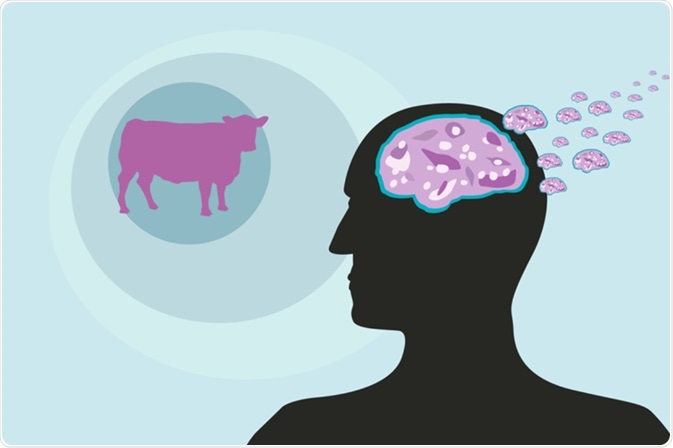
A prion is an infectious agent that is composed primarily of protein. To date, all such agents that have been discovered propagate by transmitting a mis-folded protein state; the protein itself does not self-replicate and the process is dependent on the presence of the polypeptide in the host organism. The mis-folded form of the prion protein has been implicated in a number of diseases in a variety of mammals, including bovine spongiform encephalopathy (BSE, also known as "mad cow disease") in cattle and Creutzfeldt-Jakob disease (CJD) in humans. All known prion diseases affect the structure of the brain or other neural tissue, and all are currently untreatable and are always fatal. In general usage, prion refers to the theoretical unit of infection. In scientific notation, PrPC refers to the endogenous form of prion protein (PrP), which is found in a multitude of tissues, while PrPSc refers to the misfolded form of PrP, that is responsible for the formation of amyloid plaques and neurodegeneration.

Prions are hypothesized to infect and propagate by refolding abnormally into a structure which is able to convert normal molecules of the protein into the abnormally structured form. All known prions induce the formation of an amyloid fold, in which the protein polymerises into an aggregate consisting of tightly packed beta sheets. This altered structure is extremely stable and accumulates in infected tissue, causing tissue damage and cell death. This stability means that prions are resistant to denaturation by chemical and physical agents, making disposal and containment of these particles difficult.

Proteins showing prion-type behavior are also found in some fungi, which has been useful in helping to understand mammalian prions. Fungal prions, however, do not appear to cause disease in their hosts and may even confer an evolutionary advantage through a form of protein-based inheritance.

The word prion is a compound word derived from the initial letters of the words proteinaceous'' and infectious'', with -on added by analogy to the word virion.

Prion Discovery

The radiation biologist Tikvah Alper and the mathematician John Stanley Griffith developed the hypothesis during the 1960s that some transmissible spongiform encephalopathies are caused by an infectious agent consisting solely of proteins. This theory was developed to explain the discovery that the mysterious infectious agent causing the diseases scrapie and Creutzfeldt-Jakob Disease resisted ultraviolet radiation (UV radiation damages nucleic acids). Francis Crick recognized the potential importance of the Griffith protein-only hypothesis for scrapie propagation in the second edition of his "Central dogma of molecular biology". While asserting that the flow of sequence information from protein to protein, or from protein to RNA and DNA was "precluded" by this dogma, he noted that Griffith's hypothesis was a potential contradiction to this dogma (although it was not so promoted by Griffith). Since the revised "dogma" was formulated, in part, to accommodate the then-recent discovery of reverse transcription by Howard Temin and David Baltimore (who won the Nobel Prize in 1975), proof of the protein-only hypothesis might be seen as a "sure bet" for a future Nobel Prize.

Stanley B. Prusiner of the University of California announced in 1982 that his team had purified the hypothetical infectious prion, and that the infectious agent consisted mainly of a specific protein - though they did not manage to isolate the protein until two years after Prusiner's announcement.

Prusiner coined the word "prion" as a name for the infectious agent. While the infectious agent was named a prion, the specific protein that the prion was composed of is also known as the Prion Protein (PrP), though this protein may occur both in infectious and non-infectious forms. Prusiner was awarded the Nobel Prize in Physiology or Medicine in 1997 for his research into prions.

Prion Structure

Isoforms

The protein that prions are made of (PrP) is found throughout the body, even in healthy people and animals. However, PrP found in infectious material has a different structure and is resistant to proteases, the enzymes in the body that can normally break down proteins. The normal form of the protein is called PrPC, while the infectious form is called PrPSc - the ''C'' refers to 'cellular' or 'common' PrP, while the ''Sc'' refers to 'scrapie', a prion disease occurring in sheep. While PrPC is structurally well-defined, PrPSc is certainly polydisperse and defined at a relatively poor level. PrP can be induced to fold into other more-or-less well-defined isoforms in vitro, and their relationship to the form(s) that are pathogenic in vivo is not yet clear.

PrPC

PrPC is a normal protein found on the membranes of cells. It has 209 amino acids (in humans), one disulfide bond, a molecular weight of 35-36 kDa and a mainly alpha-helical structure. Several topological forms exist; one cell surface form anchored via glycolipid and two transmembrane forms. Its function is a complex issue that continues to be investigated. PrPC binds copper (II) ions with high affinity. The significance of this finding is not clear, but it presumably relates to PrP structure or function. PrPC is readily digested by proteinase K and can be liberated from the cell surface in vitro by the enzyme phosphoinositide phospholipase C (PI-PLC), which cleaves the glycophosphatidylinositol (GPI) glycolipid anchor. PrP has been reported to play important roles in cell-cell adhesion and intracellular signaling ''in vivo'', and may therefore be involved in cell-cell communication in the brain.

PrPSc

The infectious isoform of PrP, known as PrPSc, is able to convert normal PrPC proteins into the infectious isoform by changing their conformation, or shape; this, in turn, alters the way the proteins interconnect.

Although the exact 3D structure of PrPSc is not known, it has a higher proportion of β-sheet structure in place of the normal α-helix structure. Aggregations of these abnormal isoforms form highly structured amyloid fibers, which accumulate to form plaques. The end of each fiber acts as a template onto which free protein molecules may attach, allowing the fiber to grow. Only PrP molecules with an identical amino acid sequence to the infectious PrPSc are incorporated into the growing fiber.

Prion Function

It has been proposed that neurodegeneration caused by prions may be related to abnormal function of PrP. However, the physiological function of the prion protein remains a controversial matter. While data from in vitro experiments suggest many dissimilar roles, studies on PrP knockout mice have provided only limited information because these animals exhibit only minor abnormalities.

PrP and long-term memory

There is evidence that PrP may have a normal function in maintenance of long term memory. Maglio and colleagues have shown that mice without the genes for normal cellular PrP protein have altered hippocampal long-term potentiation.

PrP and stem cell renewal

A 2006 article from the Whitehead Institute for Biomedical Research indicates that PrP expression on stem cells is necessary for an organism's self-renewal of bone marrow. The study showed that all long-term hematopoietic stem cells expressed PrP on their cell membrane and that hematopoietic tissues with PrP-null stem cells exhibited increased sensitivity to cell depletion.

Prion Disease

Prions cause neurodegenerative disease by aggregating extracellularly within the central nervous system to form plaques known as amyloid, which disrupt the normal tissue structure. This disruption is characterized by "holes" in the tissue with resultant spongy architecture due to the vacuole formation in the neurons. Other histological changes include astrogliosis and the absence of an inflammatory reaction. While the incubation period for prion diseases is generally quite long, once symptoms appear the disease progresses rapidly, leading to brain damage and death. Neurodegenerative symptoms can include convulsions, dementia, ataxia (balance and coordination dysfunction), and behavioural or personality changes.

All known prion diseases, collectively called ''transmissible spongiform encephalopathies'' (TSEs), are untreatable and fatal. A vaccine has been developed in mice, however, that may provide insight into providing a vaccine in humans to resist prion infections. Additionally, in 2006 scientists announced that they had genetically engineered cattle lacking a necessary gene for prion production - thus theoretically making them immune to BSE, building on research indicating that mice lacking normally-occurring prion protein are resistant to infection by scrapie prion protein.

Many different mammalian species can be affected by prion diseases, as the prion protein (PrP) is very similar in all mammals. Due to small differences in PrP between different species it is unusual for a prion disease to be transmitted from one species to another. The human prion disease ''variant Creutzfeldt-Jakob disease'', however, is believed to be caused by a prion which typically infects cattle, causing Bovine spongiform encephalopathy and is transmitted through infected meat.

The following diseases are caused by prions.

Affected animal(s)DiseaseWritten shorthandDisease name 2
sheepScrapie  
goat
cattleBovine spongiform encephalopathyBSEmad cow disease
humanCreutzfeldt-Jakob diseaseCJD
Kuru

Current research suggests that the primary method of infection in animals is through ingestion. It is thought that prions may be deposited in the environment through the remains of dead animals and via urine, saliva, and other body fluids. They may then linger in the soil by binding to clay and other minerals.

Sterilization

Infectious particles possessing nucleic acid are dependent upon it to direct their continued replication. Prions, however, are infectious by their effect on normal versions of the protein. Sterilizing prions therefore involves the denaturation of the protein to a state where the molecule is no longer able to induce the abnormal folding of normal proteins. Prions are generally quite resistant to proteases, heat, radiation, and formalin treatments, although their infectivity can be reduced by such treatments. Effective prion decontamination relies upon protein hydrolysis or reduction or destruction of protein tertiary structure. Examples include bleach, caustic soda, and strong acidic detergents such as LpH. 134 degrees Celsius (274 degrees Fahrenheit) for 18 minutes in a pressurised steam autoclave may not be enough to deactivate the agent of disease. Ozone sterilization is currently being studied as a potential method for prion denature and deactivation. Renaturation of a completely denatured prion to infectious status has not yet been achieved, however partially denatured prions can be renatured to an infective status under certain artificial conditions.

The World Health Organization recommends any of the following three procedures for the sterilization of all heat-resistant surgical instruments to ensure that they are not contaminated with prions:

  1. Immerse in a pan containing 1N NaOH and heat in a gravity-displacement autoclave at 121°C for 30 minutes; clean; rinse in water; and then perform routine sterilization processes.
  2. Immerse in 1N NaOH or sodium hypochlorite (20,000 parts per million available chlorine) for 1 hour; transfer instruments to water; heat in a gravity-displacement autoclave at 121°C for 1 hour; clean; and then perform routine sterilization processes.
  3. Immerse in 1N NaOH or sodium hypochlorite (20,000 parts per million available chlorine) for 1 hour; remove and rinse in water, then transfer to an open pan and heat in a gravity-displacement (121°C) or in a porous-load (134°C) autoclave for 1 hour; clean; and then perform routine sterilization processes.

Debate

Whether prions are the agent which causes disease or merely a symptom caused by a different agent is still debated by a minority of researchers. The following sections describe several contending hypotheses.

Genetics as a cause

A gene for the normal protein has been identified: the ''PRNP'' gene. In all inherited cases of prion disease, there is a mutation in the ''PRNP'' gene. Many different ''PRNP'' mutations have been identified and it is thought that the mutations somehow make PrPC more likely to change spontaneously into the abnormal PrPSc form. These mutations can occur throughout the gene. Some mutations involve expansion of the octapeptide repeat region at the N-terminal of PrP. Other mutations that have been identified as a cause of inherited prion disease occur at positions 102, 117 & 198 (GSS), 178, 200, 210 & 232 (CJD) and 178 (Fatal Familial Insomnia, FFI). The cause of prion disease can be sporadic, genetic, and infectious, or a combination of these factors. For example, in order to have scrapie, both an infectious agent and a susceptible genotype need to be present.

Multi-component hypothesis

In 2007, biochemist Surachai Supattapone and his colleagues at Dartmouth College produced purified infectious prions ''de novo'' from defined components (PrPC, co-purified lipids, and a synthetic polyanionic molecule). These researchers also showed that the polyanionic molecule required for prion formation was selectively incorporated into high-affinity complexes with PrP molecules, leading them to hypothesize that infectious prions may be composed of multiple host components, including PrP, lipid, and polyanionic molecules, rather than PrPSc alone.

Heavy metal poisoning hypothesis

Autoclavure destroys protein and genetic material, not the agent of disease.

The protein that can become protease resistant amyloidosis may gain superoxide dismutase activity when bound to copper ions.

Mark Purdey has provided epidemiology to support the idea that low concentrations of copper and high concentrations of manganese in the environment or animal feed lead to disease.

Recent reports suggest that imbalance of brain metal homeostasis is a significant cause of PrPSc-associated neurotoxicity, though the underlying mechanisms are difficult to explain based on existing information. Proposed hypotheses include a functional role for PrPC in metal metabolism, and loss of this function due to aggregation to the disease associated PrPSc form as the cause of brain metal imbalance. Other views suggest gain of toxic function by PrPSc due to sequestration of PrPC-associated metals within the aggregates, resulting in the generation of redox-active PrPSc complexes. The physiological implications of some PrPC-metal interactions are known, while others are still unclear. The pathological implications of PrPC-metal interaction include metal-induced oxidative damage, and in some instances conversion of PrPC to a PrPSc-like form.

Viral hypothesis

The protein-only hypothesis has been criticised by those who feel that the simplest explanation of the evidence to date is viral. For more than a decade, Yale University neuropathologist Laura Manuelidis has been proposing that prion diseases are caused instead by an unidentified "slow" virus. In January 2007, she and her colleagues published an article reporting to have found a virus in 10%, or less, of their scrapie-infected cells in culture.

The virion hypothesis states that TSEs are caused by a replicable informational molecule (which is likely to be a nucleic acid) bound to PrP. Many TSEs, including scrapie and BSE, show strains with specific and distinct biological properties, a feature which supporters of the virion hypothesis feel is not explained by prions.

Evidence in favor of a viral hypothesis includes:

  • Strain variation: differences in prion infectivity, incubation, symptomology and progression among species resembles that seen between viruses, especially RNA viruses
  • The long incubation and rapid onset of symptoms resembles some viral infections, such as HIV-induced AIDS
  • Viral-like particles that do not appear to be composed of PrP have been found in some of the cells of scrapie- or CJD-infected cell lines. and in purified component chemical reactions

This article is licensed under the Creative Commons Attribution-ShareAlike License. It uses material from the Wikipedia article on "Prion" All material adapted used from Wikipedia is available under the terms of the Creative Commons Attribution-ShareAlike License. Wikipedia® itself is a registered trademark of the Wikimedia Foundation, Inc.