Anatomy of the Hypothalamus
Function of the Hypothalamus
Regulation of Satiety
Regulation of Body Temperature
Regulation of Emotions
Regulation of Sleep
Understanding Hypothalamic Dysfunction
References
Further Reading
Discover how the hypothalamus acts as your body’s master regulator, balancing hunger, sleep, temperature, and emotional responses, and learn why even minor dysfunctions can have profound health consequences.
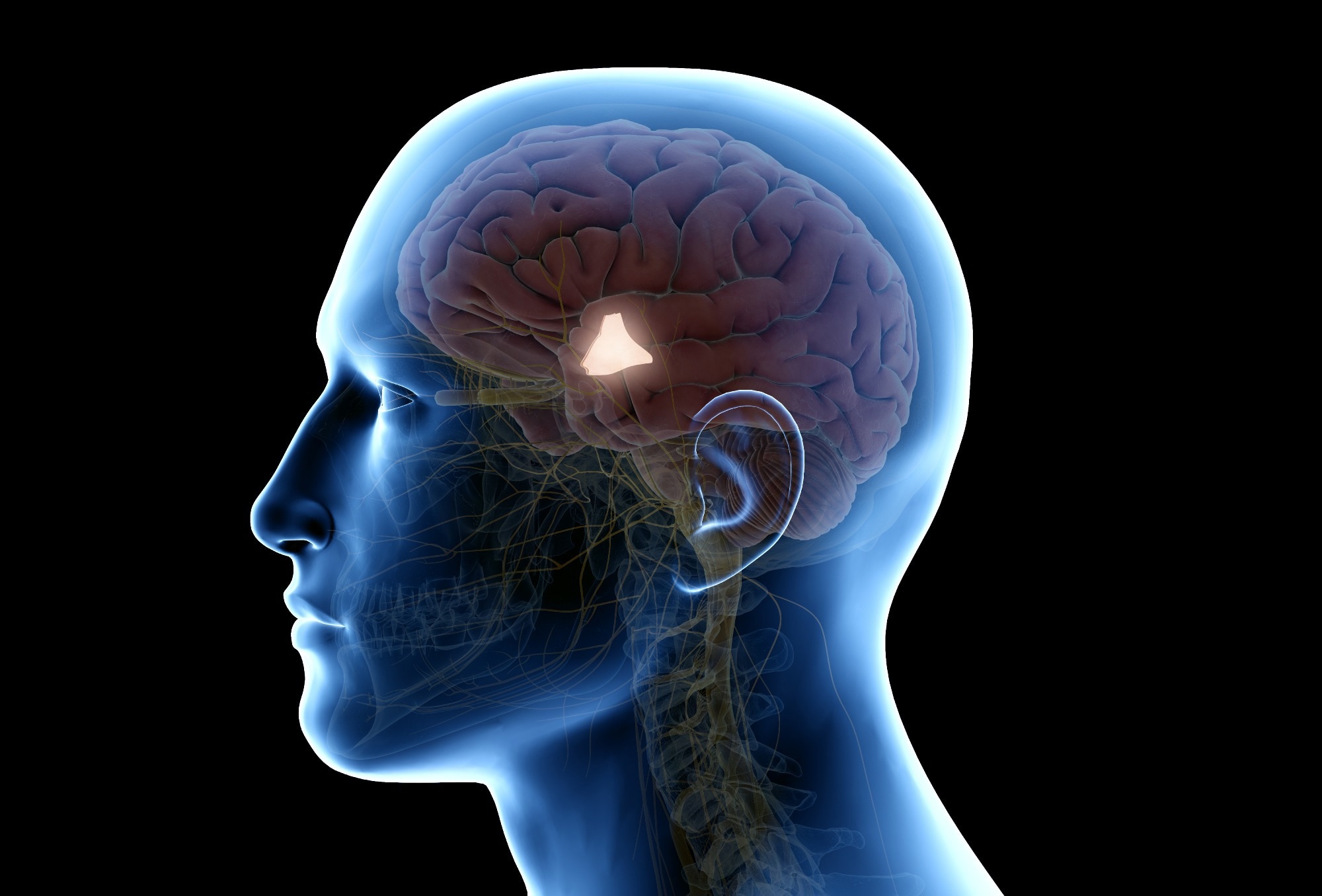 Illustration of the location of the hypothalamus in the human brain: Image Credit: 3dMediSphere / Shutterstock
Anatomy of the Hypothalamus
The hypothalamus, located in the ventral area of the brain between the pituitary gland and the third ventricle, is characterized as a bilateral group of nuclei that surround the mammillary bodies. The three primary regions of the hypothalamus include the anterior, middle, and posterior regions, each of which serves different physiological functions.
The anterior region of the hypothalamus, for example, consists of the preoptic, paraventricular, supraoptic, suprachiasmatic, and anterior hypothalamic nuclei. Comparatively, the middle region of the hypothalamus includes the arcuate, ventromedial, and dorsomedial nuclei. The posterior hypothalamic and mamillary nuclei are both located within the posterior region of the hypothalamus.
The afferent pathways that feed into the hypothalamus originate from the thalamus, cerebral cortex, brainstem, olfactory areas, and basal ganglia. The hypothalamic-neurohypophysial tract is a major efferent pathway that connects the supraoptic and paraventricular nuclei of the hypothalamus to the median eminence, which verge to form the posterior and anterior pituitary glands2.
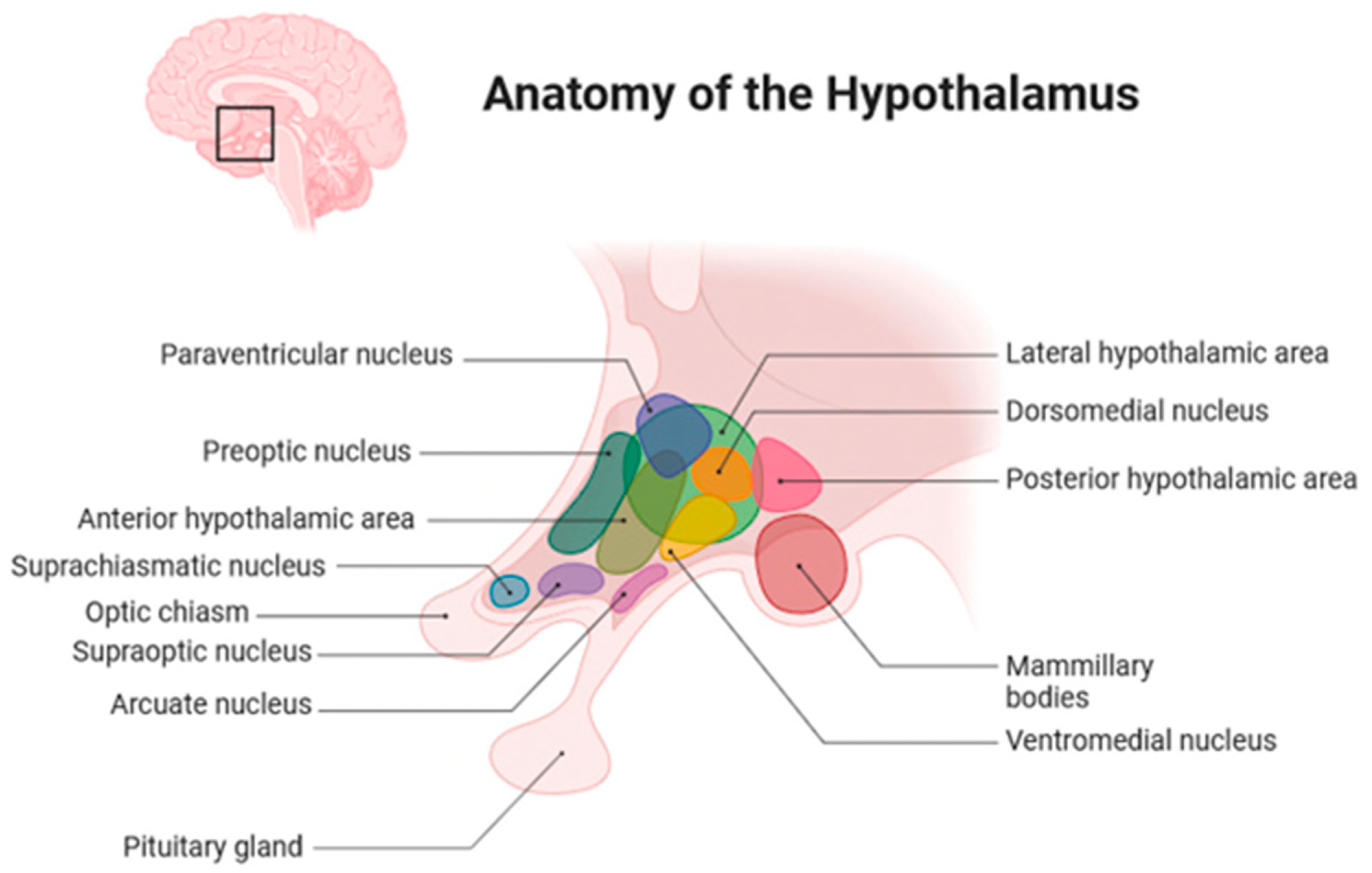 Anatomical scheme of hypothalamic nuclei, including different hypothalamus [created with a graphical software (BioRender; www.biorender.com/, Toronto, CA, USA)5
Function of the Hypothalamus
The hypothalamus is vital for maintaining homeostasis through the coordination of autonomic, endocrine, and somatic behaviors. Within the autonomic nervous system, the hypothalamus processes sensory impulses from the smooth muscle that lines organs such as the intestines and stomach, as well as blood vessels. By processing these signals, the hypothalamus regulates the movement of food, heart rate, and contraction of the bladder.
The hypothalamus releases various hormones into the bloodstream that ultimately reach the anterior pituitary gland. For example, the release of thyrotropin-releasing hormone (TRH) by the hypothalamus stimulates the release of thyroid-stimulating hormone and prolactin, whereas the release of gonadotropin-releasing hormone (GnRH) controls the release of follicle-stimulating hormone (FSH) and luteinizing hormone (LH)3.
The hypothalamus also stores growth hormone-releasing hormone (GHRH) and corticotropin-releasing hormone (CRH), which stimulate the secretion of the growth hormone (GH) and adrenocorticotropic hormone from the anterior pituitary gland, respectively. Dopamine is also stored in the hypothalamus, which, after its release, prevents prolactin from leaving the anterior pituitary gland while also modulating the activity of motor-control centers and activating reward centers within the brain3.
Regulation of Satiety
The hypothalamus also releases many hormones involved in regulating satiety, of which include glucagon-like peptide 1 (GLP-1), peptide YY (PYY), insulin, cholecystokinin (CCK), and leptin. The release of GLP-1, for example, reduces caloric intake, increases feelings of satiety, and promotes weight loss4.
The hypothalamus is home to important anorexigenic and orexigenic neuronal populations that control hunger and energy expenditure.4”
Regulation of Body Temperature
The optimal internal body temperature for bodily processes to occur is approximately 37°C (98.6°F). To regulate an individual’s temperature, the hypothalamus regularly makes comparisons between the exact and ideal body temperature, following which it signals for adjustments to be made to either raise or lower the temperature.
If body temperature is too high, the hypothalamus releases signals that can be transmitted to produce heat, which can have a cooling effect on the body. Conversely, if body temperature is too low, the body is stimulated to generate and help maintain heat.
Regulation of Emotions
One of the functions of the hypothalamus is to convert emotions into physical responses. When intense emotional feelings, such as fear, anger, or excitement, are generated in response to environmental stimuli or an individual’s thought processes, synaptic impulses are transmitted to the hypothalamus.
Based on the type of emotion experienced, the hypothalamus can send a series of signals through the autonomic nervous system and pituitary system to induce a physiological response. For example, in cases of fear, individuals may experience a quickened heart rate and shallow breathing.
Both physical and psychological stress are considered the most potent activators of the hypothalamic-pituitary-adrenal (HPA) axis. Following its activation, the HPA axis stimulates the synthesis and release of cortisol. Prolonged stress and HPA axis dysregulation can lead to chronic cortisol secretion, which has the potential to exert widespread effects on almost every organ system.
Regulation of Sleep
Within the hypothalamus lies the suprachiasmatic nucleus (SCN), which regulates sleep and wake cycles. During the light cycle, a series of mechanisms originating from retinal ganglionic cells to the SCN prevent the secretion of melatonin. By preventing the release of the hormone, individuals are motivated to stay away during daylight hours.
As the day progresses and light signals to the retinal ganglion cells subside due to a lack of sunlight, the SCN is inhibited, which leads to the activation of the paraventricular nucleus. Sleepiness is subsequently induced due to the stimulation of the sympathetic nervous system, which then triggers the release of melatonin from the pineal gland.
Other functions controlled by the hypothalamus include sexual behavior, reproduction, and water intake.
Understanding Hypothalamic Dysfunction
Hypothalamic dysfunction can arise due to a wide range of causes, including brain surgery, traumatic brain injury, and brain tumors, as well as nutritional deficiencies, genetic disorders, and infections. Because the hypothalamus helps regulate appetite, temperature, sleep-wake cycles, and stress responses, its dysfunction can lead to various symptoms, including fatigue, weight changes, disrupted sleep, infertility, and impaired growth in children.
Prader-Willi syndrome, Kallmann syndrome, and septo-optic dysplasia are genetic disorders that can lead to hypothalamic dysfunction. Whereas Prader-Willi syndrome manifests as increased appetite and altered temperature regulation, Kallmann syndrome is characterized by a gonadotropin-releasing hormone (GnRH) deficiency resulting from disrupted hypothalamic signaling.
References
- Sanchez Jimenez JG, De Jesus O. Hypothalamic Dysfunction. [Updated 2023 Aug 23]. In: StatPearls [Internet]. Treasure Island (FL): StatPearls Publishing; 2025 Jan-. Available from: https://www.ncbi.nlm.nih.gov/books/NBK560743/
- Bear, M. H., Reddy, V., Bollu, P. C. Neuroanatomy, Hypothalamus. [Updated 2022 Oct 10]. In: StatPearls [Internet]. Treasure Island (FL): StatPearls Publishing; 2025 Jan-. Available from: https://www.ncbi.nlm.nih.gov/books/NBK525993/
- Shahid, Z., Asuka, E., Singh, G. Physiology, Hypothalamus. [Updated 2023 May 1]. In: StatPearls [Internet]. Treasure Island (FL): StatPearls Publishing; 2025 Jan-. Available from: https://www.ncbi.nlm.nih.gov/books/NBK535380/
- Barakat, G. M., Ramadan, W., Assi, G., & Khoury, N. B. (2024). Satiety: a gut-brain relationship. The Journal of Physiological Sciences 74(11). DOI: 10.1186/s12576-024-00904-9, https://jps.biomedcentral.com/articles/10.1186/s12576-024-00904-9
- Müller, H. L. (2025). Management of Acquired Hypothalamic Obesity After Childhood-Onset Craniopharyngioma—A Narrative Review. Biomedicines, 13(5), 1016. DOI: 10.3390/biomedicines13051016, https://www.mdpi.com/2227-9059/13/5/1016
Further Reading
Last Updated: Jun 9, 2025
 Eating ultra-processed foods may rewire your brain’s hunger and reward circuits