Benfotiamine is a lipid-soluble derivative of thiamine. The increased lipid solubility of benfotiamine allows it to penetrate nerve cells more easily. After oral intake, benfotiamine shows increased bioavailability compared with an equivalent dose of water-soluble thiamine. Benfotiamine may, therefore, be a better option to treat thiamine deficiency than its water-soluble counterpart.
Skip to:
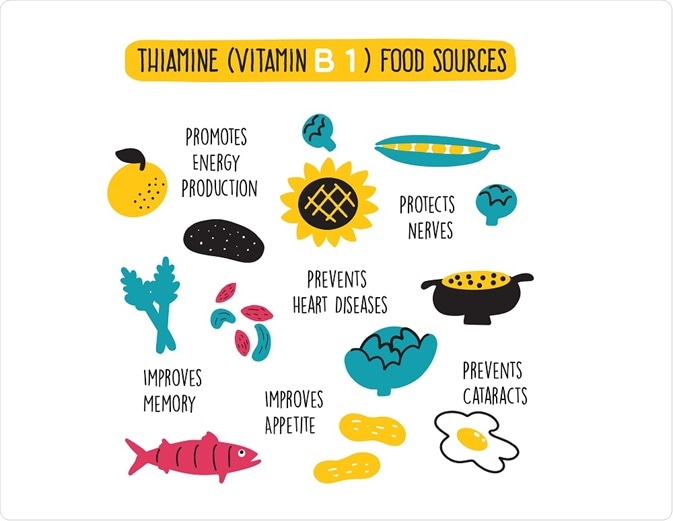 Ekaterina Kapranova | Shutterstock
What is thiamine?
Thiamine, also known as vitamin B1, plays a vital role in energy metabolism and the degradation of sugars and carbon skeletons; it is also involved in neuronal communication and activation of the immune system. The association of thiamine with these vital functions makes it an important dietary nutrient. Reduced thiamine intake results in impaired energy metabolism, increased cellular oxidative stress, and neurological side effects.
Benfotiamine mechanism of action
Benfotiamine acts by modulating the advanced glycation end products (AGEs). It can also act through non-AGE dependent pathways.
Advanced glycation end products are modified proteins or lipids that become non-enzymatically glycated on exposure to sugars such as aldose. AGEs may generate reactive oxygen species, attach to specific receptors, and form cross-linking structures.
AGEs are present in the diabetic vasculature and involved in the progression of atherosclerosis. Benfotiamine inhibits the synthesis of AGEs and thus decrease the metabolic stress. Benfotiamine thus helps in vascular complications associated with diabetes.
Benfotiamine can also regulate non-AGE dependent pathways such as nuclear transcription Factor κB, vascular endothelial growth factor receptor 2, and glycogen synthase kinase-3β (GSK-3β). It can also modulate mechanisms related to cell survival, repair, and apoptosis.
Health benefits of benfotiamine
1. Diabetic neuropathy
Benfotiamine therapy appears to be a potential strategy for preventing diabetic nephropathy, a severe complication of diabetes, associated with a high risk of heart disease and mortality. High glucose concentrations lead to an accumulation of triosephosphates; this leads to biochemical dysfunction and ultimately the development of diabetic nephropathy.
Preclinical studies in rats have shown that benfotiamine prevents the accumulation of triosephosphates in diabetes and hence inhibit the development of nephropathy.
2. Cognitive improvement in Alzheimer's disease
Preclinical studies have demonstrated that benfotiamine confers beneficial effects on cognitive impairment in Alzheimer's disease. Benfotiamine has been shown to reduce amyloid deposition in animal models of Alzheimer's disease. However, these effects have not been proved in humans beings. A phase II clinical trial is currently assessing whether benfotiamine can halt cognitive decline in patients with mild cognitive impairment.
3. Overcoming alcohol dependence
Chronic alcohol intake is associated with severe deficiency of vital nutrients and vitamins. Alcoholism-related thiamine deficiency are characterised by neurological syndromes due to progressive loss of central and peripheral white matter. Although thiamine replacement is important for patients with alcohol-induced central nervous system damage, benfotiamine has not proven effective in crossing into the central nervous system from the periphery.
4. Benfotiamine for smoking
Smoking leads to endothelial dysfunction, an early event in cardiovascular disease. This is exacerbated by oxidative stress and inflammation. In a preclinical study on rats, benfotiamine was found to prevent nicotine-induced vascular dysfunction. A trial conducted on healthy volunteers has demonstrated that short-term treatment with benfotiamine can partly restore macrovascular function in healthy smokers.
5. Kidney protection
Data from studies in rat suggest that benfotiamine confers protective action to the peritoneal membrane and remnant kidney in peritoneal dialysis and uremia. According to a study published in the Journal of the American Society of Nephrology, the addition of benfotiamine into the diet leads to increased transketolase activity and decreased expression of advanced glycation end products and their receptor.
A study by Ustuner et al. published in Tissue and Cell found that benfotiamine supplement may be helpful in attenuating antibiotic-induced nephrotoxicity via the amelioration of oxidative stress and inflammation of renal tubular cells.
6. Antitumor potential
In vitro studies suggest that benfotiamine may halt leukaemia by a mechanism termed paraptosis cell death. Paraptosis is a type of programmed cell death which involves cytoplasmic vacuole formation. A cell culture study by researchers of the Kanazawa University in Japan found that benfotiamine is a promising agent for acute myeloid leukemia patients who are not eligible for standard chemotherapy. They also observed that benfotiamine showed synergistic activity with cytarabine, a chemotherapeutic agent, to eliminate myeloid leukemia cells.
7. Antioxidant properties
Benfotiamine is also a potent antioxidant with anti-inflammatory properties that are produced through inhibition of prostaglandin and leukotriene synthesis.
Benfotiamine side effects and tolerability
The multimodal benefits of benfotiamine present an attractive option for treating a plethora of diseases, however, most benefits have been observed in the preclinical or pilot studies on humans.
Benfotiamine has been well-tolerated with no reports of serious adverse events in most human studies. However, clinical trials to establish the efficacy in humans and determine long-term side effects are needed.
Sources
- Volvert ML., et al. (2008). Benfotiamine, a synthetic S-acyl thiamine derivative, has different mechanisms of action and a different pharmacological profile than lipid-soluble thiamine disulfide derivatives. BMC Pharmacology. doi:10.1186/1471-2210-8-10
- Fraser D., et al. (2012) The effects of long-term oral benfotiamine supplementation on peripheral nerve function and inflammatory markers in patients with type 1 diabetes: a 24-month, double-blind, randomized, placebo-controlled trial. Diabetes care. doi:10.2337/dc11-1895
- Manzardo AM.,et al. (2013) Double-blind, randomized placebo-controlled clinical trial of benfotiamine for severe alcohol dependence. Drug Alcohol Depend. doi:10.1016/j.drugalcdep.2013.07.035
- Kihm LP., et al. (2011) Benfotiamine protects against peritoneal and kidney damage in peritoneal dialysis. J Am Soc Nephrol. doi:10.1681/ASN.2010070750
- Ustuner MA.,et al.(2017) Effects of benfotiamine and coenzyme Q10 on kidney damage induced gentamicin. Tissue Cell. doi:10.1016/j.tice.2017.10.001.
- Sugimori N, et al. (2015) Paraptosis cell death induction by the thiamine analog benfotiamine in leukemia cells. PLoS One. doi:10.1371/journal.pone.0120709
- Raj V.,et al. (2018) Therapeutic potential of benfotiamine and its molecular targets. Eur Rev Med Pharmacol Sci. doi:10.26355/eurrev_201805_15089.
Further Reading
Last Updated: May 23, 2019
 Vitamin deficiencies may contribute to chronic fatigue and low motivation