Delirium is a sudden state of severe mental confusion that can occur as a result of illness, surgery or the use of some medications. This clinical syndrome can be difficult to define precisely, but it involves abnormalities in awareness, perception and thought.
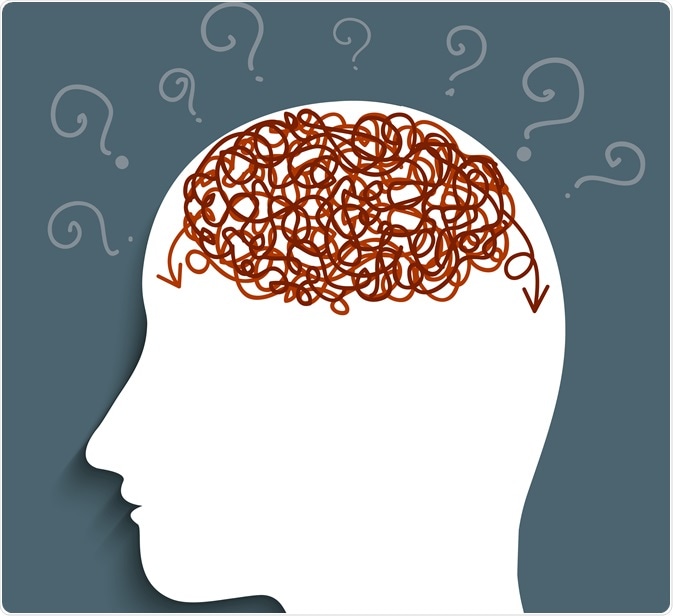 Image Credit: Idea store/Shutterstock.com
Also called “acute confusional state,” delirium usually starts suddenly and can be frightening for the person experiencing it as well as for those around them. However, the delirium usually lifts once the underlying cause has been identified and treated.
Many cases of delirium are caused by conditions that prevent oxygen or other vital substances reaching the brain. Some examples of these causes are drug abuse, surgery, poison, electrolyte imbalance, sedative withdrawal, alcohol withdrawal and infections such as pneumonia.
Several subtypes of delirium exist and these include the hypoactive subtype, which is characterized by a quiet confusion and apathy that may be easily overlooked or confused with depression; the hyperactive subtype, which presents with prominent disorientation, agitation and delusion, but may be confused with schizophrenia and the mixed subtype, where patients fluctuate between the hypoactive and hyperactive subtypes.
A patient’s symptoms can sometimes point towards the underlying cause of delirium, such as fever, for example. Some common features of delirium, however, such as drowsiness, confusion, and disorientation do not provide obvious clues as to the cause of the condition.
Delirium is present in about 15 to 20% of patients who are admitted to hospital. The syndrome is very common among the elderly and as many of these patients never recover their original function and may require institutionalisation. The incidence of delirium is estimated to be around 0.5% in those aged between 18 and 55 years; 1.1% in those aged between 56 years and 85 years and 13.6% among those older than 85 years. Delirium is also more common among people with a pre-existing cognitive abnormality, HIV or malignancy.
Although these facts are known, delirium is still underdiagnosed and inadequately managed, with as many as two thirds of cases being overlooked in some healthcare settings. One problem is that gaps may occur in terms of the measures taken to identify delirium such as daily assessment of cognitive function. Staff may also fail to perform proper assessment of delirium hallmarks such as a reduced attention span or fluctuating mood. Physicians also depend on notes made in health records to detect fluctuations and this information may be insufficient to allow for timely recognition and diagnosis.
Some examples of delirium symptoms include:
- Diminished awareness of surroundings
- Uncertainly about location or means of arriving there
- Inability to understand conversation and speak clearly
- Vivid, often frightening dreams that continue once awake
- Auditory hallucination
- Agitation and restlessness
- Fear that others are trying to cause harm
- Feeling drowsy and slow
- Sleeping during the day, but being awake at night
- Rapid mood swings that vary from scared and anxious to depressed or irritable
- Confusion that worsens in the evenings
- Reduced concentration
- Acute or subacute onset
- Memory deficits, mainly in short-term memory
- Slowed or increased movement
- Changes in sensation
- Incontinence
Patients may only present with some of these symptoms and their history needs to be examined in order to determine their previous level of function. According to the Diagnostic and Statistical Manual of Mental Disorders, the criteria that need to be met for delirium to be diagnosed are as follows:
- Disturbed consciousness, with the patient displaying a reduction in awareness of their environment, for example, along with less ability to sustain or shift their attention.
- Cognitive change such as speech disturbance, reduced perception, disorientation or memory deficit that cannot be accounted for by the pre-existence or emergence of dementia.
- The abnormalities develop quickly, over the course of hours or days and tend to fluctuate in severity throughout the day.
- Medical history, laboratory tests or physical examination indicates that the problem is being caused by an intoxicating substance, medical condition, the use of a certain medication or a combination of these factors.
This diagnostic instrument can be difficult to apply to very sick patients. For critically ill patients, clinicians can use the Confusion Assessment Method for the Intensive Care Unit (CAM-ICU) to detect delirium and this tool is particularly useful for patients on mechanical ventilation. CAM-ICU uses non-verbal tests to assess key delirium symptoms.
Another diagnostic tool that may be used in the ICU setting is the Intensive Care Delirium Screening Checklist (ICDSC). To estimate the severity of symptoms, the Delirium Detection Scale (DDS) may be used.
What is delirium? | Mental health | NCLEX-RN | Khan Academy
References
Further Reading
Last Updated: Feb 23, 2023