Dendritic cells are important innate immune cells that play a key role in shaping the body’s immune response. These cells mainly arise in the bone marrow and circulate in the blood to reach the sites where they are required.
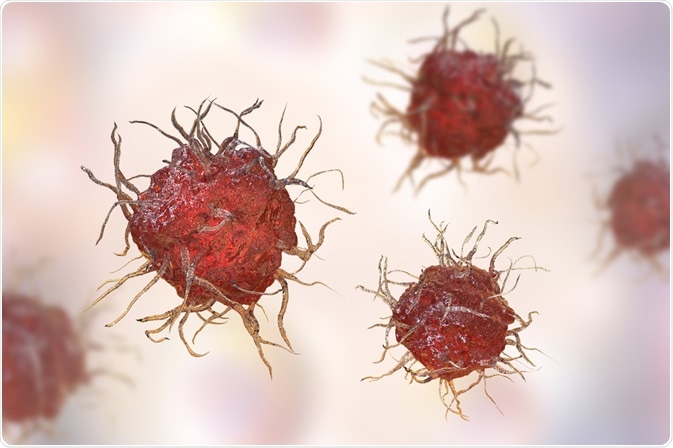
Image Credit: Kateryna Kon / Shutterstock.com
Functions of dendritic cells
Dendritic cells are able to induce an initial immune response in inactive or resting T lymphocytes. To do this, the dendritic cells capture antigens from invading bodies, which they process and then present on their cell surface, along with the necessary accessory or co-stimulation molecules.
Due to this ability to process and present antigens, dendritic cells are referred to as antigen-presenting cells (APCs). Although all dendritic cells can perform antigen presentation to stimulate naïve T cells, different types of dendritic cells have distinct markers and different locations.
Dendritic cells also differ in migratory pathways, their immunological function, and how much their generation depends on inflammatory stimuli. In addition to their ability to activate naïve T cells, dendritic cells play a role in aiding regulatory T cell differentiation and the development of T cell tolerance.
Dendritic cells : professional antigen presenter | Antigen presenting cell | Role of dendritic cells
The role of cytokines in dendritic cell communication
Dendritic cells are continuously communicating with other body cells. This communication may be achieved through cell-to-cell contact via the interaction of cell surface receptors. For example, the membrane proteins present on the surface of dendritic cells from the B7 family interact with the CD28 receptor protein present on lymphocytes.
However, this communication between cells can also occur indirectly and at a distance via cytokines. Cytokines are cell signaling molecules that aid the communication between cells in immune responses and stimulate the movement of immune cells to the sites of infection or trauma where they are needed.
For example, the in vivo activation of dendritic cells using microbe fragments causes their rapid production of interleukin (IL)-12, which is a cytokine that aids the activation of naïve CD4+ T cells and their movement towards T helper cells. This eventually leads to the priming and activation of the immune system to attack any cells in the body that present the antigen originally displayed on the surface of the dendritic cell.
Different cytokines are produced depending on the type of dendritic cell involved. For example, the plasmacytoid dendritic cells can produce high levels of type 1 interferons, which leads to the recruitment of another type of APC called a macrophage that can engulf and destroy pathogens.
How dendritic cells respond to pathogens
Dendritic cells have many cytoplasmic processes which provide a large surface area for making contact with other surrounding cells such as neutrophils, natural killer cells, and T cells. Experiments have shown that just one mature dendritic cell is needed to activate 100 to 3,000 T cells.
In the body, dendritic cell precursors move from the bone marrow into the bloodstream from which they can reach almost any non-lymphoid tissue. They remain in these tissues in their inactive form where they constantly sample the environment through phagocytosis and endocytosis. Their cytoplasmic processes extend through the epithelial junctions, allowing them to sample antigens even in the absence of any obvious infection or inflammation.
When a pathogen invades, resident inactive dendritic cells detect the invader through proteins referred to as pattern recognition receptors. After capturing antigens, they then leave the tissue and move across the endothelium of lymph channels into the draining lymph nodes. This migration is guided by chemokines such as CCL21 and CCL19.
As the dendritic cells migrate from the peripheries, they mature both functionally and phenotypically. They then stop the antigen capture while upregulating their expression of molecules such as CD86, CD80, and the chemokine receptor CCR7.
Dendritic cells will also release cytokines that promote inflammation such as IL-12 and TNF-α. Once in the lymph nodes, dendritic cells migrate to sites where T-cells are located and perform antigen presentation.
Dendritic cells in research
The very important role that dendritic cells play in the shaping of the T cell response to antigens makes these cells popular research targets for the development of immune-modulating therapies for conditions such as autoimmune disease, cancer, and graft-versus-host disease. The knowledge and understanding of dendritic cells have significantly grown over the last three decades; however, the use of these cells as a form of immunotherapy is still in its very early stages.
References
Further Reading
Last Updated: Sep 5, 2022
 Carrot fiber supplement boosts gut bacteria and immune defenses