Estradiol is the most potent and most abundant estrogen in females and is the principal growth hormone required for their reproductive development. Estradiol supports the growth of the vagina, the fallopian tubes, the endometrium, and the cervical glands. This hormone is also required to maintain oocytes, which are the eggs that reside in the ovaries, and triggers a series of events that lead to ovulation.
In males, a small amount of estradiol is produced in the testes. Here, estradiol plays a role in facilitating the maturation of sperm, as well as maintaining a healthy libido. Estradiol is one of two active metabolites of the male hormone testosterone. The other active metabolite of testosterone is dihydrotestosterone.
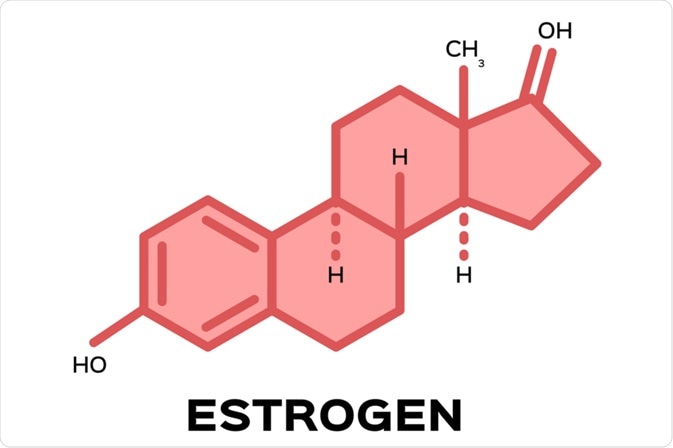
Image Credit: gritsalak karalak / Shutterstock.com
Estradiol and the brain
The developing brain expresses high levels of estradiol receptors, which are nuclear transcription factors. These receptors regulate gene expression and act at the membrane level to stimulate signaling pathways.
Estradiol is therefore required for many other biological functions in addition to its role in female reproductive processes. In fact, this versatile hormone regulates sexual differentiation of the brain and provides protective effects for the bones, brain, and cardiovascular system.
In the nervous system, estradiol plays an important role in a wide range of neurological functions. To this end, estradiol is involved in fine motor control, learning, memory, sensitivity to pain, motor coordination, and protecting the brain against stroke damage and Alzheimer’s disease.
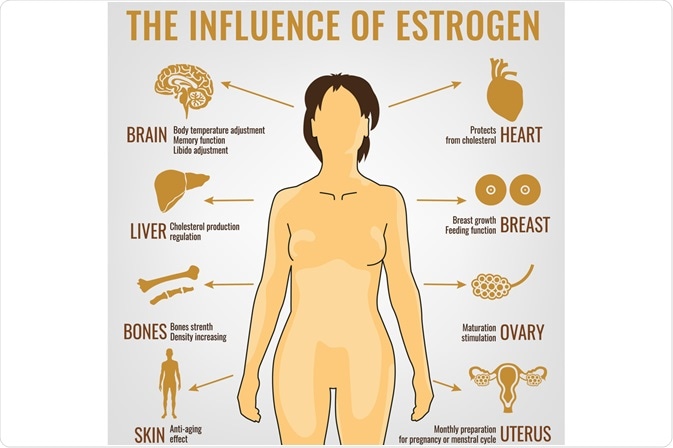
Image Credit: Double Brain / Shutterstock.com
Mood
Estrogens affect the serotonergic, dopaminergic, noradrenergic, and cholinergic systems, all of which play a role in mood. Research has shown that estrogen is also involved in depressive illness, as it appears to have antidepressant effects in humans and influences the responses of animals to antidepressant medication.
Cognitive function
Verbal memory, spatial ability, and fine motor skills are all influenced by estrogens. Estrogens are also involved in the strategies used to solve spatial or navigational puzzles which, as a result of their differences in estrogen levels, differ between males and females.
Dementia
Open trials of estrogen therapy in women have demonstrated a prospective benefit of the therapy on cognitive function in women without dementia. Among elderly women who take postmenopausal estrogen replacement therapy, there is a lower incidence of death caused by Alzheimer’s disease as compared to those who do not take ERT.
Understanding Estrogen and its Effect on Cognition
Pain
Murine studies have shown that different pain pathways are used in males and females. In women, these pain pathways appear to be regulated by gonadal steroids and, in particular, estrogen.
Stroke
In experimental models of stroke, estrogens play an important role in protecting against the damage caused by ischemia.
Estradiol and menopause
In the central nervous system (CNS), estrogen has been shown to increase cerebral blood flow, provide anti-inflammatory effects, promote neuronal synapse activity, and exert both neuroprotective and neurotrophic effects on tissues in the brain.
The brain relies solely on blood flow as a source of energy to function; in fact, blood vessels make up around one-third of the brain. Estrogen is known to increase cerebral perfusion by binding to endothelial receptors and stimulating nitric oxide release, which leads to vasodilation.
At the neuronal synapse, estrogen increases the levels of the neurotransmitters serotonin, dopamine, and norepinephrine, as well as the number of receptors that are available for these chemicals. Estrogen has been shown to confer neuroprotective effects against oxidative stress, ischemic damage, and the damage caused by amyloid protein, which is involved in the pathogenesis of Alzheimer’s disease. This hormone also promotes the growth and repair of neurons and stimulates the production of nerve growth factors.
Through these various mechanisms, estrogen has a large influence on emotions, mood, and cognitive function, all of which may be affected during menopause, which is when estrogen levels start to decline. Symptoms that may arise during menopause include mood changes, memory problems, and hot flashes. The prevalence of Alzheimer’s disease, which is more prevalent in women than men, has also been associated with a deficiency in estrogen.
Physicians should be aware of these associations when advising female patients about some of the symptoms they may experience during mid-life. To this end, it may be beneficial for healthcare providers to educate women of this age group about the potential benefits of estrogen replacement therapy. Such benefits may include an overall improved sense of well-being, improved cognitive function, and a reduced risk of Alzheimer’s disease.
References
Further Reading
Last Updated: Dec 22, 2022