Infertility is defined as the failure to conceive after a year of unprotected and unrestricted intercourse. In women over 35, the period is defined as six months. Primary infertility is when a couple has never had children, whereas secondary infertility refers to couples who have had children together but are at present unable to conceive.
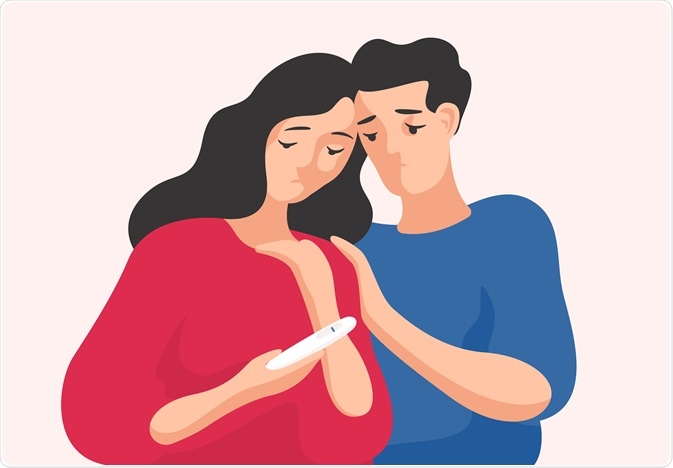 Image Credit: GoodStudio/Shutterstock.com
Causes of infertility
The causes of infertility are equally split between male, female and unknown causes.
Male causes
- Oligospermia/azoospermia
- Varicocele
- Prostatic infection
- The majority of sperms are inactive or non-motile
- Blockage of the reproductive tract, following surgery or injury
Reduction in sperm quality or quantity may be idiopathic, or a result of conditions such as:
- Congenital – Klinefelter’s syndrome
- Acquired:
- Infections of the male reproductive tract
- Alcohol or drug abuse
- Exposure to environmental pollutants
- Smoking
- Following mumps orchitis
- Chronic illnesses such as kidney disease
- Testosterone underproduction
- Medications
- Chemotherapy/ radiation
- Heat exposure to the testes, such as overly warm tubs, use of a laptop on the lap for long periods, varicoceles.
- Impotence or premature ejaculation
Female causes
- Anovulation
- Polycystic ovarian syndrome, a metabolic disease in which infertility is often associated with diabetes and obesity.
- Primary ovarian failure
- Blockage of the fallopian tubes, due to endometriosis, pelvic inflammatory disease, ectopic pregnancy, or surgery.
- Uterine developmental abnormalities, fibroids, or adhesions.
Anovulation may be due to many factors, including:
- Age
- Smoking
- Alcohol abuse
- Stress
- Obesity
- Malnutrition
Diagnosis of the cause of infertility
In men, testing starts with semen analysis, and hormonal assays if indicated, as when sperm counts are very low.
In women, ovulation is tested for, either at home, using means such as basal body temperature or cervical mucus tests, or in hospital, with an ultrasound or blood tests.
If ovulation is present, tests may be performed to rule out tubal or uterine blockages and assure normal uterine anatomy.
If ovulation is absent, hormonal levels are checked, as well as metabolic parameters.
Treatment of infertility
Treatment is based on:
- The couple’s age
- The period of infertility
- The test results, showing any abnormalities if present
- The health of the couple
Treatment includes:
- Medication for obvious problems, such as anovulation or infection
- Surgery for blockages or for varicoceles
- Impotence or premature ejaculation requires behavioral and medical therapy
- Other modes of treatment such as:
- Artificial insemination
- Assisted reproductive technologies, such as in vitro fertilization, intracytoplasmic sperm injection, or gamete intra-fallopian transfer.
ART is costly, time-consuming and carries a relatively higher risk of certain birth defects, such as heart, digestive and cleft lip/palate problems.
More modern choices include the use of a surrogate mother or a gestational carrier.
References
Further Reading
Last Updated: Apr 15, 2021
 Frozen embryo transfers dominate assisted reproduction across Europe