Ketosis represents a state of the organism characterized by the controlled and regulated production of ketone bodies in the blood via various metabolic processes. During deficient carbohydrate intake, reduced insulin levels lead to a reduction in lipogenesis and fat accumulation. After several days of fasting, glucose reserves become insufficient both for normal fat oxidation and for the proper functioning of the brain.
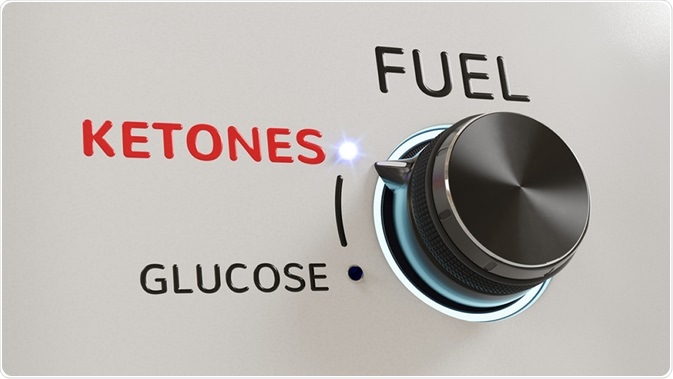
Image Credit: Watcom / Shutterstock
As the central nervous system cannot use fatty acids for its energy because they cannot cross the blood-brain barrier, it normally utilizes glucose. Low carbohydrate intake forces the brain to find alternative energy sources derived from the overproduction of acetyl coenzyme A (CoA). The production of ketone bodies in a process called ketogenesis ensues.
Ketosis is a completely physiological mechanism, and it needs to be differentiated from the pathological ketoacidosis seen in type 1 diabetes. Physiological ketosis that arises from ketogenic diets is characterized by ketone bodies in blood reaching a maximum level of 8 mmol/l with no change in pH, compared to uncontrolled diabetic ketoacidosis where their level can exceed 20 mmol/l and result in a lower blood pH.
Ketone body metabolism
The term “ketone bodies” refers to three specific compounds: acetone, acetoacetate and beta-hydroxybutyrate (or beta-hydroxybutyric acid). The circulating levels of ketone bodies depend both on their rate of production (i.e. ketogenesis) and their rate of utilization (i.e. ketolysis). They are of vital importance to the brain, which is unable to derive energy from other sources when blood glucose levels are low.
In healthy adults, the liver can produce 185 grams of ketone bodies each day. The main ketone body produced is acetoacetate, but the primary circulating ketone is beta-hydroxybutyrate. They are then incorporated into acetyl coenzyme A and used in the Krebs cycle – the central metabolic pathway in all aerobic organisms.
A majority of ketone bodies are formed in the process of ketogenesis when fatty acids liberated from adipose tissue are broken down during fasting or adrenergic stress. Fatty acids in circulation may also be derived from the action of lipoprotein lipase on chylomicrons (largest lipoproteins) or low-density lipoproteins (VLDL), which mainly happens in the non-fasting state.
During starvation, the levels of ketone bodies increase from the third day and reach the plateau at 8 mmol/l after 5-6 weeks of starvation. While free fatty acids become the principal source of energy for the skeletal muscles, and thus ketone body utilization declines, the brain increases their use.
The effects of ketone body metabolism evince that mild ketosis may offer therapeutic potential in a range of different disease states. Therefore ketone bodies may have therapeutic effects on diseases of substrate insufficiency or insulin resistance, diseases arising from free radical damage, and disease resulting from hypoxia.
What is Ketosis? Ketosis Procedures & How it works? - Regenexx
Measurement of ketone bodies
Classical tests for detecting ketones in blood and urine are semi-quantitative, reflecting the presence of acetone or acetoacetate via a reaction with nitroprusside and producing a complex detectable on a test strip. False-positive results can arise in the presence of drugs that contain sulfhydryl groups (for example, zofenopril or captopril), while false-negative results occur when the urine is highly acidic.
In recent years, quantitative blood tests for beta-hydroxybutyrate have become available to detect levels of this ketone body in venous or capillary blood samples. In diabetic ketoacidosis, the ratio of beta-hydroxybutyrate to acetoacetate is initially greater than 3:1. With treatment, this ratio changes, and there is a conversion of beta-hydroxybutyrate to acetoacetate.
Knowing the physiology of ketosis and ways to measure ketone bodies is important for conducting a ketogenic diet. In most general terms, a ketogenic diet represents any diet that causes ketone bodies to be produced by the liver, shifting the body's metabolism away from glucose and towards fat utilization.
During the milder ketosis induced by such diet, there is a strong positive correlation between ketones found in urine and serum beta-hydroxybutyrate. Also, breath acetone has been demonstrated to foresee plasma ketones and urinary ketone testing in individuals on a ketogenic diet.
Further Reading
Last Updated: Apr 6, 2021
 Experts call for safer weight loss as concerns grow over GLP-1 use