The severity of psoriasis can vary greatly among different patients, and the impact on the quality of life is also highly variable as a result. For individuals living with psoriasis, there are a number of techniques for coping with the condition and improving overall wellbeing.
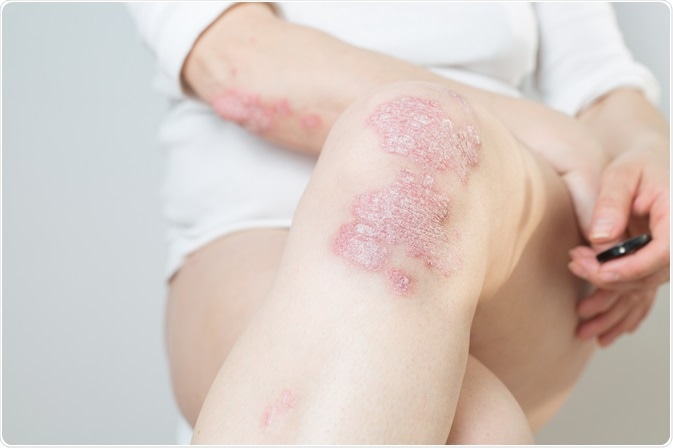
Psoriasis. Image Credit: SNAB/Shutterstock.com
Skin Care
Psoriasis is typically a chronic condition, and a health professional should be involved in the patient care plan to monitor the condition and ensure the treatment is providing adequate relief.
However, it is important for people with psoriasis to take responsibility for their health and wellbeing by implementing methods to improve symptoms of psoriasis and promote healing of the disease.
Appropriate skin care management should include regularly moisturizing the skin, in addition to several other techniques to ease the symptoms. A warm and soothing bath can be beneficial, and it’s helpful to spend some time outside in the sun often. It is important to relax and refrain from scratch or itching skin as much as possible.
Psoriasis treatment should be continued, even if the symptoms of the condition improve. This helps to prevent flare-ups of the condition and ensure the symptoms are kept under control.
Cardiovascular Risk Management
Individuals with psoriasis are at an increased risk of diabetes mellitus and cardiovascular disease than unaffected individuals. For this reason, it is important for them to make healthy lifestyle choices to help reduce this risk.
Excess weight is a significant cardiovascular risk factor and should be addressed if patients are overweight or obese. The primary factors that affect weight loss or gain are diet and physical activity, as they correlate to energy intake and consumption.
A healthy and balanced diet that is rich in fresh fruit and vegetables is preferable to encourage the natural consumption of essential vitamins and minerals. Highly processed food that is high in fat or sugar content is not recommended as they are often low in satiety and do not offer the body the valuable nutrients it needs. It is important for individuals to be physically active for at least 30 minutes each day.
It is also beneficial for smokers to quit smoking and for individuals to moderate their intake of alcohol, as both of these are cardiovascular risk factors. Additionally, regular monitoring of blood pressure can help to detect early signs of cardiovascular disease and reduce the risk of progression to serious events.
Social Isolation and Psychological Effects
The symptoms of psoriasis such as red and scaly skin can be painful as well as embarrassing in social settings. Almost any area of the body can be affected, including the arms, legs, face, and head. It can be difficult to hide changes to the appearance of the skin, which can cause patients to become uncomfortable and self-conscious in social situations.
For this reason, many sufferers of psoriasis choose to somewhat isolate themselves from society and are more likely to suffer from depression. However, psoriasis is an inflammatory autoimmune condition that is not contagious and should not be a cause of isolation.
References
Further Reading
Last Updated: Feb 17, 2021
 Study reveals key role of sugars in immune cell movement during psoriasis