A sperm is the male reproductive cell. The full name for a sperm that has a single flagellum (or "tail") to propel it along is a spermatozoon. Unlike this motile sperm, when a sperm lacks a flagellum and is non-motile, it is termed a spermatium.
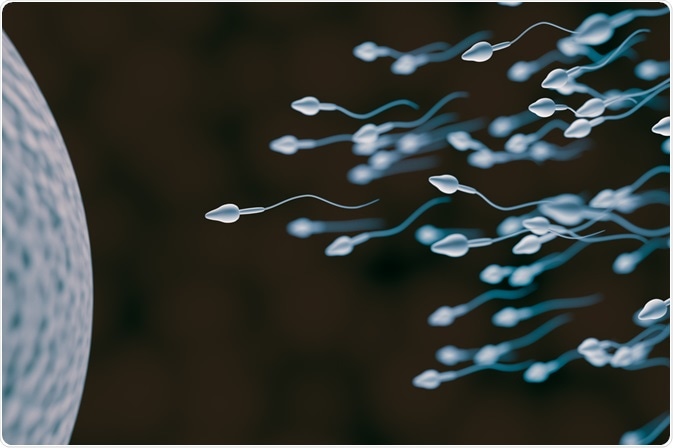
Image Credit: vchal / Shutterstock.com
Healthy spermatozoa that take the right route to achieve fertilization are rare, with many taking the wrong channel and failing to reach the female reproductive cell of the egg. To achieve fertilization, sperm needs to move up the oviduct and fight its way through the three protective layers of the egg’s surface.
To access the egg, the sperm uses chemicals and a spike present in the sperm’s head to bore a hole into the egg’s surface while it is propelled by the thrashing flagellum. Should a sperm reach this stage and penetrate the three protective layers, it is then engulfed for fertilization and the egg sends a chemical message that makes its surface impenetrable. Any other sperm that subsequently reach the egg are repelled.
Movement of the spermatozoa
The flagellum of the sperm provides a whip-like movement in order to propel it forwards. The sperm cannot swim backward due to the nature of the flagellar movement and propulsion. The sperm consists of a head that is 5 micrometers (µm) by 3 µm in size and a flagellum of around 50 µm in length.
There is little cytoplasm within the sperm, much of which is made up of DNA. The head contains the cell’s DNA, which is tightly packaged into 23 chromosomes, while the neck of the sperm contains the mitochondria that provide the sperm with energy.
At the tip of the sperm's head is a package of enzymes that are needed to break down the protective layers that cover the egg’s surface. Nearly 1000 sperm are made in the human male testes per second. Once released, the sperm can survive for approximately 48 hours.
The spermatozoon requires a liquid medium that it can move through in order to reach and fertilize the egg. The fluid medium into which sperm are released is called semen. Semen is made up of several fluids and enzymes secreted by the male reproductive tract. It provides nutrition to the spermatozoa and prevents the sperm from being motile due to its thick and alkaline nature.
The sperm achieve complete motility once they reach the posterior vagina of the female. During ejaculation, the sperm are deposited in the posterior vagina, where they quickly make contact with the cervical mucus, thereby avoiding vaginal acid and immune attack.
The optimal pH for sperm to be viable is around 7.0 to 8.5; at a pH of less than 6.0, sperm motility is reduced. The normal pH of the vagina is between 3.5 to 4.0, thereby making this acidic environment destructive to sperm. However, both the seminal fluid and the cervical mucus in the posterior vagina are alkaline, which provides a buffering effect, and a reduction in the environmental acidity after ejaculation can be maintained for up to two hours.
Limiting entrance of abnormal sperm
Another important feature of the cervical mucus is its ability to restrict the progress of sperm with abnormal morphology. Studies have shown that the proportion of sperm in the cervical mucus and uterine fluid that have a healthy morphology is significantly greater than in the original semen.
Comparative studies of morphologically normal versus abnormal spermatozoa have demonstrated that those with an abnormal morphology are less likely to be motile and of the ones that are motile, the speed at which they travel is slower than that of normal sperm. Together, these findings suggest that the entry of morphologically abnormal sperm into the cervical mucus is limited by their decreased movement as a result of increased mucosal resistance.
References
Further Reading
Last Updated: Jul 14, 2023
 Microgravity reduces the ability of sperm to navigate reproductive tracts