The diagnosis of psoriasis is usually made upon physical examination, following a discussion about the family and medical history of the patient. A skin biopsy is sometimes needed to confirm the diagnosis. The disease can then be classified according to its severity to help guide treatment decisions.
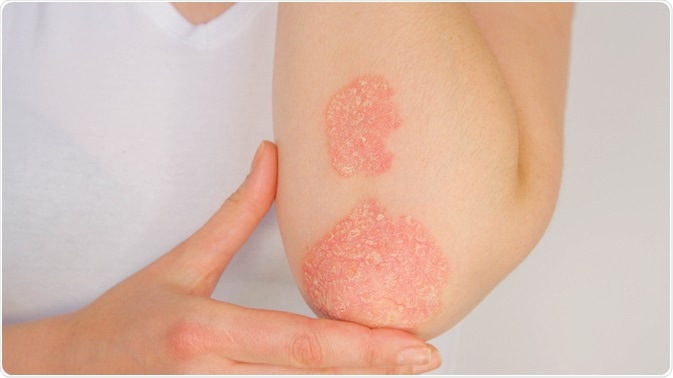 Image Credit: Flystock/Shutterstock.com
Family and medical history
It is important to discuss the family and medical history when a patient is suspected to be experiencing symptoms of psoriasis. This is because there is a strong hereditary link with psoriasis and approximately one-third of people with psoriasis have a close family member with the condition.
Additionally, other medical conditions and particular medication may also have an impact on the likelihood of an individual to suffer from psoriasis. As a result, concurrent medical conditions should be discussed to cover this issue. Other lifestyle factors that may have triggered the onset of psoriasis are also important.
Skin examination
The diagnosis of psoriasis is primarily conducted with an examination of the skin, based on the appearance of the skin and the reported symptoms of the patient.
The affected area can be visually examined for signs of psoriasis on the skin, such as red patches and scaliness on the top. The specific symptoms depend on the type of psoriasis, but the general signs may include:
- Redness
- Scaliness
- Plaque
- Skin lesions
- Nail changes
- Itching
- Inflammation
- Pain
Auspitz sign refers to visible signs of pinpoint bleeding from deep layers of skin when the plaques in the affected area are scraped. The most commonly affected areas are the elbows, knees, scalp and back. However, other areas of the body may also be affected in some patients.
Skin biopsy
In most cases, there is no need for further examinations to confirm the diagnosis, such as blood tests or other diagnostic techniques. However, a skin biopsy may be useful in some cases to help in the differential diagnosis and rule out other possible skin conditions that may be responsible for causing the symptoms at hand. The skin biopsy sample taken from a patient with psoriasis will exhibit rete pegs (also called rete ridges).
Severity
The severity of psoriasis can vary greatly between different patients and it is useful to classify the extent of the condition when making a diagnosis to help guide the appropriate treatment choice. The degree of severity depends on the:
- Proportion of body surface affected
- Extent of redness, thickness and scaling of plaques
- Response to previous treatments
- Impact of disease on the individual
There are two main ways to classify the severity of disease. The Psoriasis Area Severity Index (PASI) is a widely used measurement tool that combines the area and severity of the lesions into a single score from 0 (healthy) to 72 (maximum level of disease). Alternatively, a more simple method of classification is based solely on the affected body area, as follows:
- Mild psoriasis: less than 3% of body affected
- Moderate psoriasis: 3-10% of body affected
- Severe psoriasis: more than 10% of body affected
As a guide, the palm of the hand is approximately 1% of the entire body surface.
Psoriasis, Causes, Types, Sign and Symptoms, Diagnosis and Treatment.
References
Further Reading
Last Updated: Dec 22, 2022
 Scientists uncover a key mechanism that protects the skin from harmful inflammation