Psoriasis is a chronic condition with no known cure. However, with appropriate treatment and management techniques, symptoms can usually be well controlled and allow patients to live uninhibited lives.
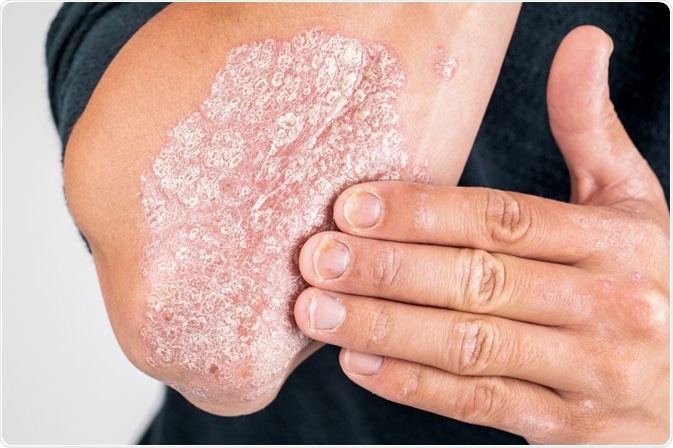
Image Credit: Fuss Sergey / Shutterstock.com
Patients with severe forms of psoriasis may experience a poorer quality of life and overall health outcomes as compared to other members of the general population. This is likely due to a number of factors, including related health conditions and the treatments used for the condition.
Remission and flare-ups
The nature of the symptoms of psoriasis is not constant; therefore, it is normal for psoriasis symptoms to vary in severity over time with remissions and exacerbations.
Approximately half of all patients with psoriasis will experience periods of remission, which can vary greatly in length. Psoriatic arthritis is a complication of psoriasis that affects approximately 1 in 10 patients with psoriasis.
As a result of the occurrence of both remissions and flare-ups, the quality of life of patients with psoriasis can vary significantly over different time periods, depending on the level of impediment.
Morbidity
The quality of life for patients with psoriasis can be greatly altered due to the effects of the disease. Scientific research has suggested that the physical and mental disability associated with moderate to severe cases of psoriasis is similar to that experienced with other chronic health conditions, such as heart disease and cancer.
Of particular concern, many patients with psoriasis are affected by depression that is secondary to the condition. This can alter their ability to enjoy life and participate in social activities as usual, and, in severe cases, can even lead to suicide.
Mortality
Patients with mild psoriasis are not associated with higher rates of mortality as compared to the general population, and the life expectancy is considered to be equal.
However, mortality rates may be affected in severe cases of psoriasis. Several studies with a sample population of men and women have shown that patients with severe cases of the disease are linked to death three to five years early than the control group population.
Associated factors
Psoriasis is related to several other factors, including:
- Smoking
- Alcohol consumption
- Metabolic syndrome
- Lymphoma
- Depression
- Suicide
- Melanoma
- Cardiovascular disease
- Respiratory diseases
- Diabetes
- Kidney disease
- Arthritis
These factors may also account for the mortality changes noted in patients with severe psoriasis. In comparison to a healthy control population, patients with mild are 11% more likely to suffer from these conditions, whereas those with severe psoriasis have a positive association with these conditions that is up to 35% greater.
In many cases, a resulting health condition, such as heart disease, is responsible for causing changes in mortality rates for patients with psoriasis.
Effect of treatments
For the vast majority of psoriasis cases, the affected area is localized to small patches of the body, often around the elbows and knees, and can be managed with simple topical treatments.
In severe cases, the treatments required to control the psoriatic symptoms can have harsh adverse effects and may increase the risk of other health conditions, such as skin cancer, lymphoma, and liver disease. For this reason, it is prudent to carefully consider the benefits and risks of treatments used for psoriasis in order to improve the overall quality of life.
References
Further Reading
Last Updated: Mar 17, 2021
 Scientists show for the first time how fibroblasts go 'rogue' in different diseases