Syphilis produces similar symptoms in both men and women. In the early stages, which are more infectious, the symptoms are mild and often difficult to recognize.
The symptoms develop in three stages:
- primary syphilis or stage 1
- secondary syphilis or stage 2 (followed by the hidden or latent phase)
- tertiary syphilis or stage 3
Primary Syphilis
Symptoms of primary syphilis may appear any time from 10 days to three months (most commonly 2-3 weeks) after exposure to the infection. The symptoms are mild, the commonest symptom being the appearance of a small, painless, hard clean sore or ulcer (called a chancre).
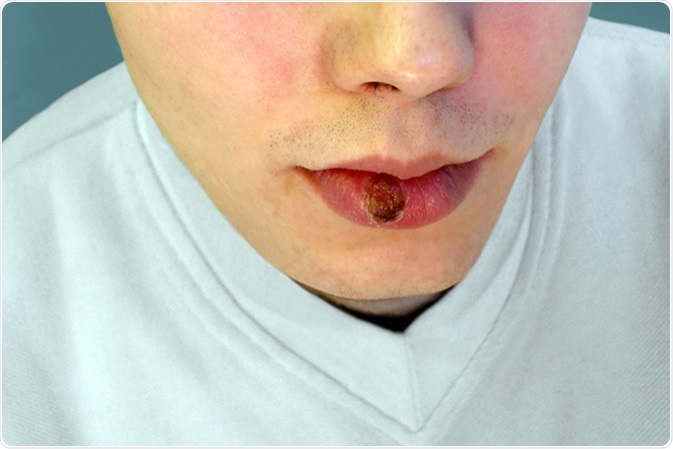
Primary syphilis - indurated chancre on the lip. Image Credit: Nau Nau / Shutterstock
The sore is usually seen on the part of the body that is the entry point of the infection - the tip of the penis, vagina, anus, rectum, tongue or lips. It is usually single, but some individuals show multiple primary syphilitic chancres.
In addition, there may be painless firm swelling of lymph nodes within a week of the chancre’s appearance. The sore disappears within two to six weeks in most patients, but the infection remains. If the condition is not treated, syphilis will move into its second stage.
Secondary Syphilis
This is stage 2 of the infection and affects about a fourth of all patients. This stage appears about 6-12 weeks (range: 1-6 months) after the appearance of the sore and reflects generalized infection. In the commonest form, secondary syphilis manifests as a non-itchy skin rash that may appear anywhere in the body, such as the palms of the hands or the soles of the feet. Condyloma lata are other lesions of secondary syphilis, referring to moist warty lesions occurring in skin folds and on the genital organs.
In addition, the individual may experience swollen lymph nodes, headaches, fatigue, fever, weight loss, patchy hair loss and pain in the joints. These symptoms generally resolve within a few weeks even without treatment, or they may come and go over a period of months. About 80 percent of these patients enter the latent phase of the infection.
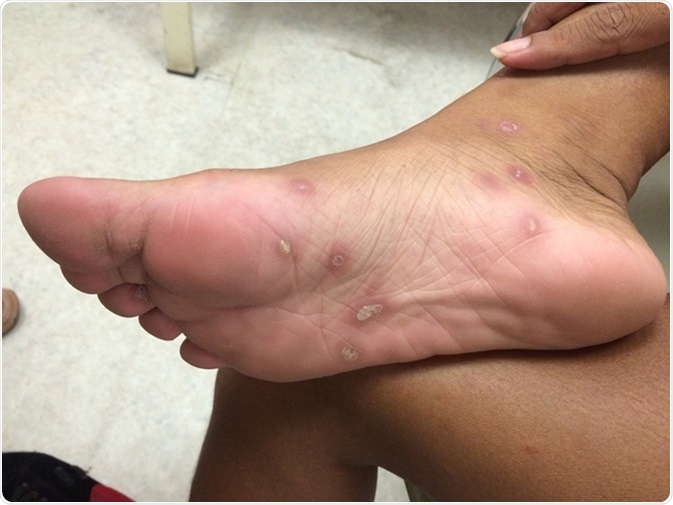
Secondary Syphilis of feet. Image Credit: TisforThan / Shutterstock
Latent Phase
After the secondary phase, the infection moves into a latent or hidden phase. There are no symptoms during this phase. Latent syphilis is infectious during the first two years. Transmission is possible through unprotected sexual contact. However, after one year (two years according to the UK and WHO classification) this ‘early latent syphilis’ passes into ‘late latent syphilis’. At this point the condition becomes non-transmissible.
The latent stage may continue for many years (even decades) after the primary stage, and persists for life in about 50 percent of these patients. One in five suffers a relapse in the subsequent year, which is infectious. Without treatment, there is a risk that latent syphilis will move on to the most dangerous stage 3 or tertiary stage. Some patients are cured spontaneously even without treatment.
Tertiary Syphilis
Around 40 percent of people who are not treated for syphilis develop serious symptoms in the tertiary stage. The symptoms of tertiary or late syphilis depend on the affected organ. The typical lesion is the gumma, found in 15 percent of patients. Death may occur in this stage.
Gummata
These are chronic inflammatory nodules or plaques, which may erode the underlying tissue and cause local destruction. They are typically found at 3-12 years following primary infection. These most commonly affect the skin and the bones.
Other organ systems affected at this stage include:
- the brain and nerves (7 percent)
- the eyes
- the heart and blood vessels (10 percent)
- the bones
- the skin
Neurological syphilis
- In the brain late syphilis is sometimes asymptomatic but the cerebrospinal fluid shows abnormalities.
- Symptomatic neurosyphilis presents in various ways, such as
- stroke
- loss of memory (dementia)
- psychosis
- depression
- mania
- loss of co-ordination
- paralysis of limbs
- numbness
- defects of the spinal cord such as tabes dorsalis, presenting with sensory ataxia and shooting pains
- deafness
- blindness
Cardiovascular syphilis
This is characterized by inflammation of the aorta, typically at the root, but sometimes spreading to other parts of this great blood vessel. It manifests as aortic regurgitation, aortic aneurysm and angina.
Syphilis During Pregnancy
Syphilis during pregnancy can be passed on to the unborn or newly born baby, most commonly in the first two years of infection. This may lead to complications like congenital syphilis (in a third of babies born to women with early syphilis), miscarriage and stillbirth (together comprising a third of pregnancies in this patient subgroup) and neonatal death.
Congenital Syphilis
The severity of syphilis contracted in intrauterine life ranges from asymptomatic to fatal. The clinical features include:
- spontaneous abortion
- stillbirth
- premature birth
- brain infection (encephalitis)
- generalized skin rash
- runny nose (‘snuffles’)
- liver damage
- multiple organ failure
- bleeding disorders
- consumption coagulopathy
These symptoms are seen immediately after birth.
Other features that may appear later include:
- inflammation or osteitis of long bones
- dental malformations
- abnormalities of facial and cranial bones
- ocular abnormalities (interstitial keratitis)
- hearing loss
- chronic neuropsychological deficits
- paroxysmal cold hemoglobinuria
Further Reading
Last Updated: Aug 21, 2023
 Mediterranean-style diets improve pelvic floor function and sexual health, review finds