The prevention of thrombosis should be actively sought in individuals who are at a high risk of the condition but is generally not required by all populations. People with a higher risk of thrombosis are likely to benefit from effective preventative methods.
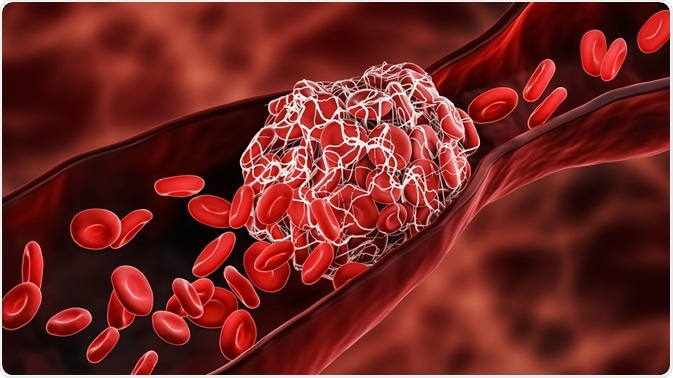
Image Credit: MattLphotography / Shutterstock.com
Determining the risk of thrombosis
Although anyone can be affected by thrombosis, some populations are at a greater risk of forming a blood clot as compared to others. People at risk of thrombosis are more likely to benefit from preventative methods to reduce the incidence of thrombosis and related complications, such as embolization.
People who are at an increased risk of thrombosis include:
- Medical history of thrombosis
- Family history of thrombosis
- Recent surgery or trauma requiring bed rest
- Cancer and related therapy
- Elderly people
- Pregnant mothers
- Women taking birth control or hormonal estrogen therapy
- Obesity
- Cardiovascular disease
- Smoking
- Varicose veins
Each of these risk factors is associated with a different level of increased thrombosis risk, which should be considered in the prevention of thrombosis. Most treatments are associated with some degree of danger or inconvenience to the patient, and the benefit to risk ratio differs for each individual.
Lifestyle prevention
There are some simple lifestyle adjustments that can help to reduce the risk of thrombosis. These are closely linked to the specific risk factors for thrombosis and help to reduce the likelihood of their occurrence.
For example, obesity is strongly associated with a higher incidence of thrombosis; therefore, adopting good nutritional and exercise habits is a great way to a lessen this risk. Opting for whole-grain foods, as well as fruit and vegetables is preferable, as these food products are high in fiber but have low salt, sugar, and fat content. Regular exercise can also be useful in maintaining a healthy weight, with at least 30 minutes of daily exercise currently being recommended.
People who smoke are also more likely to experience thrombosis and should, therefore, be encouraged to quit or reduce their smoking habits to help prevent thrombosis.
Some specific situations are also associated with an immediate increased risk of thrombosis. Long periods of staying sedentary, due to airplane travel or bed rest, allow stasis of the blood, which is the ideal condition for a thrombus to form. If someone at risk of thrombosis is likely to stay sedentary for extended periods of time, it is recommended that they make regular movements of their feet and legs to keep the blood moving to prevent the formation of a blood clot.
What causes DVT and how can we stop it?
Pharmacological prevention
Coagulation factors in the blood are essential for the formation of blood clots and can be manipulated with the use of pharmacological agents to prevent thrombosis.
Anticoagulant medications such as warfarin are commonly used in the prevention of thrombosis. Aspirin is also widely used and is associated with less severe complications; therefore, it is often opted for in low-risk patients.
These agents must be used with caution, as they are associated with an increased risk of bleeding as a direct result of their mechanism of action. The way these agents work changes the functionality of the coagulation factors, which normally work to form a clot when a blood vessel ruptures. By inhibiting this clot formation function, it can take longer to form a clot and can therefore lead to a significant volume of blood loss.
For this reason, it is prudent to consider the risks and benefits of taking anticoagulant therapy for each individual. Patients at a high risk of thrombosis, such as those who have previously experienced thrombosis, are likely to benefit from anticoagulant medication. However, if the patient is likely to fall or cut themselves frequently, anticoagulant therapy may not be warranted because of the increased bleeding risk.
The decision to prevent thrombosis needs to be individualized according to the specific risks and benefits.
References
Further Reading
Last Updated: Nov 28, 2022
 Collaboration advances EMA601 as potential first-in-class stroke therapy